
As Saemangeum Seawall Blocks Waterways, Hard Clam Farms Die Off 100% and Tidal Flats Rot
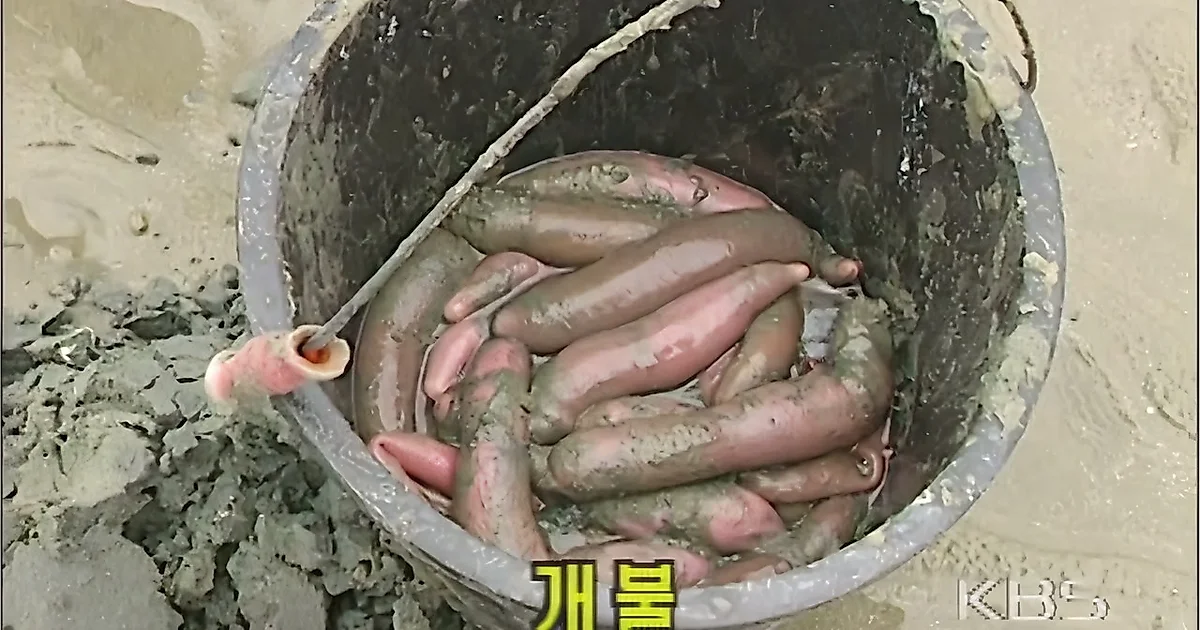
As the seawall is constructed due to the Saemangeum reclamation project and water pathways are blocked, a tragedy has occurred where the tidal flats, which were once hard clam farms, are losing their vitality and rotting blackly. According to the video from the KBS Environment Special 'Saemangeum: A 100-Day Record' (broadcast on May 24, 2000), the tidal flats inside the seawall experienced a sharp drop in water velocity, leading to the accumulation of fine silt, which in turn formed an anoxic layer where oxygen supply is cut off.
Saemangeum with blocked waterways, tidal flats turned from hard clam farms into ruins
The Saemangeum reclamation project, which began in 1987 with the goals of expanding national territory and developing the local economy, had reached approximately 59% completion of the seawall construction as of the end of 1999. At that time, the project cost invested to build the world's largest seawall, reaching a total length of 33km, had already exceeded 1.7 trillion won, a figure that significantly surpassed the original budget of 820 billion won. While intense pros and cons debates regarding the feasibility of the project continued, the ecosystem inside the seawall faced rapid changes.
The tidal flats, which were once abundant with hard clams and Manila clams, experienced a phenomenon where fine-grained silt accumulated to a depth of over 1m as the water velocity slowed down following the seawall construction. Kim Jeong-bae, a hard clam farmer appearing in the video, testified that the phenomenon began around 1995 and that in 1997, 100% of the farmed hard clams died off. As an environment was created where an anoxic layer forms just 0.5cm below the surface of the tidal flat, organic matter could not decompose, leading to the result of the tidal flats rotting blackly.
Organisms that help the tidal flats breathe, the brown band created by the oxygen layer
Unlike the dead tidal flats inside the seawall, the Daehang-ri tidal flats outside the seawall maintained normal water flow and showed a healthy state. Healthy tidal flats breathe through the activities of organisms. The spoon worm digs holes and lives up to about 30cm deep from the surface of the tidal flat, while the lugworm creates cylindrical 'burrows' to hide up to depths of over 1m.
The numerous holes made by these organisms become passages for air and water to enter the tidal flats. The video explains that the state of the tidal flats can be distinguished by color. The surface where oxygen passes through takes on a brown color, but places where oxygen does not reach appear black. The vivid brown band formed at the edge of the spoon worm's hole is evidence that oxygen is being supplied through the activities of the organisms. Lugworms perform the role of 'cleaners of the tidal flats' by constantly digging tunnels and turning over the soil, helping to prevent the tidal flats from rotting.
An important stopover visited by 5% of the world's shorebirds
The Saemangeum tidal flats also occupy a very important ecological position. The tidal flats of Korea's west coast are a migratory path for East Asia migratory birds connecting Siberia and Australia, and about 30,000 shorebirds visit this place. In particular, migratory birds that fly from Australia with rings attached use Saemangeum as a stopover to rest during their long journey.
According to a mention by an Australian official cited in the video, Saemangeum is an important place visited by about 5% of the world's shorebirds. Thanks to the abundant food in the tidal flats, endangered shorebirds can replenish their energy here. The birds continue their survival by hunting food in ways optimized to their respective beak lengths.
Meanwhile, to prevent the destruction of the tidal flats, efforts to protect the habitat of life continue, with local residents, environmental groups, and even children, who are the future generations, stepping forward to file lawsuits against the state and erect totem poles.
Related Articles

Can dragonfly models repel eye gnats? The results of a direct experiment
Tropical marine fish such as Threadfin Butterflyfish and Bannerfish discovered in large numbers in Korean waters
Why Wild Birds Do Not Get Diabetes Despite High-Sugar Diets
Tropical fish captured off the coast of Ulsan, flowing into the East Sea via warm currents
Five households remaining along the 51km path of the Donggang River, living in remote villages connected by rope boats
Difference Between Mangrove Horseshoe Crabs and Venomous Species: How to Distinguish Them by Shape

Snapping Turtle Captured in Seoul's Hongjecheon Stream, Large Specimen Difficult to Lift with One Hand

5,000 Golden Mandarin Fish Released in Hwacheon, Gangwon, Starting Restoration of Natural Monument
Reservoirs Dried Up by Drought: Why Bullfrog Fishing Failed

65 Species of Native Creatures Found in Hongcheon Stream Gathered in a Mobile Aquarium
800 Mountain Goats Survive in DMZ Rocky Areas... Wild Ecosystem Blocked by Barbed Wire

The reason the moon looks larger is due to perigee and optical illusions

The 'Lek' of Birds Gathering Similar Males: Is it a Strategy Targeting Females' Decision Paralysis?

The Changes in Paldang Lake Fisherman Seong-ju and Gumchi, and the Spawning Grounds Lost to Sediment Inflow
Komodo dragon's hunting secret is venom glands and serrated teeth, not bacteria in saliva
Deep-sea creatures at Nagoya Aquarium: The characteristics of the 16cm Scaly-foot Snail where females parasitize males
Fish Survey in Wangsukcheon Stream Confirms Species Ranging from Mandarin Fish and Draco to Endangered Sira
The Monk of Mungyeong Bongamsa Temple's Cave: A Life Coexisting with Squirrels and Butterflies in a 40-Year-Old Rock Crevice
Estimated 20 Musk Deer at Haesanryeong Pass: A Record of the Wild Found Through Tracking Traces

Comments 0