
Deep-sea creatures at Nagoya Aquarium: The characteristics of the 16cm Scaly-foot Snail where females parasitize males
The ecological characteristics of various deep-sea creatures and whales available at an aquarium in Nagoya, Japan, have been revealed.
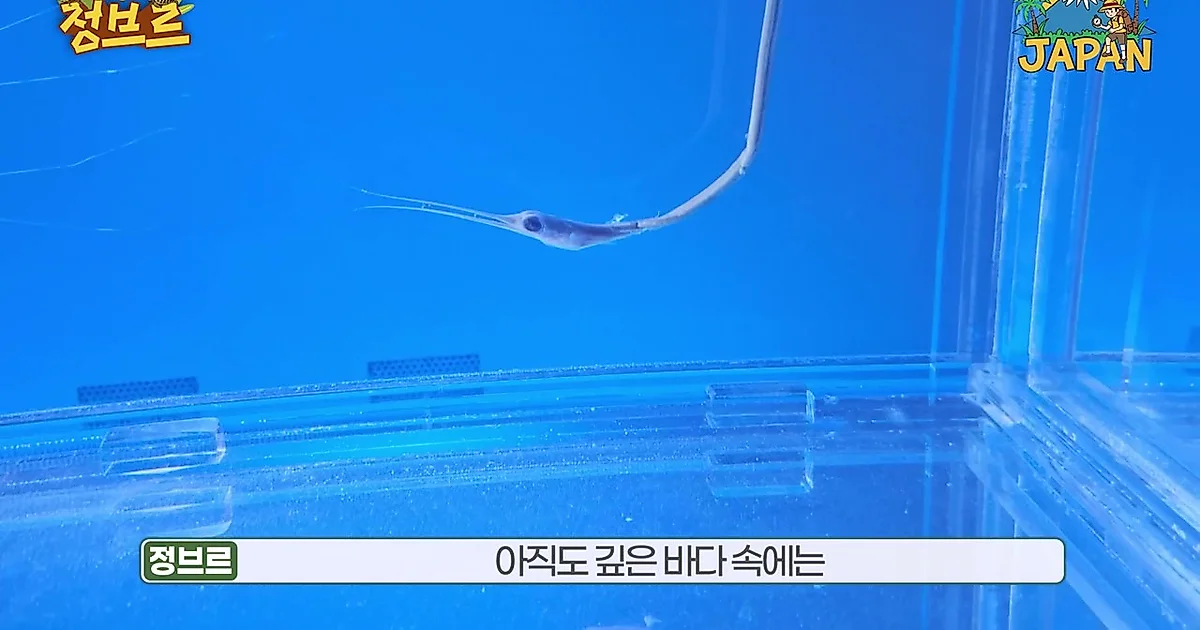
The ecological characteristics of various deep-sea creatures and whales that can be encountered at an aquarium located in Nagoya, Japan, have been revealed. According to a video from the YouTube channel 'Jungbeure', visitors can observe deep-sea fish species that are usually difficult to encounter, such as the 16cm Scaly-foot Snail, which lives in the 3,400m deep sea and has a unique reproductive method where the female parasitizes the male, as well as anglerfish and viperfish.
Ecological appearances of 6m-class killer whales and belugas
One of the main viewing elements of the aquarium is the movement of cetaceans. The video shows the appearance of a killer whale with specifications reaching up to 6m in length and 3.6 tons. In the case of killer whales, many people mistake the white parts for eyes, but the actual eyes are located at the end of the white coloration. Killer whales are known to be a species occasionally found in the East Sea as well.
Belugas are also a major viewing target. The video captures two belugas together, along with a scene of a baby dolphin interacting and playing with its mother. In particular, there is an individual that gave birth in October 2024, allowing visitors to see a young dolphin that is not even half a year old. Belugas also show themselves approaching visitors while making their characteristic sounds.
The mysteries of the deep sea, from parasitic Scaly-foot Snails to anglerfish
In the deep-sea section, creatures with unique survival methods catch the eye. In particular, the 16cm Scaly-foot Snail, which inhabits the 3,400m deep sea, has the unique characteristic of the female parasitizing the male to reproduce. This appears to be a strategy for survival in the extreme environment of the deep sea. The video also introduces the actual appearance of deep-sea creatures filmed by exploring up to a depth of 1,500m using robots and special equipment.
The appearance of anglerfish, which uses light to lure prey, was also confirmed. Anglerfish have an ecology of emitting light from an antenna on their head to lure small prey and then swallowing them. In addition to this, various deep-sea creatures are on display, such as models and actual organisms of viperfish with sharp teeth, devilfish which have a shape similar to octopuses, and batfish which show movements like walking using their fins. Furthermore, creatures such as Bathynomus giganteus, which play the role of scavengers in nature, can be observed.
The role of seaweed and the reproduction of ecosystems within tanks
Efforts to maintain the ecosystem inside the aquarium are also visible. The seaweed planted inside the tanks not only keeps the water clear but also provides important habitats for the fish. By tying seaweed to rocks and planting them as if planting grass, they play a role in creating an environment where fish can gather and restoring the ecosystem.
The composition of the tanks is focused on reproducing the natural environment as much as possible. Corals are not mere models but actual living animals are placed to increase liveliness, and sand and environments are created so that sea turtles can naturally breed and rest. Additionally, it is designed so that various regional creatures, such as freshwater fish from Australia and penguins (Emperor Penguin, Gentoo Penguin, Adélie Penguin, Chinstrap Penguin, etc.), can be observed in one place. In particular, in the Australian freshwater fish section, one can see 12 fish, including individuals over 1m in size, filling the tank.



Comments 0