
Five households remaining along the 51km path of the Donggang River, living in remote villages connected by rope boats
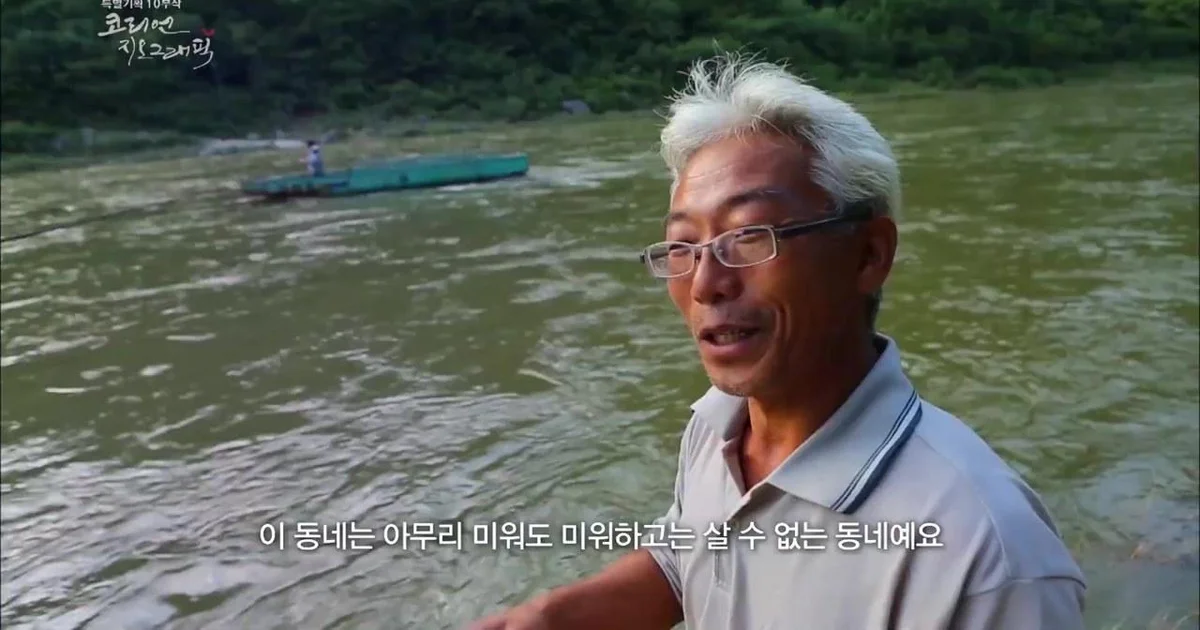
The Donggang River, a 51km stretch of water connecting Jeongseon, Pyeongchang, and Yeongwol in Gangwon Province, is a typical meandering river that winds along limestone layers uplifted 450 million years ago. This path, lined with rugged cliffs and steep canyons, preserves the original form of nature, but due to the terrain's characteristics of narrow river widths and deep depths, the river water can rise suddenly when it rains, isolating villages. According to the KBS 'Environment Special - Let Me Live by the Donggang River (broadcast on November 20, 2014)' video, there are people still living as part of nature alongside traces of life that have continued since prehistoric times along the winding waters of the Donggang River.
Isolated lives traveling by rope boat, the scenery of Gajeong Village and Turtle Village
Gajeong Village in the Donggang River basin once had about 20 households, but currently, only seven people from five households remain to guard the village. To go outside, the residents must use a 'rope boat' (julbae). If the river rises and the boat rope breaks, the village becomes completely isolated, but the residents accept this as the price of living beside grand nature. The villagers maintain neighborly affection by carrying each other or going to pick people up.
Jeong Sang-jung left city life behind and returned to his hometown, Gajeong Village, last year, where he began farming on the land left by his parents. Since most of the land is sloped, his daily life is not much different from before, such as still using oxen for farming. Meanwhile, Turtle Village, located in northern Jeongseon, currently has only one household remaining to guard the flow of the Donggang River. Jeong Yong-hwa's brother in this village collects wildflowers that bloom in the Donggang River to make flower tea. In the video, Jeong Yong-hwa continues a life of empathy with nature through the process of lightly steaming flowers in a cauldron to preserve the color and scent of dandelion flowers.
The dietary habits of the villages are also closely tied to nature. Due to the characteristics of remote villages where it is difficult to go to the market, most food is made by hand. Residents of Turtle Village grind harvested black soybeans to make tofu to be used for ancestral rites. They complete soft tofu and firm tofu through a process of pressing the beans through dense cloth and then adding bittern to coagulate them, filling their daily lives with soft tofu stew containing the taste of 50 years of experience.
Mysterious terrain created by limestone and the vitality of underground spring water
The unique landscape of the Donggang River is a result of surface movements in limestone areas and the dissolution action of groundwater. Since the current terrain was formed about 200 million years ago, sedimentation and erosion caused by river movements continue even now. In particular, the 71 caves formed while passing through the limestone areas add to the mystery of the Donggang River. Among them, Baengnyong Cave, which is Natural Monument No. 260, has been preserved, keeping the stalactites and stalagmites formed over hundreds of millions of years intact since it was discovered by residents in 1976. This cave, opened to the public in 2010, shows the spectacular scenery of an untouched dark world.
The underground spring water that constantly wells up from the riverbed is a key factor in keeping the water of the Donggang River cold and clear. This water, flowing out from the limestone caves of Yeongwol, becomes the driving force that enriches the aquatic ecosystem of the Donggang River. This phenomenon of water springing up from the river is a unique natural phenomenon seen in the Donggang River, providing optimal conditions for various living things to inhabit.
Spawning of the mandarin fish and wintering of the Eurasian Spoonbill, the Donggang where life stays
The Donggang River is an important habitat for rare creatures. The mandarin fish, a Natural Monument No. 259, spends all its energy building stone towers 5 to 8cm high to safely protect its eggs when the spawning season arrives. Also, the Eurasian Spoonbill, a winter migratory bird that breeds in Siberia and winters in Korea, uses the holes in the limestone cliffs of the Donggang River as spawning sites and spends the winter here. The Eurasian Spoonbill lives as a guardian protecting the winter of the Donggang River.
In winter, the water of the Donggang River becomes so clear that the riverbed is visible, and mandarin fish hibernate in the crevices of rocks. The mandarin fish, which has eight black stripes, spends the winter huddling in the cold water. When spring comes, the Donggang Pasque Flower, an endemic species that can only be seen in the Donggang River basin, blooms in the crevices of the cliff rocks, announcing the season of life once again.
Related Articles

Difference Between Mangrove Horseshoe Crabs and Venomous Species: How to Distinguish Them by Shape

Snapping Turtle Captured in Seoul's Hongjecheon Stream, Large Specimen Difficult to Lift with One Hand

5,000 Golden Mandarin Fish Released in Hwacheon, Gangwon, Starting Restoration of Natural Monument
Reservoirs Dried Up by Drought: Why Bullfrog Fishing Failed
65 Species of Native Creatures Found in Hongcheon Stream Gathered in a Mobile Aquarium
800 Mountain Goats Survive in DMZ Rocky Areas... Wild Ecosystem Blocked by Barbed Wire

The reason the moon looks larger is due to perigee and optical illusions

The 'Lek' of Birds Gathering Similar Males: Is it a Strategy Targeting Females' Decision Paralysis?

The Changes in Paldang Lake Fisherman Seong-ju and Gumchi, and the Spawning Grounds Lost to Sediment Inflow
Komodo dragon's hunting secret is venom glands and serrated teeth, not bacteria in saliva

Deep-sea creatures at Nagoya Aquarium: The characteristics of the 16cm Scaly-foot Snail where females parasitize males
Fish Survey in Wangsukcheon Stream Confirms Species Ranging from Mandarin Fish and Draco to Endangered Sira
The Monk of Mungyeong Bongamsa Temple's Cave: A Life Coexisting with Squirrels and Butterflies in a 40-Year-Old Rock Crevice
Estimated 20 Musk Deer at Haesanryeong Pass: A Record of the Wild Found Through Tracking Traces
Why Forest Walks in Germany Help Relieve Pain in the Elderly
How squirrels and flying squirrels recycle forest nests to raise their young
Why the Stone Buddhas of Namsan Mountain in Gyeongju are Connected to the Ecosystem
Drinking and fighting—all with the neck: How giraffes live

20 Years in the Wild, 30 in Captivity: The Difference in Pandas’ Lifespans

Comments 0