
Komodo dragon's hunting secret is venom glands and serrated teeth, not bacteria in saliva
Research reveals that Komodo dragons hunt large prey using venom glands and serrated teeth rather than bacteria in their saliva.
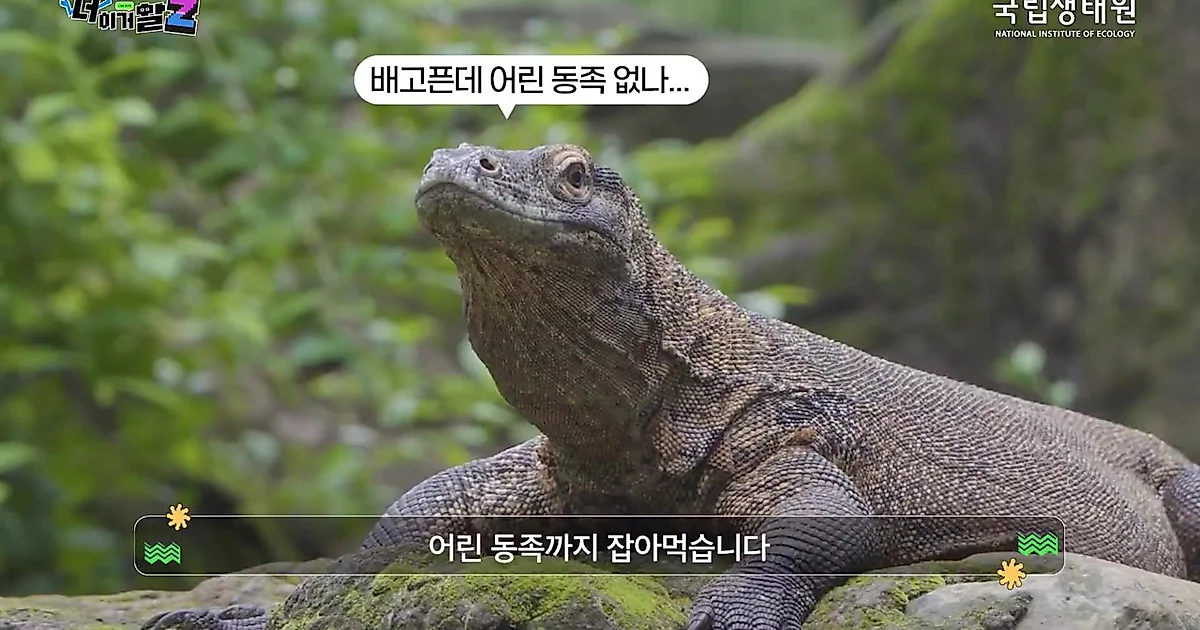
It has been revealed that the reason the Komodo dragon, boasting the largest size in the world, can hunt water buffalo weighing up to 1 ton is due to venom glands hidden in its jaw and a special tooth structure, rather than bacteria in its saliva. While it is commonly known that bacteria in a Komodo dragon's saliva infect and kill prey, this is different from the truth.
Venom glands, not bacteria, create the fatal effect
According to a video from the National Institute of Ecology, the true hunting weapon of the Komodo dragon is the venom gland located in the lower jaw among the jawbones. According to recent research results confirmed through MRI scans and other methods, Komodo dragons possess anticoagulants that prevent blood clotting and lower blood pressure. When this venom spreads through the prey's wounds, the prey gradually becomes incapacitated and eventually dies.
Komodo dragons grow to more than 3m in length, and they possess an overwhelming bulk, with individuals confirmed to reach weights of 166kg. Thanks to this massive physique, they can devour an amount equivalent to up to 80% of their own body weight in a single meal. Their hunting method is also very sophisticated. Rather than a structure where venom from the venom glands goes directly through tubes via the teeth, they employ a structure where the teeth tear the prey's skin, allowing venom to flow in from six venom glands.
Serrated teeth and the desperate environment for survival
Along with the venom glands, another weapon that makes the Komodo dragon a fearsome predator is the shape of its teeth. The back of the teeth has sharp serrations, designed so that flesh is torn to shreds when biting prey. Through the wounds made by these sharp teeth, the venom penetrates more effectively, allowing them to overpower animals much larger than themselves.
However, even for this powerful predator, threats to survival exist. As Komodo dragons become adults, they have a habit of eating their young kin, so juveniles seek survival by living in trees to avoid adults. Currently, wild Komodo dragons inhabit only some islands in Indonesia, and due to threats such as climate change and illegal smuggling, they are classified as an endangered species on the IUCN Red List and Appendix I of CITES, making protection urgent.
In Korea, Komodo dragons that have been illegally smuggled or captive are being rescued and protected at the National Institute of Ecology. The National Institute of Ecology is also a place where you can directly observe the ecology of the world's largest lizard.

Comments 0