
800 Mountain Goats Survive in DMZ Rocky Areas... Wild Ecosystem Blocked by Barbed Wire
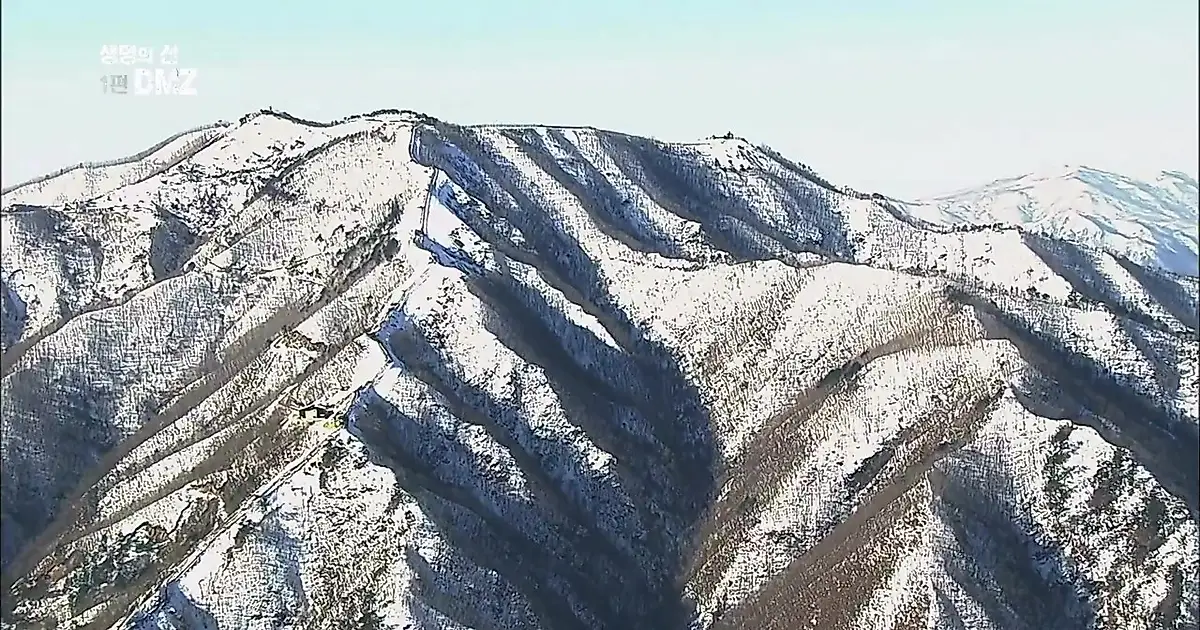
According to the June 17, 2018, broadcast of 'Wild Journey' on KBS Animal TV : Animal for You animal4u, the Demilitarized Zone (DMZ) has become a habitat for rare animals thanks to restricted human access, but it simultaneously appears as a dual-natured space where the survival of wildlife is threatened by barbed wire fences.
Coexistence of the 'Living Fossil' Mountain Goat and Winter Guests, Cranes
In the steep rocky areas of the DMZ, mountain goats, referred to as 'living fossils,' reside. With approximately 800 individuals remaining in South Korea, mountain goats mainly live on steep rocky cliffs. Mountain goats possess long front legs and soft hoof structures optimized for climbing rocks, and they sometimes even descend to the front of guard posts where soldiers are stationed to find food.
When winter arrives, cranes that have finished breeding in the Amur River and Ussuri River in Siberia visit the DMZ. The wide plains, grasslands, and rivers around the DMZ provide suitable conditions for cranes to overwinter. Cranes replenish their winter food supplies by eating grains fallen in rice paddies or dried grass. However, in this process, they are also attacked by the leopard cat, the last predator of this land. In the video, a hunting scene was captured where a leopard cat bites the neck of a crane and does not let go.
Barriers Created by Barbed Wire, Wounds Left on Wildlife
The barbed wire, a symbol of division, becomes a barrier that tests the limits of survival for wildlife. The video mentions a case of a water deer trapped between barbed wire fences. Even though it is a period when they must consume enough food to increase fat reserves in preparation for winter, the water deer, blocked by the barbed wire, faced restrictions in foraging. Ultimately, some of the water deer living trapped by the wire ended their lives, unable to overcome winter starvation.
A wild boar family also continues a dangerous journey. A wild boar in the video was seen moving behind its group, struggling with inflammation, with one of its front ankles severed. In this way, the boundary formed by the division is imposing fatal trials on wildlife, such as restrictions on movement and imbalances in foraging.
On the other hand, life flowing along the waterways crosses the boundaries. When spring comes, Lenok fish prepare to spawn in the upper reaches of the river. The process involves the female striking the riverbed with her tail to create a spawning ground, followed by the male fertilizing the eggs. Through the waterways that connect the South and the North, life flows naturally, and the nature of the DMZ continues the path of life, transcending the artificial lines drawn by humans.



Comments 0