
5,000 Golden Mandarin Fish Released in Hwacheon, Gangwon, Starting Restoration of Natural Monument

The golden mandarin fish, a rare fish species that inhabits only South Korea in the world, has been released in large quantities into Hwacheon Stream, a tributary of the Bukhangang River in Hwacheon, Gangwon Province. According to a video released on the TV Saengmul Dogam channel as of September 26, 2026, the Korean Native Fish Conservation Association conducted an event to release approximately 5,000 golden mandarin fish in the Hwacheon area to restore the declining population of the species. In this event, a total of 30,000 fish were released, including not only golden mandarin fish but also 25,000 regular mandarin fish.
Golden-bodied mandarin fish face difficulty breeding in the wild
The species inhabiting the Han River system is designated as a natural monument and is protected. While they are also found in some parts of the Geum River or Nakdonggang River, these are results of human transplantation, and they are characterized by being originally found only in the Han River system. In particular, the mandarin fish in the Hwacheon area are characterized by having golden bodies, which is known to be a recessive color that appears because foraging is not smooth in the natural state.
Lee Wan-ho, president of the Korean Native Fish Conservation Association appearing in the video, explained the unique breeding habits of the golden mandarin fish. It is said that natural spawning is very difficult because the probability of them meeting each other in the wild is low. Therefore, they are increasing the population through artificial insemination at hatcheries and then returning them to nature. The individuals released this time are young individuals about 47 days old, and their golden color is expected to become deeper as they grow. The individuals in the video show the characteristic that the golden color appears when they become about 90-day-old juveniles, and the color becomes deeper as they grow.
Large-scale release event of 30,000 fish and ecosystem adaptation
In this release event, a total of 30,000 fish, including 5,000 golden mandarin fish and 25,000 regular mandarin fish, were released into Hwacheon Stream. During the release process, care was taken to release them slowly by mixing the water little by little so that the fish would not suffer shock due to sudden temperature differences. Immediately after the release, the individuals showed temporary shock due to the temperature difference, but they soon showed signs of adapting to the environment by pressing their bodies against the crevices of rocks. This is a habit of the fish, and once adaptation is complete, they move far away and begin hunting.
As the area is designated as a conservation area for the golden mandarin fish, Hwacheon County expects that this release will preserve the depleting fishery resources and hopes that the mandarin fish population will proliferate sufficiently next year to open an era of mandarin fish in the Bukhangang River area. At the scene, the Mayor of Hwacheon also attended to encourage the purpose of the event.
Confirming diverse ecosystems of the Bukhangang River tributary and survival strategies
In the ecological exploration conducted after the release event, various fish species of the Bukhangang River rocky streams were identified. Youngides of Korean splendid dace, youngides of stone moroko, Chinese bitterling, mandarin fish, and northern perch were found, and an unusual sight was captured where youngides of pond smelt were found even though it is August. Additionally, pale chub, which features striking colorful nuptial colors in males, and Korean sleeper, which has the habit of burying eggs in the sand, were observed. The Korean sleeper uses the male's teeth (protrusions) to dig into the sand and bury eggs, and also plays a role in stimulating the female's abdomen to promote spawning during spawning. However, the Korean sleeper also has a vulnerability to being eaten by predators like egrets.
During the exploration process, an interesting fact was also confirmed where species are distinguished by the direction of their mouths. If the mouth faces downward, it is a slender stone moroko, and if the mouth faces the center, it is a stone moroko. They employ a unique survival strategy by taking advantage of the situation where their predator, the Korean bullhead, protects the eggs. When the Korean bullhead is guarding the eggs under a rock, the stone moroko, slender stone moroko, or spotted stone moroko take the method of gathering in groups to lay eggs and then run away. In this process, the Korean bullhead may attack, but eventually, a strange symbiotic situation is produced where the Korean bullhead ends up guarding those eggs together.
Related Articles

Reservoirs Dried Up by Drought: Why Bullfrog Fishing Failed

65 Species of Native Creatures Found in Hongcheon Stream Gathered in a Mobile Aquarium

800 Mountain Goats Survive in DMZ Rocky Areas... Wild Ecosystem Blocked by Barbed Wire

The reason the moon looks larger is due to perigee and optical illusions

The 'Lek' of Birds Gathering Similar Males: Is it a Strategy Targeting Females' Decision Paralysis?

The Changes in Paldang Lake Fisherman Seong-ju and Gumchi, and the Spawning Grounds Lost to Sediment Inflow
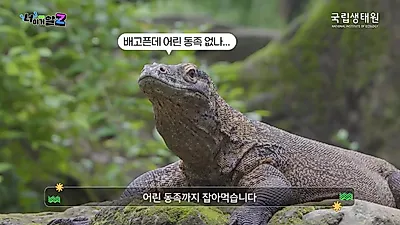
Komodo dragon's hunting secret is venom glands and serrated teeth, not bacteria in saliva

Deep-sea creatures at Nagoya Aquarium: The characteristics of the 16cm Scaly-foot Snail where females parasitize males

Fish Survey in Wangsukcheon Stream Confirms Species Ranging from Mandarin Fish and Draco to Endangered Sira

The Monk of Mungyeong Bongamsa Temple's Cave: A Life Coexisting with Squirrels and Butterflies in a 40-Year-Old Rock Crevice
Estimated 20 Musk Deer at Haesanryeong Pass: A Record of the Wild Found Through Tracking Traces

Why Forest Walks in Germany Help Relieve Pain in the Elderly

How squirrels and flying squirrels recycle forest nests to raise their young
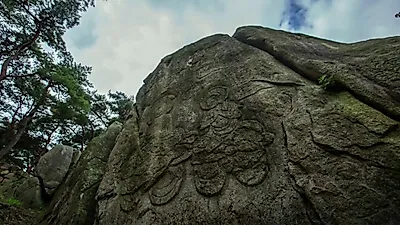
Why the Stone Buddhas of Namsan Mountain in Gyeongju are Connected to the Ecosystem
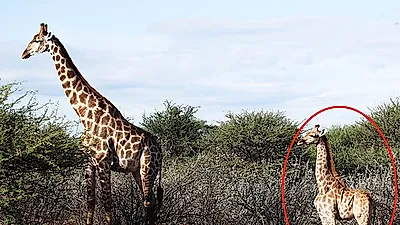
Drinking and fighting—all with the neck: How giraffes live

20 Years in the Wild, 30 in Captivity: The Difference in Pandas’ Lifespans

'Red Shadow of the Forest'… The Red Panda, a Small, Solitary Resident of High-Altitude Forests

Ancient 'Large Serrated-Tooth Shark' Nursery Discovered, Yielding 87 Fossil Teeth

A Starving Polar Bear Rummages Through a Garbage Truck: How Can We Help Save Polar Bears?

Comments 0