
Why the Stone Buddhas of Namsan Mountain in Gyeongju are Connected to the Ecosystem
The stone Buddhas of Namsan Mountain in Gyeongju serve as more than religious symbols…
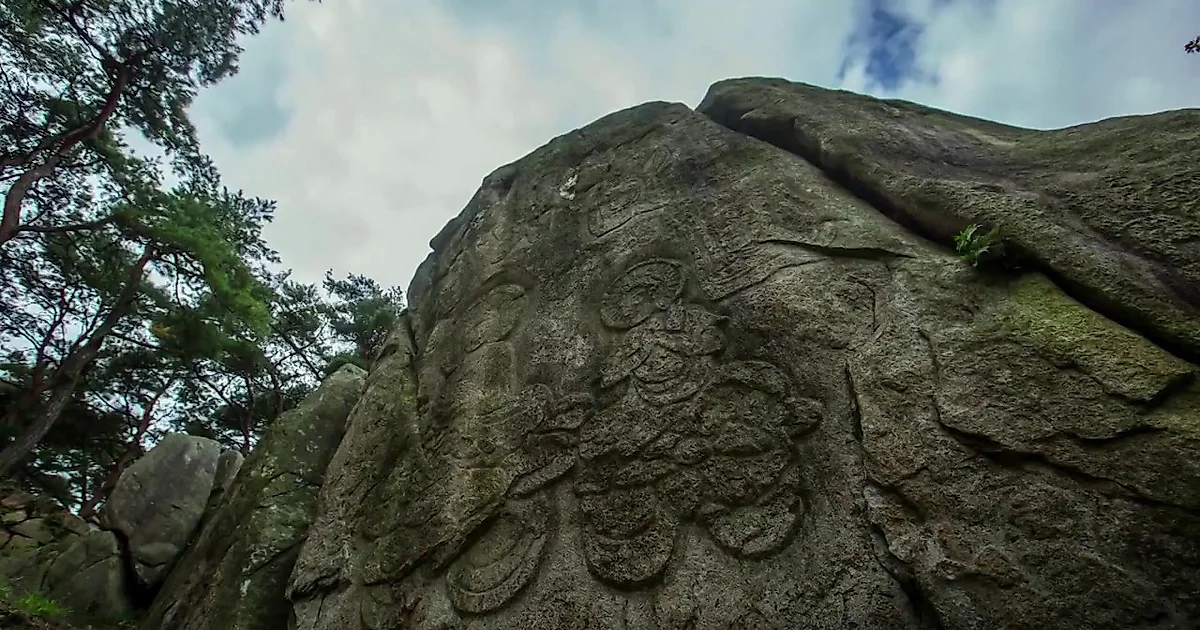
The stone Buddhas of Namsan Mountain in Gyeongju go beyond being mere religious symbols, providing shelter and a foundation for survival to the creatures in the forest. According to a KBS Environment Special video, Namsan Mountain in Gyeongju, which was listed as a World Heritage site in 2000, contains more than 200 stone Buddhas and stone pagodas, which are closely connected to the forest ecosystem as part of nature.
A Chain of Survival Unfolding Beneath the Smile of the Stone Buddha
The stone Buddhas of Namsan Mountain are situated throughout the valleys with rugged and benevolent appearances. These Buddha statues become important habitats for the small lives of the forest. The video shows the coexistence of human aspirations contained in relics and wild animals through scenes such as paper wasps taking shelter from wind and rain under a stone Buddha, and a squirrel from Sangseonam sharing the Buddha's offering rice.
In particular, lichen settles thickly on the surface of the rock-carved Buddhas, and this lichen plays a role in grinding the barren rocks to create soil. In this process, small lives camouflaged as lichen live as if they are one body with the stone Buddhas. However, the laws of nature are cold, and the ecosystem around the stone Buddhas is in a constant flow of the food chain. Much like the process of an antlion hunting a moth caterpillar after much patience, it shows a cycle where the death of one life leads to the transformation of another.
The Forest's Cyclical Structure Where Pollen Drifts
The ecosystem of Namsan Mountain operates in an exquisitely interlocking manner according to the changing seasons. Every year in April, pine pollen drifts through the entire forest like golden powder on the wind. Although the probability of this pollen meeting female flowers to become seeds is very slim, even the pollen that fails to bear fruit is recycled into nutrients for the forest without being wasted.
The growth of the forest is completed through the interactions of small lives. The water emitted by bamboo shoots entering their growth stage becomes morning mist that moistens the trees and allows moss to grow. The moss grown this way becomes material for birds to build nests. The participant in the video explains that "within a seed discarded by a squirrel lies the future of a tree," explaining that all life in Namsan Mountain does not exist alone but is connected to form a massive forest.
An Open-Air Museum Embracing a Thousand Years
The people of Silla carved rock-carved Buddhas seeking the spirits dwelling within the rocks. The stone Buddhas, whose colors change according to the movement of light, become the contact point where nature and human belief meet. On nights when moonlight seeps in, the stone Buddhas of Namsan Mountain reveal a mysterious appearance, holding a thousand years of time. In this way, Namsan Mountain in Gyeongju is like a massive time capsule where the historical traces of Silla and the fierce survival stories of the wild coexist.
Comments 0