
Drinking and fighting—all with the neck: How giraffes live
Giraffes’ height, long necks, powerful hearts, necking behavior and conservation status shape their lives across the African savanna.
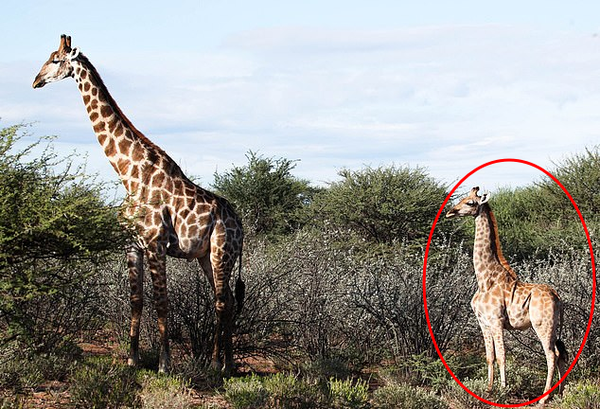
There is an animal whose sheer body length commands attention: the giraffe, an iconic herbivore of the African savanna.
The giraffe is the tallest land animal in the world; an adult male is known to be approximately 5.3 m tall, though this varies by individual. The neck alone grows to about 2–2.4 m, a figure that far exceeds the height of an adult man. This physique provides advantages in securing food and watching for predators.
Giraffes use their long necks to primarily eat the leaves of tall plants such as acacia trees. Their tongues are also long, measuring about 45 cm, and are dark blue in color. They are frequently observed skillfully using their tongues to pluck leaves from thorny branches.
A giraffe's legs, both front and back, are long and straight, and they can reach speeds of up to 50 km/h when running. Contrary to their appearance, they possess excellent mobility.
However, due to their long necks, the posture for drinking water is somewhat awkward. They must spread their two front legs sideways to lower their bodies and then carefully bow their heads, making this the moment they are most vulnerable to predators.
A giraffe's heart is also unique. Weighing approximately 11 kg, it acts as a powerful pump, efficiently sending blood up the animal's tall body to its brain. A giraffe's blood pressure is the highest among herbivores, measuring about two to three times that of humans.
A giraffe's neck consists of seven vertebrae, the same number as a human's. While the number is the same, the structure is elongated because each bone is much longer. Their long necks also sometimes feature in fights. During mating season, male giraffes may exhibit a behavior called “necking,” in which they swing their necks to strike rivals.
Their patterns are also unique to each individual. The mottled brown patterns are as unique as fingerprints and serve as camouflage in the brush of their habitat. Pattern shapes also vary by species. Currently, giraffes are classified into four main species and their subspecies, which the Giraffe Conservation Foundation divides into the Masai giraffe, Northern giraffe, Reticulated giraffe, and Southern giraffe. The Nubian giraffe is a subspecies of the Northern giraffe.
Meanwhile, giraffes are social animals, typically living in groups consisting of females and their young. Males tend to live relatively independent lives or form small groups.
The gestation period is about 15 months, and giraffes usually give birth to one calf. Immediately after birth, the calf falls about 2 m to the ground and instinctively tries to stand up right away.
Depending on the species and subspecies, giraffes are distributed across various savannas and open areas in Africa. Recently, due to reasons such as habitat destruction and poaching, some species have been listed on the IUCN Red List.
Giraffes possess a wide variety of biological characteristics befitting their imposing size, and many scholars remain interested in studying them.
FAM타임스 명의로 발행된 기사를 모아 제공하는 매체 공용 저자 페이지입니다.
Comments 0