
20 Years in the Wild, 30 in Captivity: The Difference in Pandas’ Lifespans
Giant pandas eat 12–38 kg of bamboo daily and live 15–20 years in the wild, while some in captivity survive to around 30.
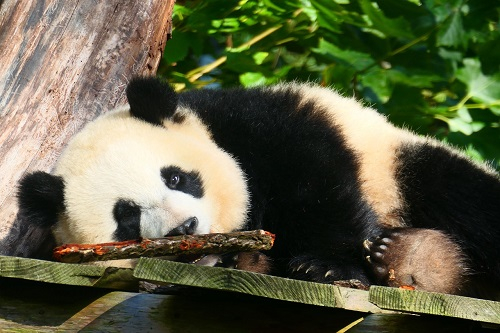
There is an animal that survives by eating tens of kilograms of bamboo every day. Native to the mountainous regions of southwestern China, the giant panda is well known for its unusual diet and relatively short lifespan in the wild.
According to data released by the World Wide Fund for Nature (WWF), giant pandas spend an average of more than 12 hours a day feeding.
They consume between 12 kg and as much as 38 kg per day, with bamboo leaves, stems and shoots making up their staple diet. About 99% of their entire diet consists of bamboo.
Although pandas are taxonomically classified as carnivores, their digestive systems are not optimized to break down bamboo fiber. Their low energy efficiency means they can survive only by consuming large quantities over long periods.
Pandas digest only some of the fiber with the help of microorganisms and spend long hours eating to compensate for this low efficiency.
They are most active in foraging around dawn and dusk, while during the day they generally rest in trees or in the shade of rocks. The parts of bamboo they prefer vary by season; in spring, they feed particularly heavily on protein-rich shoots.
There is a major difference in lifespan between captive and wild environments. According to an announcement by the same research center, giant pandas live an average of 15–20 years in the wild, while some in captivity have reportedly survived to around 30. Basi (芭喜), a panda that died in China in 2020, lived to the age of 37 and was recorded as one of the world’s oldest pandas.
One of the panda’s distinctive anatomical features is its “pseudo-thumb.” This modified wrist bone is believed to have evolved to help the animal grasp bamboo. It enables pandas to hold and rotate bamboo, allowing them to handle their food efficiently.
According to information released by the International Union for Conservation of Nature (IUCN) in 2016, the giant panda had previously been classified as Endangered, but its status was adjusted to Vulnerable to reflect conservation gains at the time. It is currently designated a Class I protected animal by the Chinese government, with conservation and breeding programs underway through various forms of international cooperation.
Because of their distinctive diet and physiology, as well as differences in lifespan depending on their environment, pandas are a focus of conservation worldwide. Their ecological profile is becoming clearer through the continued collection and publication of data by numerous organizations.
FAM타임스 명의로 발행된 기사를 모아 제공하는 매체 공용 저자 페이지입니다.

Comments 0