
'Red Shadow of the Forest'… The Red Panda, a Small, Solitary Resident of High-Altitude Forests
The red panda is a unique, endangered mammal living in high-altitude forests, characterized by its distinct evolutionary lineage and solitary nature.
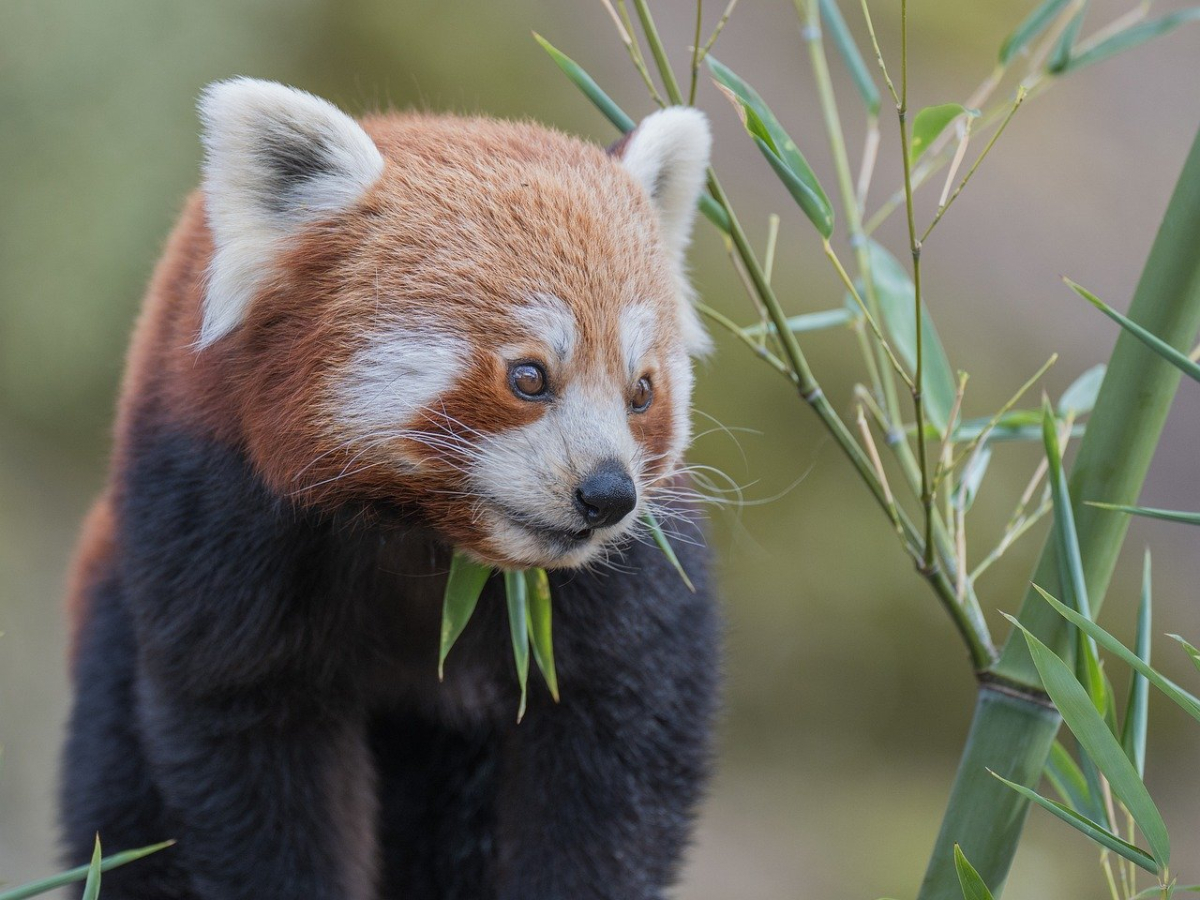
Deep red fur, a long and rounded tail, and a cat-like body. While people often think of the massive black-and-white bear when they hear the word 'panda,' there is another kind of panda. It is the red panda, a small mammal inhabiting the high-altitude forests of the Himalayas and southern China.
Although the red panda (Ailurus fulgens) shares the name 'panda,' it is a completely different species from the giant panda. Biologically, it is distinct from both bears and raccoons, belonging to its own unique family, 'Ailuridae.'
In appearance, it possesses a mix of characteristics from raccoons, weasels, and cats, but molecular biological research has confirmed that it follows its own unique evolutionary path.
Its body length is approximately 50–65 cm, tail length is 30–50 cm, and it weighs about 3–6 kg. While it looks small and cute, it prefers solitary life in the wild and exhibits highly territorial behavior. It primarily inhabits cold, humid regions at altitudes of 2,200 to 4,800 meters.
The main habitats of the red panda include Nepal, Bhutan, northern India, Myanmar, and southwestern China. They live in high-altitude areas where bamboo forests and broadleaf forests are mixed, and they are highly active in trees. Their climbing-adapted claws and long tails help them maintain balance while climbing.
Their diet is omnivorous but largely herbivorous. Most of their food consists of bamboo leaves and shoots, but they also consume fruit, tree bark, insects, and bird eggs. Since bamboo is difficult to digest and provides little energy, red pandas spend a significant amount of time searching for and eating food.
They are nocturnal and spend most of their daytime sleeping or resting on tree branches. During winter, they reduce their activity to conserve body heat and wrap their tails around their bodies to prevent heat loss.
Breeding mainly occurs in winter, with a gestation period of approximately 130 days. They typically give birth to 1 to 4 cubs, which receive protection from the mother in a nest for about three months. They begin living independently after one year of age.
Currently, the red panda is classified as an 'Endangered' species by the International Union for Conservation of Nature (IUCN). The main causes of population decline include habitat destruction, deforestation, illegal poaching, and capture for the pet industry.
In some regions, major habitats are being fragmented due to road construction and tourism development, raising concerns about the reduction of genetic diversity.
Zoos and reserves around the world are operating breeding programs for the conservation of red pandas. For the current status of captive breeding and conservation programs, it is necessary to check the latest information from specific institutions.
FAM타임스 명의로 발행된 기사를 모아 제공하는 매체 공용 저자 페이지입니다.
Comments 0