
170,000 Kim Soo-nam Photographs Donated to National Folk Museum of Korea, "Hoping for Free and Creative Use"
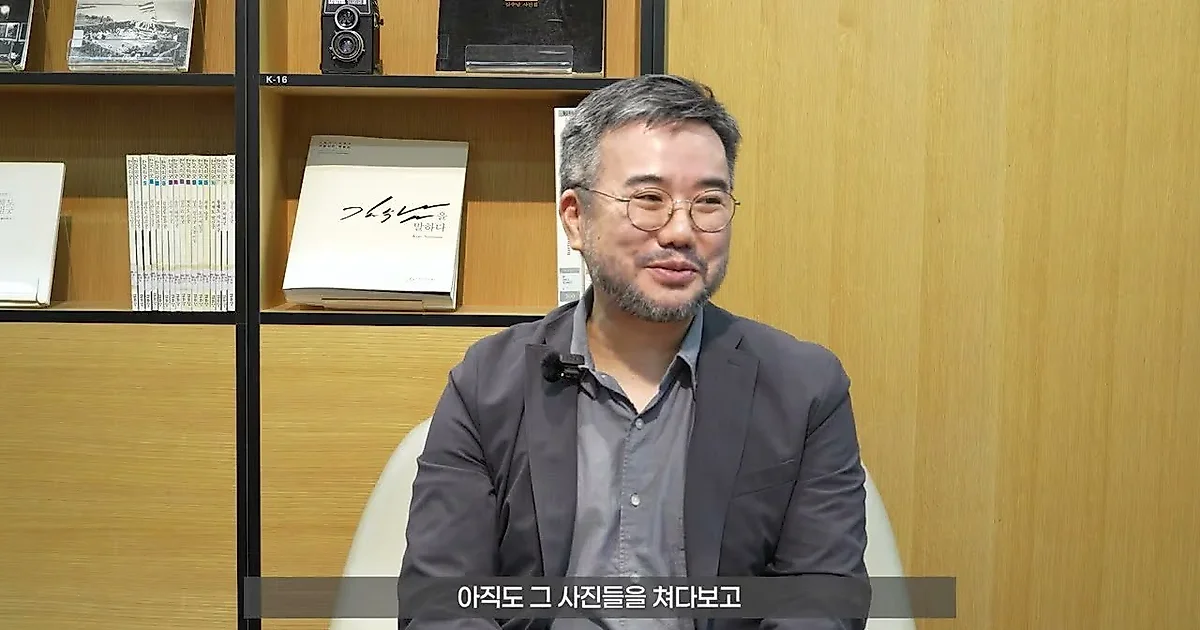
In the year marking 20 years since the passing of documentary photographer Kim Soo-nam (1949–2006), approximately 170,000 photographs and records he left behind after traveling throughout South Korea and Asia for over 30 years are being preserved at the National Folk Museum of Korea. According to a video from the National Folk Museum of Korea, this vast collection was donated by Kim Soo-nam's eldest son, Kim Sang-hoon, and holds precious historical value as it captures the archetypes of disappearing cultures.
Picking up the camera to record disappearing cultures
Photographer Kim Soo-nam has been capturing the disappearing cultures of South Korea and Asia since the 1970s. In the 1970s, South Korea was a period when traditional rituals such as Gut were suppressed and dismissed as superstition due to the influence of the Saemaul Movement. Even in this situation, he traveled to Gut sites across the country to leave photographic records of various cultural archetypes. He did not stop at merely taking photos; he increased the completeness of his work as a documentary by meticulously recording the stories of the people he met and the situations on site in his notebooks.
After resigning from The Dong-A Ilbo in 1985 and working as a freelancer, his gaze expanded across all of Asia. His photographs and records, which captured the rituals, festivals, and daily lives of various Asian countries, became an important window into the life and culture of that time. During his lifetime, he even said, "I would be happiest if I meet my end while taking photos in the field." He passed away in 2006 while shooting in Chiang Rai, Thailand.
170,000 records: How to preserve and utilize them
Kim Sang-hoon, the son of Kim Soo-nam, said he felt overwhelmed by the task of managing the 170,000 photographs his father had accumulated throughout his life. Initially, the volume was about the size of a bookshelf, but as the shooting continued, the photos increased enough to fill entire walls. Kim said, "The most difficult task was wondering how to manage them if left as they were, and how to organize them so that others could utilize them."
He emphasized that for the photographs to hold value as a documentary beyond being simple works of art, "a photograph survives only when someone needs it and can use it." Accordingly, work has been underway to digitize the photographic materials so they can be searched on the web. Kim determined that digitizing the files was important so that researchers could easily find and utilize the materials, and he decided to donate them to the National Folk Museum of Korea, which is equipped with professional storage facilities. The museum provides an environment where researchers can continuously utilize the materials rather than leaving them buried.
"Hoping for creative use within the bounds of no copyright infringement"
Kim Sang-hoon stated that while there were concerns from those around him regarding the release of his father's photographs online, he hopes they will survive in new ways rather than diminishing the value of the photos. He said, "I hope not only researchers but also those studying traditional Asian culture will utilize them more," adding, "If they are used freely and creatively within the bounds of not infringing on copyrights, the photographs will survive in another way."
Kim recalled how his father felt a deep sense of regret regarding things that were disappearing during his lifetime. He added, "As I am getting older, whenever I think that the ethnic minorities of Myanmar might have disappeared, I find myself looking for my father's photos again." He expressed his wish to revisit the places where his father took photos after his own retirement, and hoped that these records would serve as an opportunity for people to discover the past they had forgotten.
Related Articles
Gangseo-gu Completes Recruitment of 4,000 Participants for Heo Jun Run and Launches New Magok District Course on the 10th
Artist Hong Jin-hwon Reveals the Relationship Between Images and Struggle in 'Korea Artist Prize 2026' Interview
Gimpo International Sculpture Park Exhibits 30 Works by Masters Including Daniel Buren in a 20,000-pyeong Forest
Artist Oh In-hwan to Participate in 2026 Title Match with the Theme "We Are Not One"
500 Years of Spanish Art: 95 works from the New York Hispanic Society to arrive in Seoul for the first time
Proposals for the National Folk Museum of Korea's Transition to a World Culture Museum: Emphasizing the Connection Between Museum Purpose and Visitors
Kim Dong-hee Solo Exhibition at Un-gyeong Historic House: A Radical Exhibition Excavating 6 Tons of Soil and Bringing the Attic Outside
Wonju Hanji Theme Park: Experiencing the Full Process of Hanji, from Mulberry Bark to Making Hanji Keyrings
Stone used at Yangju Hoeamsa Temple Site confirmed to have been brought from Taebongsan Mountain, not nearby Cheonbosan Mountain
Brad Wals Photography Exhibition: A World of Aerial Photography Completed with Design Without a 1cm Error
Comics from the 1970s–90s met at the Korea Manhwa Museum… Memories of a boy dreaming of robots
Hwaseong Dongtan Central Library 'Strata of Light' Exhibition: A Combination of Mother-of-Pearl Lacquerware and Generative AI
Gyeonggi Provincial Library AI Studio: Free Trials for Over 60 Paid AI Models Available
Miryang Yeongnamnu Starlight Garden to Provide Nighttime Attractions During Free Pilot Operation Until September 30
Seochon's Gallery Simon 'Becoming With' Exhibition: The Artistic World of Yo-E Ryou, an Artist Invited to La Biennale di Venezia
AI Proposes Restoration Candidates for the Nine-Story Wooden Pagoda of Hwangnyongsa Temple by Combining Data and Historical Research
Artist Jeon Hyun-sun shows the beginning and end of painting through installations revealing the back of canvases
Director of National Museum of Singapore: "Museums are dynamic spaces for community engagement beyond knowledge transfer"
ACMI, a 'Screen Culture' Museum where Two-Thirds of Visitors are Under 35
Comments 0