
AI Proposes Restoration Candidates for the Nine-Story Wooden Pagoda of Hwangnyongsa Temple by Combining Data and Historical Research
Artificial intelligence is evolving beyond image generation to serve as a tool for restoring and recording lost cultural heritage.
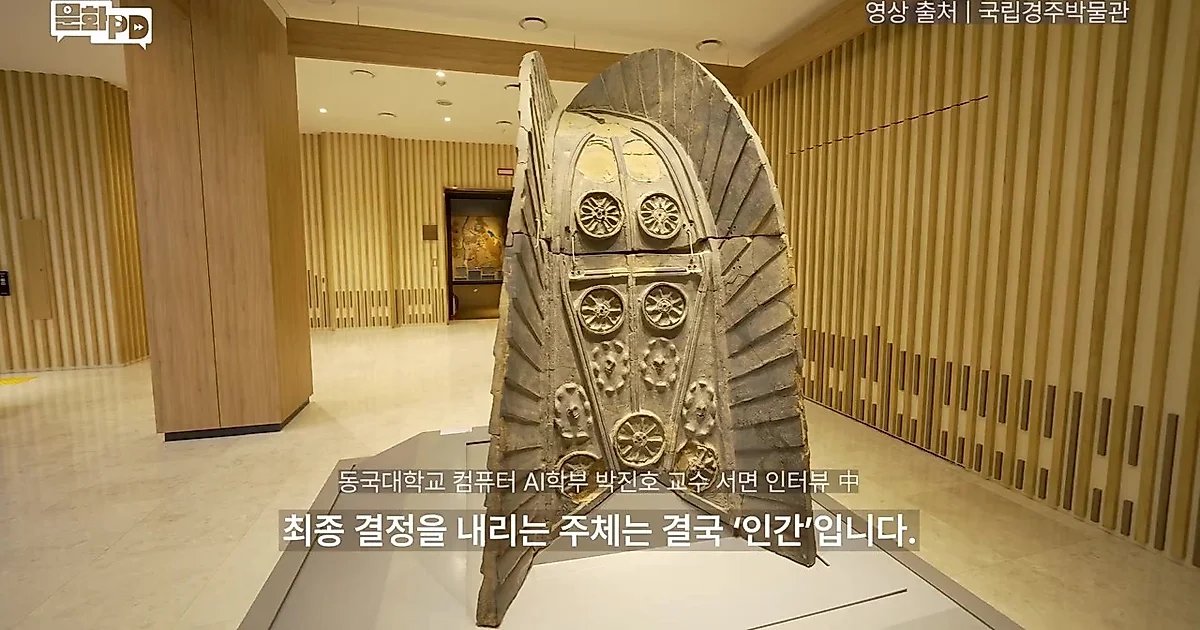
Artificial intelligence (AI) is moving beyond the stage of simply creating new images and is being utilized as a tool to restore and record the appearance of lost cultural heritage. According to a video from the Culture Portal, due to the nature of generative models, AI may produce results that differ from facts due to "hallucination" if commands are given without historical research; however, if specific historical materials are input, it performs the role of deriving sophisticated restoration candidates.
Connecting Data Based on Historical Records, Not Imagination
At the Hwangnyongsa Temple Site in Gyeongju, the Nine-Story Wooden Pagoda of Hwangnyongsa Temple, which was once the largest in the East, once stood, but currently only a wide site remains. If one simply asks generative AI to draw Hwangnyongsa Temple, it creates a magnificent temple image in just a few seconds, but this may be a result far removed from historical facts. The video explains that when specific information—such as the height of the wooden pagoda reaching 80m, the wooden architectural style of Silla, and excavated data—is input, the AI can finally calculate a form close to reality.
Actual restoration of cultural properties begins with tens of thousands of artifact fragments buried underground and written records. In this process, AI plays the role of a "sophisticated recorder" rather than a creator. AI finds highly probable links within thousands of broken artifact fragments or 3D data that are difficult for humans to find one by one. In other words, AI does not decide the correct answer, but functions as a tool to quickly narrow down possible restoration candidates.
Digital Restoration Completed by Human Verification
The results presented by AI do not immediately become historical facts. No matter how sophisticated a 3D model is, the entity that verifies the actual historical facts and research and makes the final decision is ultimately a human. True restoration is only completed when historians and archaeologists thoroughly verify the various hypotheses presented by AI.
In Gyeongju, these digital technologies are being used to record the Silla Royal Capital and various artifacts as data. In particular, by utilizing XR (Extended Reality) buses, one can experience seeing the streets of Silla from a thousand years ago overlaid through the windows of a moving bus. The details reproduced based on the recorded data make the spaces of the past feel like an extension of the present. AI is being utilized not as a technology to remake the past, but as a technology to carry and protect the memories of a thousand years into the future.
Comments 0