
Artist Jeon Hyun-sun shows the beginning and end of painting through installations revealing the back of canvases
===
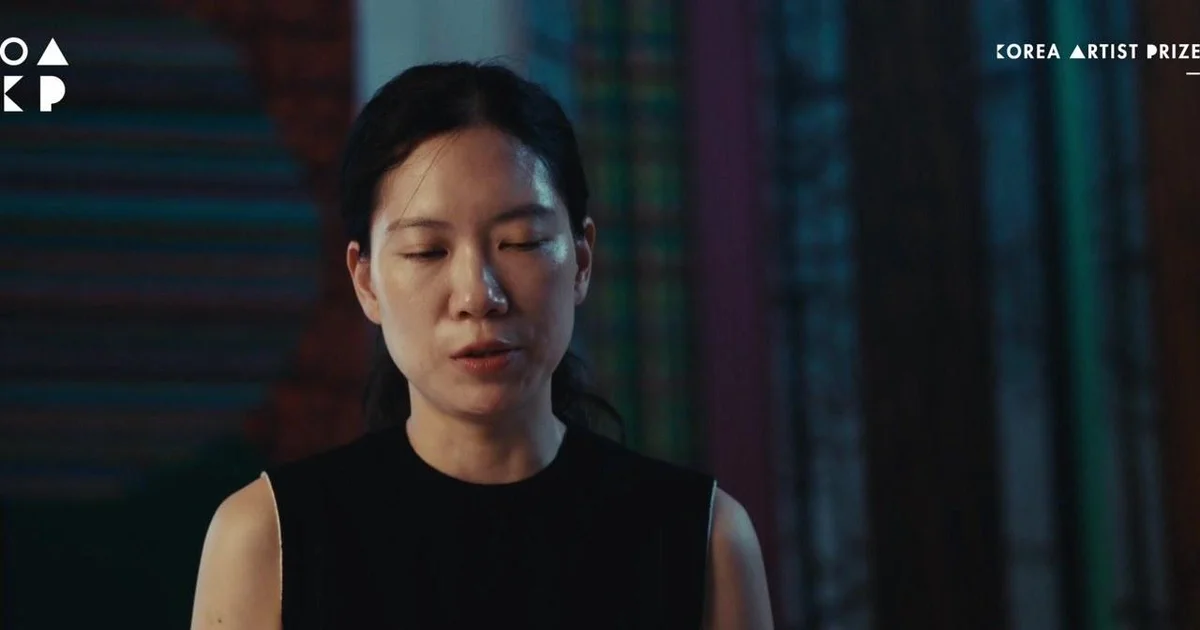
Jeon Hyun-sun, a nominee for the Korea Artist Prize 2026 at the MMCA, explores new possibilities of painting through installation works that reveal the back of the canvas rather than the front. Through this exhibition, held at MMCA Seoul from July 24, 2026, to December 6, 2026, Jeon presents new paintings, sculptures, videos, and installation works utilizing the back of canvases.
Painting resembling the process of rock climbing, 'Even a Rabbit Digs Two Burrows'
Jeon Hyun-sun's new work, 'Even a Rabbit Digs Two Burrows', is a piece composed of 30 canvases of the same size connected to form one massive screen. This work is installed tilted about 15 degrees forward from the wall, providing a unique visual experience for viewers. The artist stated that she obtained the idea for this work from rock climbing.
According to the video, the artist explained that the process of a climber using the spot where they stand in front of a rock wall as a starting point and choosing stones one by one to climb resembles her painting process and exhibition methods. She added that she strives to let the elements placed on the screen exist as 'potentialities' waiting to be connected by someone, rather than fixing the roles or meanings of the elements within the frame. She expressed hope that this exhibition will be like one large painting, where viewers travel through various paths via the gaps and spaces within the screen to create their own individual collections of images.
The meaning of 'Invisible Painting' revealing the back of the canvas
In one of the exhibition spaces, 'Invisible Painting' is displayed, an installation work made by connecting the backs of canvases to form a cylinder and suspending it in the air. This work originated from reflections on the human way of perceiving, where one sees only a part of an object and believes it to be the whole. Dealing with the canvas, her most familiar medium, the artist focused on the back side, which is often forgotten while painting the front.
The artist explained that the back of the canvas is an important part representing the beginning (the process of stretching the canvas) and the end (the process of signing) of a painting. Accordingly, she sought to explore the complete form of an object through a method of hiding the front of the canvas and revealing the back.
The appearance of 'Horns' and the recording of images through 點描
A significant turning point in Jeon Hyun-sun's artistic world is the appearance of the form known as 'horns' since around 2010. While she initially reconstructed classical fairy tales or myths, the emergence of 'horns'—triangular or conical shapes—allowed her to capture ambiguous things that are difficult to explain with language in her paintings. Since then, 'horns' have sometimes been fragmented or disappeared within the screen, but they have served as a bridge allowing different elements such as abstraction and figuration, or imagination and reality, to coexist on a single screen.
Changes also appeared in her painting methods. While she initially used a method of tapping the screen with a worn-out brush to speak to the empty canvas, she now uses the 點描 method to record the memories of digital images and the visual environment of the internet. The artist stated that she chose 點描 to contain broken and shattered information instead of smooth images, expecting that while the resolution of the image may decrease, the resolution of time and experience will increase.
Furthermore, the artist expressed her desire for viewers to experience an 'animalistic vision'—one that receives images purely by moving the body—rather than a vision acquired through familiar learning or education, by installing massive screens that exceed human body size. The titles of the new paintings were each created in the form of sentences, and the 30 works are composed to form a single prose poem.
Comments 0