
500 Years of Spanish Art: 95 works from the New York Hispanic Society to arrive in Seoul for the first time
The exhibition '500 Years of Spanish Art: A Chronicle of Light and Darkness' will be held at the Hangaram Art Museum…
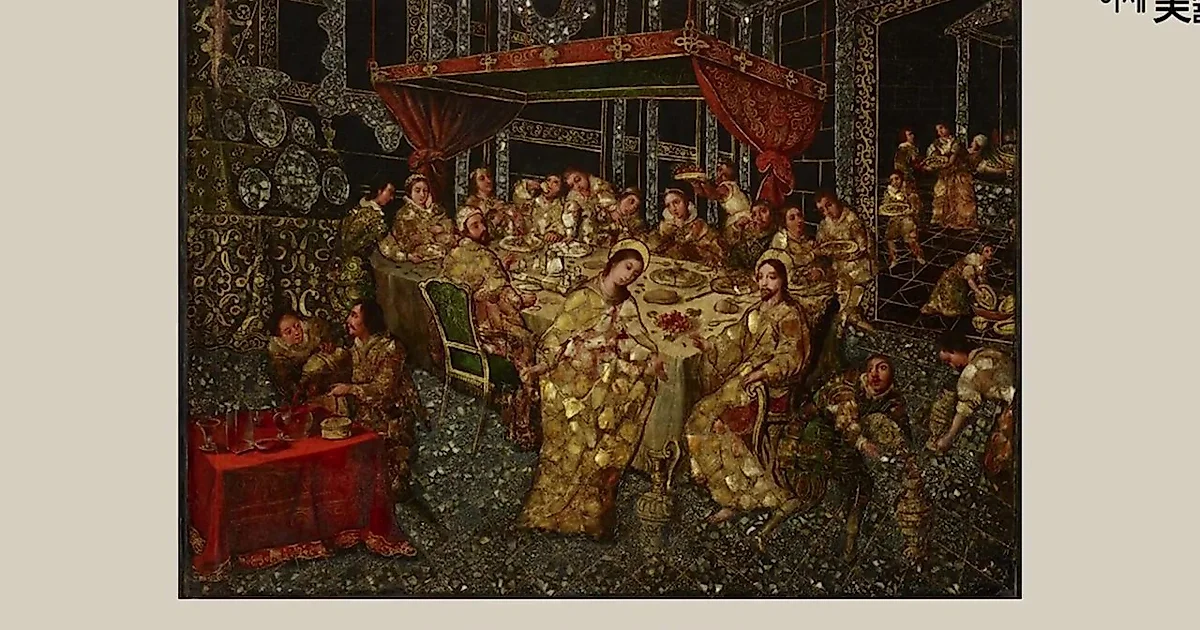
From September 22 to January 20, the exhibition '500 Years of Spanish Art: A Chronicle of Light and Darkness' will be held at the Hangaram Art Museum, Seoul Arts Center. The Heose Museum channel, in an exhibition preview video, selected this exhibition as a highly anticipated event for the second half of the year at the Seoul Arts Center and summarized the key viewing points. According to the video, this exhibition includes 95 works, ranging from the three great classical Spanish painters—El Greco, Velázquez, and Goya—to the painter of light, Sorolla. The exhibition is said to compress 500 years of history into six sections, from medieval religious paintings to the Golden Age, Goya and Romanticism, genre paintings, and 20th-century Modernism.
The Hispanic Society, a Treasure Trove in North Manhattan, New York
The works in this exhibition are from the collection of the Hispanic Society Museum & Library in New York. Opened in 1908, this museum boasts the largest collection of Spanish and Latin American art outside of mainland Spain, making it the place where Spanish art is most extensively collected after Spain itself. With a collection of approximately 500,000 items, this is said to be the first time this collection is visiting Asia. The video introduces it as a hidden treasure trove located in North Manhattan, New York.
The person who completed this vast collection was Archer Huntington. As the heir to a prominent American railroad tycoon family, he fell in love with art after encountering the National Gallery, London and the Louvre Museum, Paris during a Grand Tour of Europe around the age of twelve, and became fascinated with Spanish culture during a trip to Mexico following his father. It is said that he subsequently studied Spanish, ancient manuscripts, history, and painting on his own. The video describes him not as a collector showing off wealth, but as a scholarly enthusiast who delved into culture, academics, and language. In 1904, at the age of thirty-four, Huntington established a center in North Manhattan, New York dedicated solely to Spanish and Latin culture, which officially opened in 1908.
Renaissance Spain and the Toledo Painter, El Greco
Aside from the officially released exhibition themes, the presenter set their own criteria and designated the first theme as 'The Isolated Renaissance of Spain.' After Queen Isabella unified Spain in 1492 and sent Columbus to the New World, Spain and Portugal, which were previously treated as peripheral, rose to the forefront of the Age of Discovery, and Spain reached its peak in the 16th century with its invincible armada. However, due to a strong, closed Christian culture and pure-bloodism, it was the most conservative and closed country in Europe, and most Spanish painters at the time could not break free from the framework of religious paintings inherited from the Middle Ages. Therefore, while their military power was the strongest, it is explained that they imported paintings or brought in foreign painters to paint.
During this time, a Greek painter who could not find a place in late Renaissance Italy settled in Toledo. This was El Greco. The presenter states that since he reached his peak in Toledo, he should essentially be viewed as a Spanish painter, or more accurately, a Toledo painter. It is ironic that paintings that were ahead of their time emerged from Toledo, which was the most closed religious city in Europe. His paintings, characterized by distorted bodies and grotesque colors, are extremely modern, giving the impression of foreshadowing German Expressionism around the time of World War I; it is also said that Picasso was significantly influenced by El Greco, and it was El Greco's paintings that provided direct inspiration for 'Les Demoiselles d'Avignon'.
There is also a behind-the-scenes story. El Greco originally wanted to become a court painter in Spain, but his first royal work, painted to please King Philip II, was rejected. He subsequently turned his eyes toward the cathedral where the Archbishop of Toledo was located and met clients for life. While the presenter noted they do not yet know which specific works will all be present, they pointed out the works one by one, suggesting that quite a few El Greco paintings seem to be coming this time.
The 1585 work 'The Holy Family' is a piece where the brushwork expressing the thin, translucent lace veil worn by the Virgin Mary in oil is considered to be of the highest difficulty. The icon of 'Nursing Madonna', where she directly nurses the infant Jesus, is explained as an unusual case in Toledo, Spain, during the Counter-Reformation period when every icon was subject to theological censorship. The 'Pietà', presumed to have been painted in Rome between 1574 and 1576, is a work that imitates the composition of two Pietàs by Michelangelo through engravings, showing El Greco during his period of practicing in Rome before becoming a master. In the 1600 work 'Saint Jerome in Penitence', one can see typical icons such as a red hat, red clothing, a skull, and a cross; the skull and hourglass symbolize the transience of life, or Memento mori, while the book and pen symbolize academic achievements.
The 'Portrait of Fernando Álvarez, Duke of Alba', painted by the Flemish Habsburg royal portraitist Anthonis Mor, was also introduced. The model, the 3rd Duke of Alba, was a figure who served as the Governor of the Netherlands and ruthlessly suppressed the Protestant rebellion, earning the nickname 'The Iron Duke'. The presenter recommended enjoying the fun of looking at the delicate metal details of the armor.
The 17th Century Golden Age and the Realism of Velázquez
The next theme chosen by the presenter is the 17th-century Golden Age of Spain. While Spain had long since seen the sinking of its invincible armada and was in political and economic decline due to continuous wars and financial ruin, art exploded in the opposite direction. It is explained as a period that reached a cultural peak as masters like the royal court painter Velázquez and those from Seville, such as Zurbarán and Murillo, appeared all at once.
Velázquez, who was from Seville and was the court painter for Philip IV, is the flagship painter of the Prado Museum. It is said that 'Portrait of Cardinal Camillo Astalli-Pamphilj' is a work he painted during a business trip to Rome in 1650. The model, Camillo Astalli, was a protagonist of sudden rise to power who filled the vacancy after the Pope's nephew abandoned his cardinal position to marry, receiving the surname Pamphilj from the Pope; however, within a few years, he was stripped of all status and his family name and was expelled from Rome. The presenter noted that the appearance of wearing the hat slightly tilted is interesting, explaining that Velázquez's realism style is the use of light that is truly natural like a photograph compared to the previous Renaissance era.
Velázquez's 1640 work 'Portrait of a Young Girl', considered the Mona Lisa of the Hispanic Society, was also introduced. It is the only portrait of a child, rather than a royal, painted by a painter who spent his life primarily painting royal families or court figures, and because it is only written as 'one girl' in the inventory list, it is still not known exactly who she is. Many scholars speculate she might be Velázquez's granddaughter. However, the presenter predicted that since this is a flagship painting, it might not be lent this time.



Comments 0