
ACMI, a 'Screen Culture' Museum where Two-Thirds of Visitors are Under 35
ACMI is redefining itself as a hub for 'Screen Culture' by using digital technology to expand visitor experiences and attract a younger demographic.
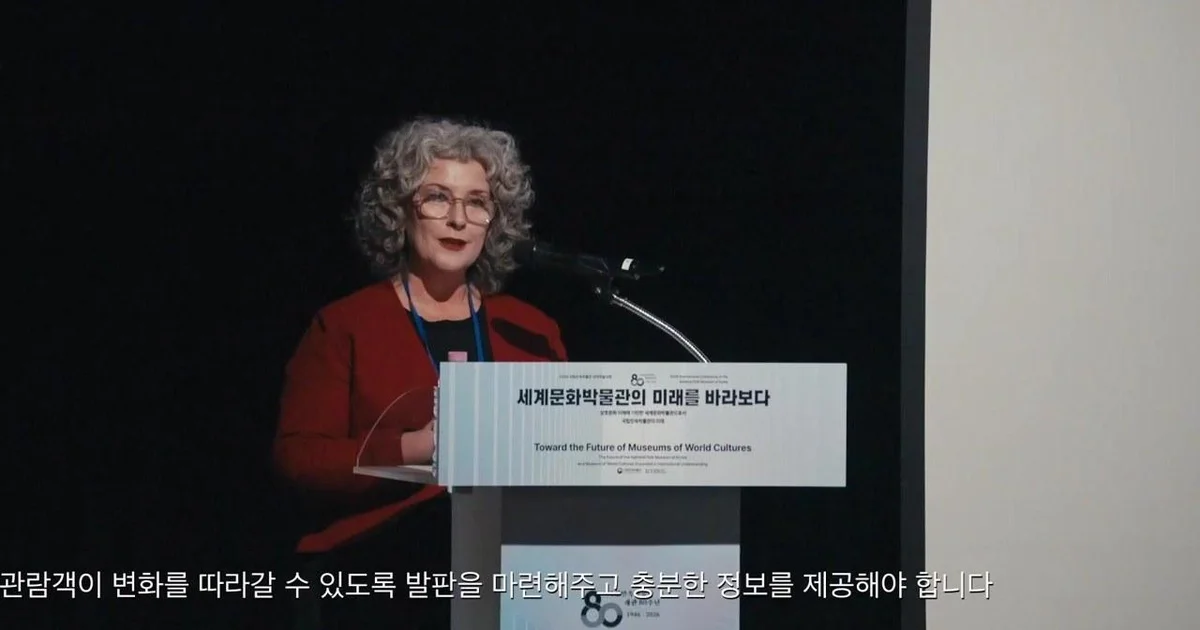
ACMI is expanding visitor experiences using digital technology and redefining the museum as a hub for 'Screen Culture', successfully capturing the interest of the younger generation. This content, presented at the '2026 International Academic Conference' hosted by the National Folk Museum of Korea, shows the museum's changing role, which prioritizes visitor needs over technology itself.
Dr. Britt Romstad of ACMI, "Digital technology should be a tool to solve visitor problems"
Located in Melbourne, Australia, ACMI opened as a new media art center in 2002 and recently reopened in 2021 as a 'Screen Culture Museum' following a major redevelopment. Speaking as a presenter in Session 2 of the '2026 International Academic Conference' held at the main auditorium of the National Folk Museum of Korea, Britt Romstad, the Head of Visitor Experience and Engagement at ACMI, stated that ACMI takes film, TV, video games, and screen-based arts as its primary areas of exploration.
Dr. Romstad emphasized that museums must move away from the perception that they are simply places to store artifacts of the past. She explained, "Unlike the outdated view of seeing a museum as a repository for old objects, we are a story-based institution," and described how the museum serves as a place for 'Digital Literacy' education to help visitors understand and navigate the rapidly changing digital world. In particular, ACMI supports the competencies required in the era of digital transformation and even defines itself as a 'Digital Literacy Museum'.
66% of Visitors are Under 35... Space Designed for the Youth and High Satisfaction
The most striking feature of ACMI is its visitor composition. As of last year, it was found that approximately two-thirds (66%) of ACMI visitors are under the age of 35. This is a highly unique figure compared to the average of 35% for visitors under 35 among all museums and art galleries in Australia. Dr. Romstad mentioned that this is "a major differentiator unique to our museum."
This high level of engagement from the younger generation is because the museum provides a space where they can stay and communicate with friends or family, rather than just a place to view exhibitions. ACMI focused on designing spaces where visitors can relax comfortably and engage in social activities. In fact, 98% of the visitors who participated in the survey responded that they were satisfied or very satisfied with their visit, and 13% of visitors were visiting a museum or cultural institution for the first time in their lives.
The museum's facilities have also been diversified. The four exhibition spaces run self-curated exhibitions alongside commissioned external works, and are equipped with two cinemas upgraded to 4K and laser projection facilities. Additionally, it operates dedicated facilities for the digitization and preservation of analog and digital media, and strengthens its educational functions by running the state-of-the-art technology-based 'Learning Labs', which are visited by approximately 100,000 students and teachers every year.
The Purpose of Technology is 'Solving Visitor Problems' and Data-Driven Decision Making, Not 'Showing Off'
ACMI's digital strategy is focused on improving the visitor experience rather than showing off technological prowess. Quoting the philosophy of Lucy Patterson, who is in charge of ACMI's digital products and interaction design, Dr. Romstad emphasized, "Digital is not simply about showing what is possible, but about solving people's problems." To this end, ACMI places its technology team at the center of experience and engagement units and promotes data-driven decision-making.
In particular, ACMI operates a separate 'Audience Research Unit' to deeply understand the visitor journey and shares the insights gained here throughout the entire organization. All visitor touchpoint services, including digital products, education, and marketing, are designed according to three principles: 'Legibility', 'Accessibility', and 'Memorability'. The fact that 90% of visitors perceive ACMI as an innovative and experimental place shows that this approach has been effective.
In conclusion, ACMI aims to be a 'future-oriented museum' that helps visitors explore the changing world and acquire the competencies needed in the era of digital transformation through digital technology.


Comments 0