
Kim Dong-hee Solo Exhibition at Un-gyeong Historic House: A Radical Exhibition Excavating 6 Tons of Soil and Bringing the Attic Outside
Artist Kim Dong-hee is holding a solo exhibition titled "The House Arrived at Again" at the Un-gyeong Historic House in Jongno, Seoul…
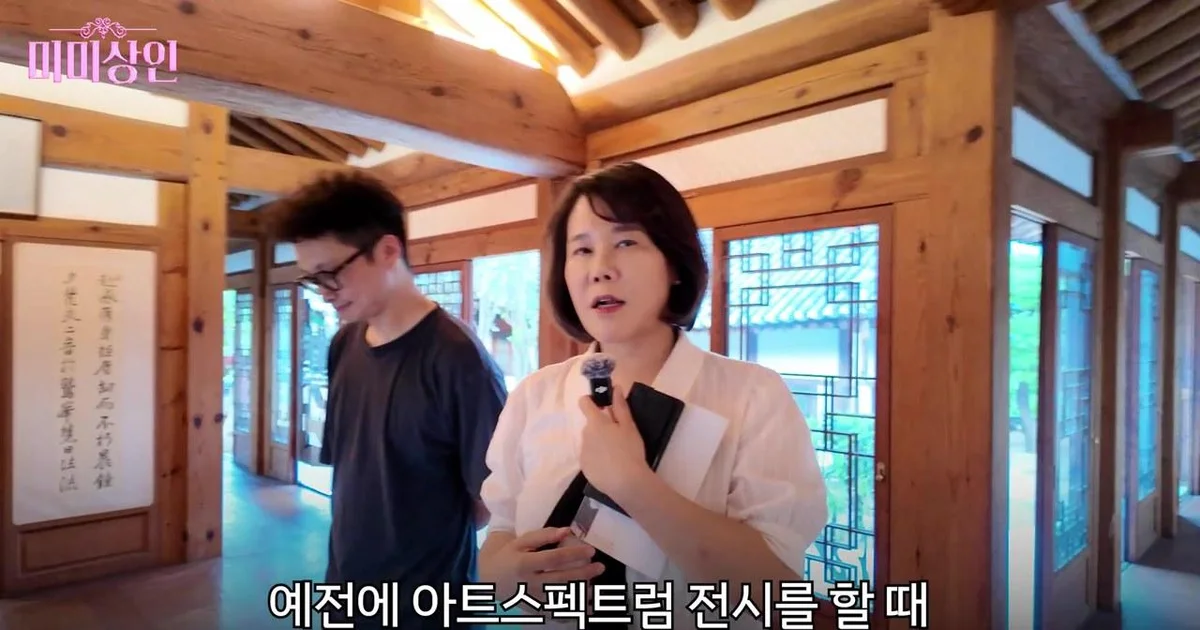
In a quiet Hanok in Jongno, Seoul, the 'Un-gyeong Historic House', which is usually difficult for the general public to visit, has opened its special doors that only open once every two years. This place, which was purchased and inhabited by the 12th National Assembly Speaker, Un-gyeong Lee Jae-hyeong, in 1953, is also the site of 'Dojeonggung', where Deokheung Daewongun of the Joseon era and his descendants lived for generations. In this exhibition, the solo exhibition 《The House Arrived at Again》, which artist Kim Dong-hee prepared while visiting this place for two years, is underway.
A Radical Attempt to Excavate 6 Tons of Soil and Bring the Attic Outside
This exhibition takes on the character of a 'two-person exhibition' where the space and the artist's work are closely intertwined. Artist Kim Dong-hee went through a process of implementing spaces imagined through computer programs into the actual terrain. Particularly eye-catching is the radical work utilizing the topography of the courtyard. To visualize the gaze looking from the main house (anchae), the artist performed work to lower the ground, and the amount of soil produced in this process reached as much as 6 tons. The excavated soil is currently being stored in a warehouse.
Furthermore, the 'attic' space, which was strictly restricted in the past and could not be climbed by just anyone, was pulled outside in the form of an artwork. This structure, named 'Inverted Attic', was produced by reversing left and right using data from the attic. This is an implementation of the experience of not being able to go up to the attic in the past through artistic imagination, and it serves as an observatory where visitors can view both the exterior and interior of the historic house simultaneously.
Sculptural and Mapping Works Following Topography and Gazes
The exhibited works actively reflect the topographical characteristics and historical context of the Un-gyeong Historic House. The structure titled 'Six-part Circle. Excavation for the Circle' was produced reflecting the gaze looking from the main house toward the main gate. In areas where the terrain is low, long pillars were erected, and in high areas, short pillars were made to visually reveal the ups and downs of the ground. Through this, visitors experience the flow of gazes crossing over the walls.
The mapping work containing the history of the historic house is also noteworthy. The artist combined map data from different eras onto one screen, centered around the Un-gyeong Historic House. The buildings that coexisted in each era were distinguished through the colors of the trees, and the location of Geunjeongjeon Hall of Gyeongbokgung Palace and even the errors in the maps are expressed as they are to show the changes of the eras. This serves as a device to show the contrast between the surrounding environment, which has changed rapidly, and the Un-gyeong Historic House, which has maintained its appearance since its establishment in 1953.
Works in the form of furniture, made by converting the shape of the pond into data, are also on display. This work, made using the difference in water surface height, is designed to make visitors feel as if they are leaning against the pond. Utilizing the characteristic of the Hanok where the boundary between inside and outside is subtle, the artist induced visitors to face the shape of the outer pond with the heart of being indoors with shoes removed.
A Special Viewing Experience at Un-gyeong Historic House Operated by Reservation
According to the mimisangin video, during this exhibition period, the Un-gyeong Historic House is open to general visitors by reservation. It is operated five times a day, limited to 20 people per session, and the viewing time per session is approximately 1 hour and 20 minutes. A total of only 100 people per day can experience this special space.
The works installed in the guest house (sarangchae) are works that the artist brought after modifying them to fit the environment of the historic house from works previously presented in other spaces. By placing works where the window frame sizes match, or through the 'White Line' work that expresses the gaze from the main house to the guest house in a curve, it allows for a new way of looking at every corner of the historic house. This exhibition, which continues until October 31, 2026, provides a unique time where the scenery of the historic house and the artist's sculptures engage in a conversation.
Comments 0