
Tesla Model Y Fastest with 5.8-Second Acceleration... Comparison Results of 3 Electric Vehicles
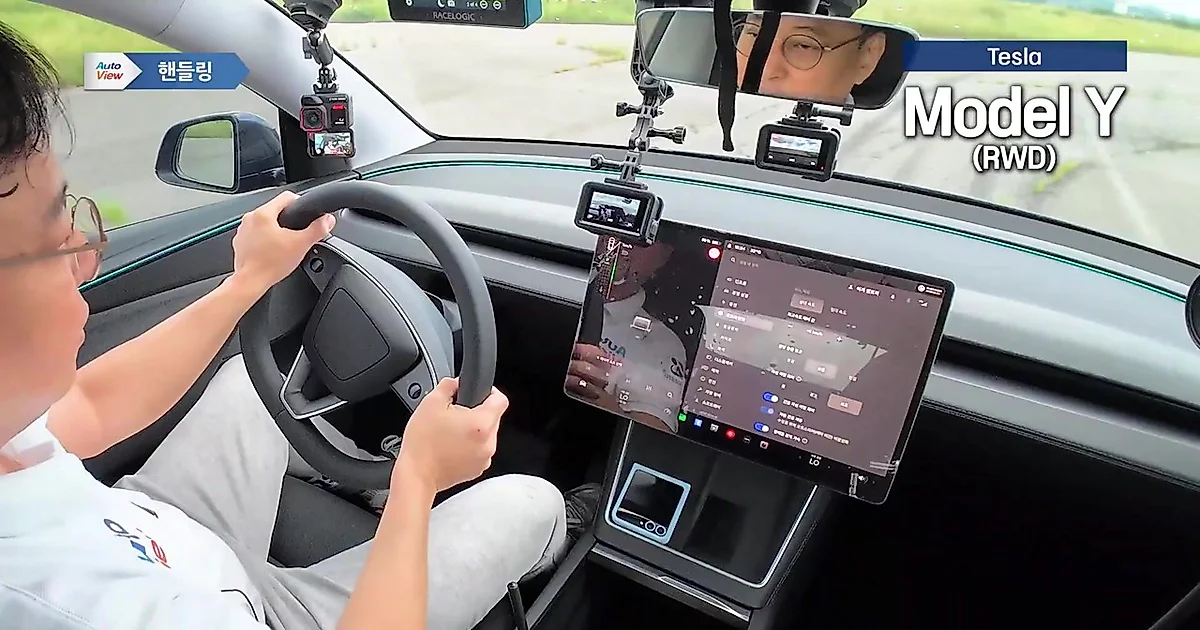
The driving performance and convenience features of the Tesla Model Y, BYD SEALION 7, and Kia EV5, which are key competing models in the electric vehicle market, were compared through precise measurement. According to the AutoView - Car & Tire Buying Guide video, the Tesla Model Y led in acceleration performance, while the Kia EV5 received the best evaluation in terms of ride comfort.
Tesla Model Y Records 5.8 Seconds for Zero to 100km/h, SEALION 7 Has Shortest Braking Distance
As a result of the acceleration performance test reaching 100km/h from a standstill, the Tesla Model Y recorded 5.8 seconds, showing the fastest acceleration among the three models. The BYD SEALION 7 recorded 6.65 seconds, and the Kia EV5 recorded 8.18 seconds. The Model Y recorded a figure 2.38 seconds faster than the EV5, revealing the performance gap between single-motor electric vehicles.
In braking performance, differences depending on the tire type were identified. The EV5 and Model Y use all-season tires (Kumho TA91 EV, Crugen HP71 EV), while the SEALION 7 is equipped with summer tires (Continental EcoContact 6) produced in a China factory. The shortest braking distance from 100km/h to a complete stop was 36.40m for the SEALION 7, followed by 38.7m for the EV5 and 39.82m for the Model Y.
Driving Stability and Ride Comfort: Model Y Focuses on 'Stability' while EV5 Focuses on 'Ride Comfort'
In the handling performance test under conditions where load changes occur during cornering, the Model Y showed the most decent control capability. The EV5 showed a reasonably good performance, but the SEALION 7 appeared to be the most unstable among the three models, as the rear suddenly swung out the moment the turn began. In particular, in the case of the SEALION 7, a phenomenon where it turned in the opposite direction after counter-steering was observed, indicating a need for improvement.
In terms of high-speed driving stability, the Model Y was the best. The Model Y had the best straight-line stability and proceeded stably by quickly processing impacts even when encountering bumps. On the other hand, the EV5 and SEALION 7 experienced body wobbling when encountering bumps during high-speed driving. In particular, the SEALION 7 showed a characteristic where this phenomenon repeated even with slight bumps.
The target direction for ride comfort differed by model. When driving over continuous bumps, the ride comfort felt by passengers was best with the EV5, followed by the SEALION 7. The Model Y was confirmed to be a type that focuses on stability rather than ride comfort, giving a somewhat firm and disciplined feel when crossing bumps. However, the sensation of crossing speed bumps was best with the SEALION 7, and the EV5 showed a level comparable to it.
Battery Capacity and Driving Range: Model Y Has the Highest Efficiency
Looking at the power unit and battery efficiency, the characteristics of each model are distinct. The Kia EV5 has a certified driving range of 460km based on 19-inch wheels, making it able to travel the furthest among the three models. The BYD SEALION 7 Plus is equipped with an approximately 82.5kWh class LFP Blade battery, making it the largest in battery capacity among the three models. The Tesla Model Y RWD uses an approximately 62kWh class battery, but its combined energy efficiency was the highest at 5.6km/kWh based on 19-inch wheels, showing the best performance in terms of energy efficiency.
Differences exist in convenience features by model. All three models are equipped with essential basic equipment such as heated and ventilated front seats and heated rear seats. Instead of providing a Head-Up Display (HUD) and an electric roof shade, the Model Y is equipped with a touchscreen in the rear seat. Regarding the V2L function, the EV5 can be used both inside and outside, and the SEALION 7 can be used outside, but the Model Y does not support this function.
Related Articles

Storage devices up 46.8%, outpacing computers and tablets... The difference indicated by DRAM and NAND outlooks

Kim Han-yong's MOCAR reveals Tesla Model 3 with gold color PPF decided by subscriber vote

BMW i7 Driving Experience: Cruise Control Performance Smoother Than Tesla Autopilot
Aston Martin DBX S features 727-horsepower V8 engine and carbon ceramic brakes
At the IAA Motor Show in Germany, FAW's Concept Truck Features a Living Room-like Interior and Autonomous Driving Technology

'Half Hyundai, Half Parts Supplier'... The Reason Why 42dot is Called 'Tier 0.5'

Costco Shopping Spree of 1 Million Won: Meat Preparation and Ingredient Utilization for the Holidays
Olight Marauder 3: New Product Features Real-Time Usage Time Display
Apple AirPods 5 Increases Cost-Effectiveness with Enhanced Bass and 1.5x Improved ANC

iPhone 18 Pro Case Comparison: Spigen Air Skin MagFit Offers Low Discoloration and Strong Magnetic Strength
Mercedes-Benz electric MPV VLE features design maximizing space utilization with 8-seater seat rails

AirPods 5 Released: Lower Price Than Previous Model with Improved Noise Cancellation Performance

iPhone Duo starts at 3.29 million won; 4 decisive drawbacks identified by actual user

Xiaomi 18 Fold features proprietary Xring O3 chipset to enhance performance and software maturity

Sorento, Carnival, and Sportage Black Edition: Beyond Color Changes to Differentiated UI and Interior Materials

Colorless, Preservative-Free Gangjeong and Chestnut Tea... 5 Types of Local Agricultural Processed Foods Introduced by the Rural Development Administration
Olight Oclip Ultra 2 Enhances Night Running Convenience with 360-Degree Rotating Head

'Panic Full' Issue Occurs on iPhone 18 Pro During Face ID Recognition, Causing Restarts

Tesla Model Y Purchase Dilemma: The Decisive Reason for Choosing It Over Hyundai Motor Company

Comments 0