
Review of the PARKSEOBO MUSEUM Opening Exhibition: Capturing 1990s Works and the Evolution of the Ecriture Series
The PARKSEOBO MUSEUM has opened in Yeonhui-dong, Seoul, to honor the artistic legacy of Korean Dansaekhwa master Park Seo-Bo.
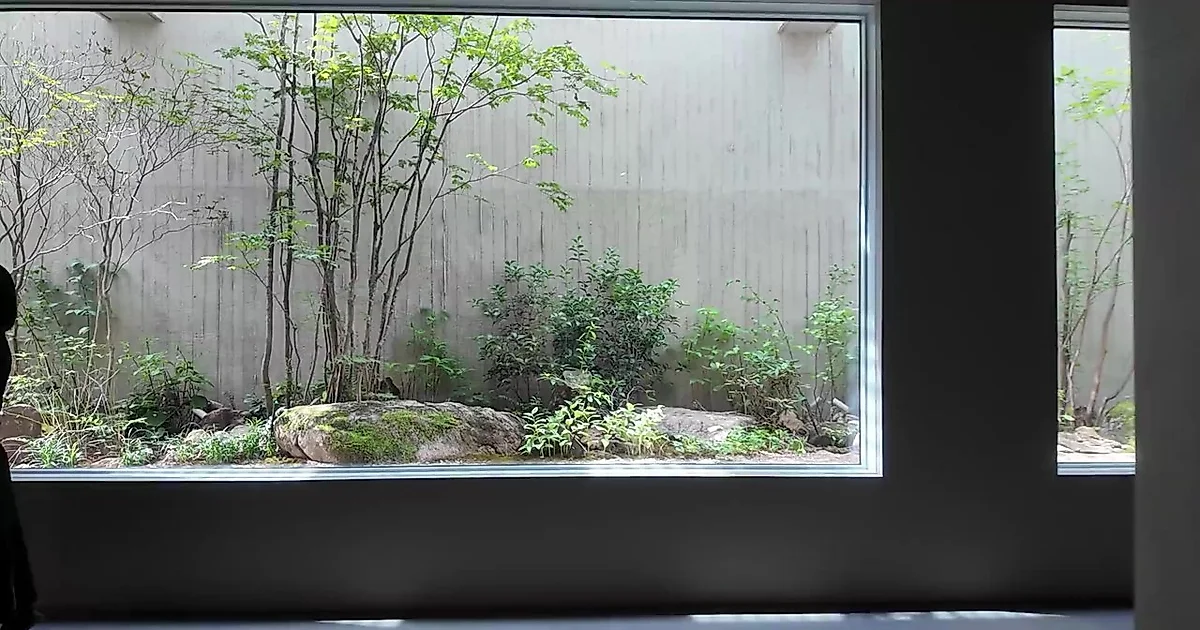
The 'PARKSEOBO MUSEUM', which honors the artistic footsteps of the master of Korean Dansaekhwa, Park Seo-Bo, has opened in Yeonhui-dong, Seoul. According to a video released on the Heose Museum YouTube channel, this museum was planned as a space where one can feel his final breath, as it is located right next to the artist's studio during his lifetime. We examine the architectural features of the museum and the changes in the artist's world of works, centered around the opening exhibition 'Park Seo-Bo and Hung Dinh: Emptiness, the Fullness'.
Park Seo-Bo's traces settled in Yeonhui-dong and the spatial composition of the museum
The PARKSEOBO MUSEUM is located near the studio where the artist was active during his lifetime and opened on August 21, 2026. Although originally planned as a small-scale memorial hall, it was expanded to its current scale as the plan to establish a public museum for the artist fell through and additional land was secured. This building, designed by architect Chae Moon-gyu, consists of a total of 5 floors from the 2nd to the 3rd floor, and adopts a structure that brings nature indoors by placing a garden on each floor. The movement line starting from the basement and going upward contains the intention of taking root in the ground and having life force stretch upwards.
The exhibition space is divided into three 'Spaces'. In the second basement floor 'SPACE Ø', works from the 1990s by Park Seo-Bo and the Vietnamese painter Hung Dinh are exhibited side by side. While the two artists share minimalist tendencies, their methods of expression are opposite. While Park Seo-Bo's method involves creating lines by pushing wet Hanji, Hung Dinh uses a method of layering mineral pigments. The 2nd floor 'SPACE 2' shows the process of transitioning from Park Seo-Bo's black and white Hanji Ecriture to colored Hanji Ecriture, and the 3rd floor 'SPACE 3' utilizes an 8m high cube space for an exhibition themed 'The Last White'.
Meeting Hung Dinh and the artistic evolution of Park Seo-Bo's Ecriture
The unique aspect of this opening exhibition is that it is not a solo exhibition of Park Seo-Bo, but a two-person exhibition with the Vietnamese painter Hung Dinh, whom he met three months before he passed away. Hung Dinh is an artist with a dramatic narrative who appeared in the art world only in his late 70s, and he adheres to a unique working method of layering pigments he grinds himself without chemical additives onto canvas. While the two artists share the Dansaekhwa commonality of 'repetition and restraint', they compose the screen with different materials and methodologies.
The world of Park Seo-Bo's works underwent dramatic changes depending on the era. During the early 'Art Informel' period, which contained the scars of the Korean War, atypical paintings with rough and dark textures were predominant. The 'Anti-National Art Exhibition' declaration, which rebelled against the National Art Exhibition of the Republic of Korea, the highest authority at the time in 1956, shows that he was an artist challenging the established art world. Afterwards, he continued experiments with color and form through the 'Primordialis' and 'Hereditarius' series. In particular, the 'Ecriture' series, which began in 1967, was inspired by the act of his son scribbling on paper while writing. This contains the meaning of 'writing', and subsequently expanded from pencil Ecriture to Ecriture using the texture of Hanji, and then to colored Ecriture inspired by the autumn leaves in Fukushima, Japan in 2000.
Regrets regarding the museum space and considerations on artistic evaluation
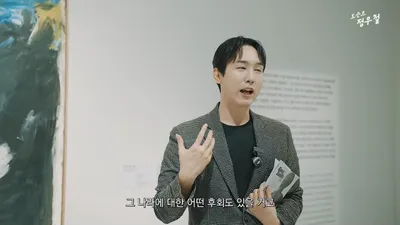
The video mentions some regrets regarding the spatial perfection of the museum. In the case of the 3rd-floor cube space, while there was an attempt to reproduce the natural white light of Joseon white porcelain or hemp, an opinion was presented that the artificial gray tone of the newly built building is strongly felt in reality. While the foundation intended to capture the white light of Joseon white porcelain or hemp, the video pointed out that rather than the subtle light of ceramics, it gives an artificial feeling as if a gray tombstone has been placed, and expressed hope that this could be supplemented in the future through the scent (fragrance) of the space.
Additionally, there is a point that the composition of the opening exhibition is somewhat limited to illuminate the artist's entire life. In the current exhibition, the artist's early Art Informel or pencil Ecriture series are missing, so it is evaluated as having a narrower scope compared to the retrospective exhibition at Kukje Gallery, which shows all 50 years from the 1960s to the recent period. Regarding the artist's later works, critical perspectives are also presented. While his steps in using various colors and continuing popular collaborations hold great meaning in the art market, on the other hand, questions are raised whether his working method is flowing into a commercial style close to mass production without groundbreaking changes.
However, the PARKSEOBO MUSEUM stated that this place will go beyond simply being a place to honor the artist and will become a space that continues the value of 'discovering and educating young artists' that he practiced throughout his life. In the future, they plan to inherit Park Seo-Bo's artistic spirit by operating special exhibitions for emerging artists and various educational programs.
Comments 0