
Grindelwald Chalet Accommodation Costs 2.8 Million Won for 4 Nights... Alps Trekking Course Information
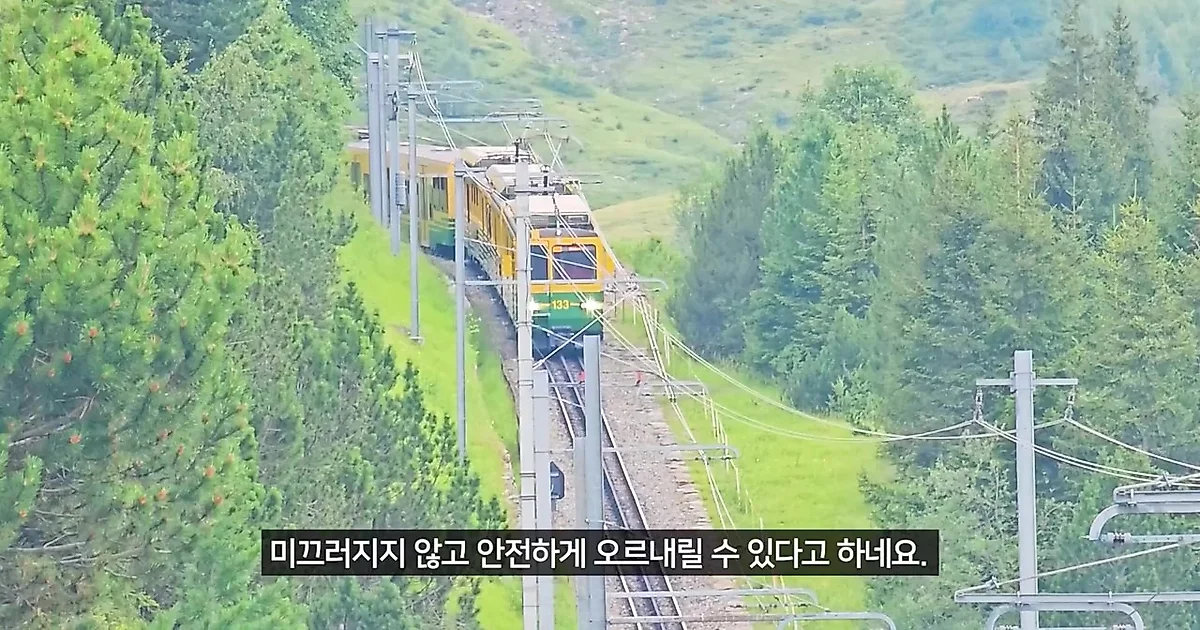
If you are planning a walking trip while enjoying the magnificent scenery of the Swiss Alps, it is important to understand the types of accommodation and the characteristics of transportation in advance. A YouTube video introduces trekking itineraries and local accommodation and transportation information, centered on Grindelwald, a representative village in the Swiss Jungfrau region, and the pollution-free village of Wengen.
Traditional Wooden 'Chalet' Accommodation and the Scenery of Grindelwald
Grindelwald, located in the Jungfrau region of the Canton of Bern, Switzerland, is a representative mountain village situated at a high altitude of over 1,000m above sea level. The residential style here is characterized by traditional wooden houses called 'Chalets.' Originally, chalets were mountain huts where shepherds stayed temporarily during the summer to raise cattle in high-altitude Alpine pastures and produce dairy products like cheese or butter, but they have now established themselves as a unique residential form representing the Swiss landscape. They feature gabled roofs with eaves that extend far outward and have exteriors made of sturdy wood.
The video shows a case of staying for 4 nights in a chalet located about a 10-minute walk from Grindelwald Station, paying approximately 2.8 million won for accommodation. Considering the high cost of living in Switzerland, a well-located chalet can exceed 700,000 won per night. Outside the accommodation window, magnificent mountain ranges such as Mount Eiger, Mönch, and Schreckhorn unfold.
Frequent Transfers and Transportation Using Cogwheel Trains
Switzerland's railway system boasts world-class punctuality and convenience, but it differs from the KTX-centered high-speed rail network in South Korea. While South Korea focuses on high-speed rails exceeding 300 km/h, trains in Switzerland, which has much mountainous terrain, usually operate at levels around 180 km/h. Additionally, due to the rugged terrain, the types of tracks and trains are diverse, making transfers very frequent. However, the transfer system is perfectly established, making it convenient enough to board a train at the platform right next to where you disembark.
In the video, most public transportation was used with a 6-day Swiss Travel Pass, which was purchased for approximately 760,000 won based on the French exchange rate at the time. Compared to South Korea's 7-day Rail Pass (approximately 110,000 won), this makes one realize the high cost of living in Switzerland. To ascend mountainous terrain, 'cogwheel trains' are essential. These are trains that use special gears to move up steep slopes that regular railways cannot climb, and they can safely travel even steep inclents reaching up to 48%. In particular, some mountain trains operated by private companies, such as in the Bernese Oberland, allow windows to be opened, enabling one to enjoy vivid scenery while feeling the natural Alpine breeze directly.
The Pollution-Free Village of Wengen and Alps Hiking Programs
Wengen, one of the main bases for trekking, is a peaceful mountain village located at an altitude of approximately 1,274m. This is a 'pollution-free village' where the entry of general gasoline or diesel vehicles is completely prohibited, and it maintains clean air without noise as it can only be accessed via mountain trains. It is also known as a mecca for winter sports representing Switzerland, and one can feel the atmosphere of a cozy rural village with a small church.
Trekking can be done more safely by using hiking programs conducted by Switzerland Tourism. The video introduced a program where a South Korean university student guide accompanies for a cost of 30,000 won. It shows a route where, after looking around the scenery of Wengen village with the guide, one takes a cogwheel train to a higher altitude to begin full-scale Alps trekking. This journey began by departing from Dubrovnik Airport in Croatia and moving to Zurich Airport in Switzerland. Upon arriving at Zurich Airport, since it was a movement between European countries like Croatia, it was convenient to move without separate immigration inspection.
Related Articles
Swiss monthly salary is 11 million won, but a meal costs 100,000 won... The reason behind the murderous cost of living
Bernina Express: An Alpine Traverse Passing Through 55 Tunnels and 196 Bridges Over 144km
Day 6 of the TMB in the Alps: Breathtaking Swiss Scenery Amidst Heavy Rain

The Twist of an 80-Year-Old Mother: Why She Became the Center of a 30-Day Europe Camping Trip
Why Booking an Official Shuttle is Essential When Visiting Moraine Lake, Canada
Camper Van Transport from Busan to Slovenia Takes Two Months Due to War Aftermath

Oh Hyeon-gyu's Life in Türkiye, Daily Routine Spent in a Beşiktaş Apartment in Istanbul

A city of 500,000 with not even 1m of land connection to the outside... Iquitos in the middle of the Amazon
Tour du Mont Blanc Day 8: Finishing Trekking with a Cable Car Chance Due to Bad Weather Forecast for the Next Day
Swiss Rent 3.5 Million Won and Hourly Wage 50,000 Won... 3 Reasons for the Lethal Cost of Living

La Rinconada at 5,100m Altitude: Why People Endure Mercury Poisoning and Altitude Sickness for Gold
500 Yen from Fukuoka Airport to Tenjin: Check the New Direct Bus Route Launched in April
TMB Arpette Variant: Dangerous Section Where a 6–7m Fall Occurred
From Crossing the Albanian Border to Free Camping: The Local Reality Encountered via Motorhome
Dhaka, Bangladesh: Vibrant Daily Life Created by Commercial Districts and High Population Density Beside Railway Tracks
KwakTube visits Miami, the setting for GTA 6, comparing in-game locations with real-life views during a pilgrimage
A Day Trip to Tsushima
Problems You May Face While Traveling
Checklist for a Successful First Business Trip
Comments 0