
Senior Home Organization: For Safety, Place Daily Items Between Waist and Eye Level
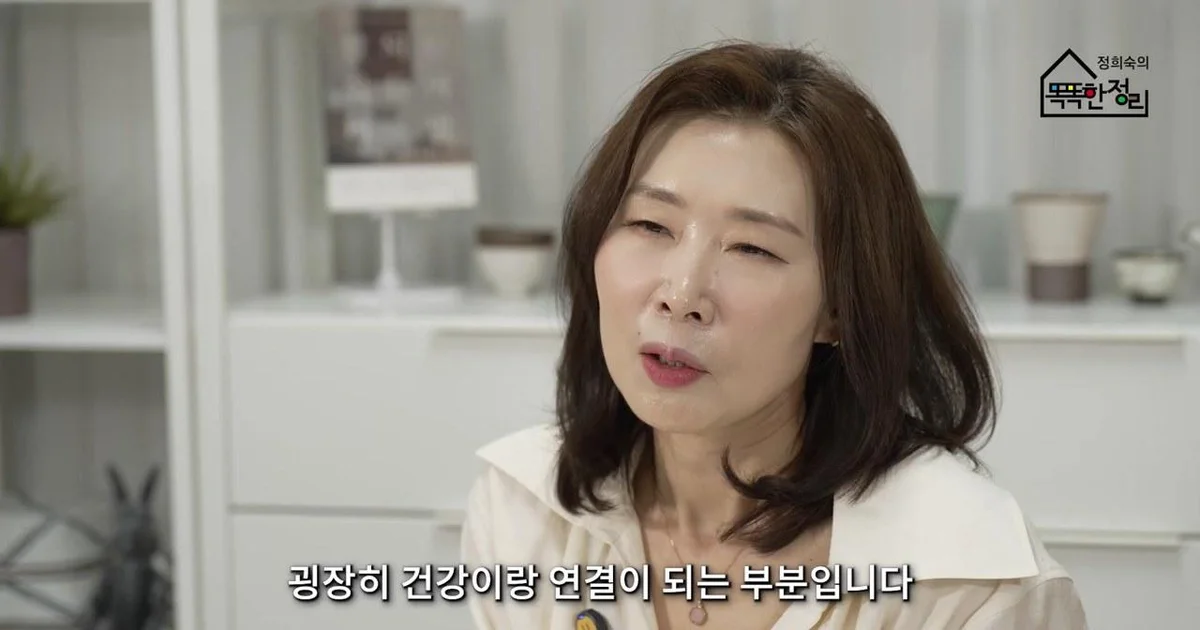
For seniors who spend more time at home due to children becoming independent or changes in lifestyle patterns, it is necessary to re-examine the arrangement of furniture and the location of items in the house. According to a video from the YouTube channel 'Jung Hee-sook's Smart Organizing,' to protect both health and safety, furniture must be adjusted to fit a person's life, rather than a person moving to fit the furniture. Organizing is not simply about clearing away items, but a process of contemplating how to live more comfortably in this house for the next 10 years.
Daily items: The 'Golden Zone' is between the waist and eye level
One of the cases frequently observed by organizing experts in the field is when items used daily are located excessively high up. Items used three or more times a day, such as rice bowls in the kitchen, frequently used cups, or daily side dish containers, should occupy the most convenient spots. At this time, the most ideal location is from the waist to eye level, a place that is easily reachable when naturally reaching out one's hand.
On the other hand, it is good to place light and frequently used items in high places. However, caution is needed if one has the habit of using a bathroom chair or a step stool to take items off high shelves. The video points out that using a chair to take items off a high shelf can be dangerous. Bringing a chair to use a shelf is not a fundamental solution; the solution is to move the items on the high shelf to a lower place.
The weight of an item is also an important criterion for deciding placement. For items with weight, such as pots, frying pans, heavy dishes, or small appliances, putting them in a cabinet is not necessarily the answer. The heavier the item, the more its position should be set so it can be easily taken out at once. If the structure requires one to move several other items in front to take out a single item, or requires one to squat on their knees, it is a wrong arrangement that harms joint health and wastes time. The core point of organizing is that finding items should not be difficult and they should be easy to find.
Furniture that blocks movement and preventing nighttime accidents
Furniture arrangement goes beyond the issue of simply storing items and is directly linked to movement paths. If lifestyle patterns have changed, the location of furniture should be adjusted accordingly. In particular, in spaces used frequently, efficiency increases when there are no obstacles hindering movement. If a person has to move while avoiding furniture, it is a wrong arrangement. When arranging furniture, one must check whether there are elements blocking one's movement path.
Additionally, arrangement considering nighttime safety accidents is essential. Even if there seem to be no major problems during the day, the position of furniture can lead to accidents during the dawn hours when moving while half-asleep. When just waking up, one's sense of direction may be blurred, which can lead to cases of bumping into furniture or falling when moving from the bed. Therefore, the corners of furniture must also be carefully examined, and if furniture is blocking a person's movement, its position should be adjusted immediately. Whether one bumps into something when opening a door is also an important check item.
If items keep coming out, doubt their 'location'
If items are piled up all over the house, it is highly likely that it is not simply a matter of tidiness, but because the location of the items is inconvenient. Many people encountered in the field say that they keep leaving items out because it is inconvenient to put them back after use. If it is difficult or cumbersome to put them back after use, that item is currently in the wrong place. If the structure makes it impossible to put things back in their place immediately after use, the location must be readjusted.
The core of organizing is not simply clearing away visible items, but first examining 'why they are in that place.' One should ask questions such as where they are wasting time and whether they are repeating unnecessary movements to take out a single item. Only when the house is adjusted to the person does the efficiency of life increase and physical fatigue decrease. Please start by positioning even a single pot you use frequently so that it can be easily taken out.
Related Articles

To Extend Galaxy Battery Life, Use 'Light Mode' and 'Battery Protection' Settings
When goose-neck faucet filters cannot be installed, an in-line filter under the sink is an alternative
Solve Groundwater Impurity Concerns by Replacing with an All-in-One Filter Faucet
Replacing USB Charging Outlets: How to Organize Neatly Without Adapters
The reason why adding two towels increases cleaning power when washing backpacks

Checking the size of the car behind you during lane changes helps identify the timing to merge
Kitchen upper cabinet shelf sagging: Reinforcement possible at any hole position using screw-type support pins
Organizing Expert Lee Jeong-won's Housekeeping Methods: Rediscovering Monitor Stands and Paper Shopping Bags

BODYFRIEND to Operate 55 Lounges and Pop-up Houses Nationwide During Chuseok Holiday

How to DIY Repair Worn Screws and Sagging Front Doors Using Professional Tools and Wires

How to remove a broken pipe thread inside a wall using a 1,500 won tool

Stricter Hospitalization Standards for Varicose Vein Indemnity Insurance: What Patients Must Check Before Treatment

Why Kitchen Organization Lasts Only When You Reduce Item Types Instead of Portioning Them
Housekeeping methods of a 58-year-old single-person household: Know-how to eliminate towel odors and bacteria using vinegar and EM
3 ways to securely hang hanging plant pots from gypsum board ceilings

10 Penalty Points for Failure to Use Turn Signals or Seatbelts... Intensive Traffic Law Enforcement to Begin in October

How to easily peel fresh chestnuts using 1kg of chestnuts, 1 teaspoon of baking soda, and a bottle cap

Proving Secondhand Smoke Damage in Apartments: 'Quantified Odor Log' Becomes Decisive

Pickleball: Why the Low Barrier to Entry Allows for Gameplay After Just 30 Minutes of Training
Comments 0