
Checking the size of the car behind you during lane changes helps identify the timing to merge
A driver with 20 years of accident-free experience shares practical driving tips for beginners on the YouTube channel 'Chagaemi'.
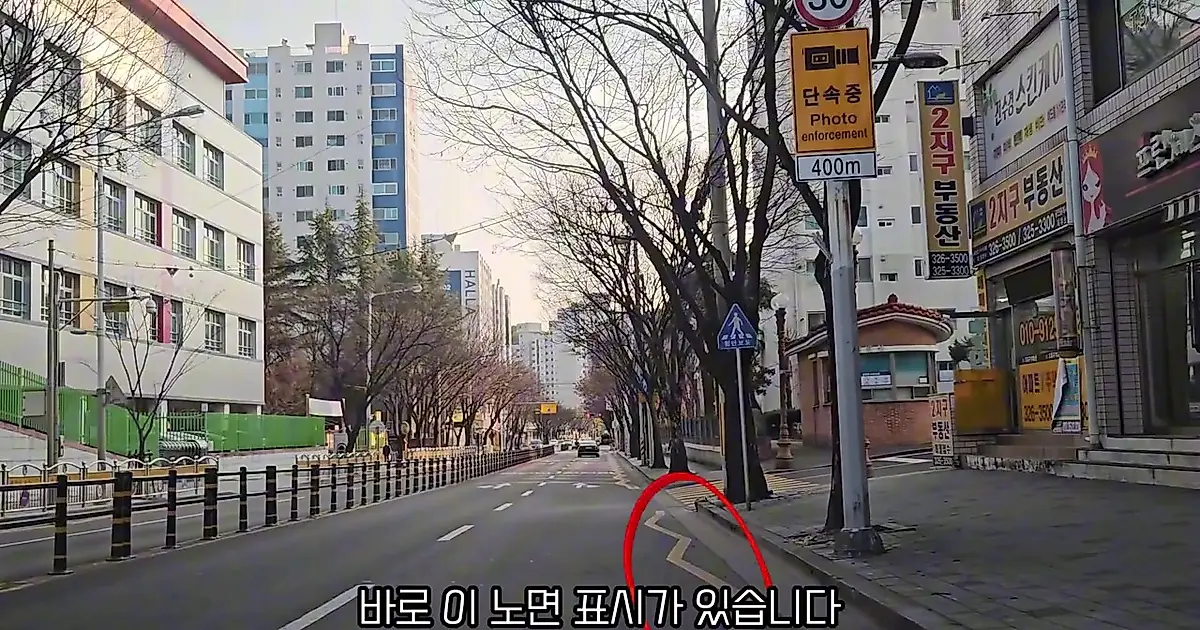
For beginner drivers who feel overwhelmed by driving, a driver with 20 years of accident-free experience has revealed practical know-how. According to a video from the YouTube channel 'Chagaemi', the start of driving is not simply grabbing the steering wheel, but begins with adjusting the seat to fit your body. The key is to adjust the distance between your hips and back so that both pedal and steering wheel operations are comfortable. In particular, when holding the steering wheel, do not tuck your thumb inside the wheel, but place it lightly on top of the wheel so that operation is not obstructed during rotation.
Specific methods to learn the center of the car and sense of width
For beginners who find it difficult to check if the vehicle is driving well in the center of the road, a method using the 'right foot position' was suggested. Once the driver has finished adjusting the seat, they should find the feeling where the position of the right foot while pressing the accelerator matches the center of the car. In the video, after checking by stopping the car on actual road lanes, it was shown that the position the right foot is pressing matches the center of the car exactly when driving comfortably without moving the head. This method is applicable to most vehicles, from light cars to large vehicles.
To learn the sense of car width, practice is needed to establish a reference point in environments like parking lots. After getting into the car with the front and rear wheels about 10cm away from the lane, one imagines the extension of the line visible on the dashboard or the tip of the wiper. The video introduced a way to create a reference point by attaching a sticker to the dashboard. Through the position where the sticker is placed, one can visually grasp whether the car is tilted toward the inside or the outside of the lane, which increases confidence during cornering or lane keeping. During driving, one can prevent leaving the road by checking whether these points pass while maintaining a constant distance from the lane.
'Body movement' strategies to prevent A-pillar blind spots and intersection accidents
The part most emphasized for accident prevention is 'moving your body directly to secure visibility.' The vehicle's A-pillar (the pillars on both sides of the windshield) can block the driver's view, causing them to miss pedestrians at crosswalks. In particular, when waiting at a stop line during a left turn, situations may arise where pedestrians are not visible due to the A-pillar. To prevent this, 'shoulder checks'—moving the body to secure a wide field of view beyond simply turning the head—are essential. When turning left, one must move the head left and right to check for pedestrians, and when turning right, one should not just look forward but turn the head back to scan for things like bicycles approaching from behind.
When passing through narrow roads or alleys, the judgment to pre-calculate where to yield when facing an oncoming vehicle is important. Rather than entering blindly, one should keep in mind the space to avoid when an opposing vehicle appears to avoid being flustered. For example, if one decides in advance whether to pull to the right when an oncoming car approaches and then operates, awkward situations can be avoided. Additionally, utilizing surrounding landmarks is also a method. It is possible to drive more safely by grasping the intention of the other party through light or shadows reflected in a shop window, or the movement of the opposing vehicle's wheels. On narrow roads, it is helpful for smooth passage to always drive by sticking to the right rather than occupying the center, and to have a mindset of yielding to others.
How to read the speed of the car behind when changing lanes
To prevent rear-side blind spot accidents that occur during lane changes, it is also important to adjust the angle by moving the body. To check the blind spot that cannot be seen in the mirror, a process of turning the head slightly to check at a wide angle is required. In the video, the importance of the body-using verification process was emphasized through a blind spot case where a vehicle that was not visible in the mirror appeared when the head was turned slightly.
A tip for grasping the intention of the car behind when deciding to change lanes was also revealed. When the turn signal is turned on, if the size of the car behind seen in the side mirror or window gradually increases, this is a signal that the car behind is approaching at a faster speed than oneself. In other words, it means the car behind has no intention of letting you in or is moving fast, so if you feel the car getting larger, do not enter forcedly but wait for the car to pass before changing lanes for safety.


Comments 0