
Proving Secondhand Smoke Damage in Apartments: 'Quantified Odor Log' Becomes Decisive
Lee Seung-yoon, a legal officer at the Mokpo Branch Office of the Korea Legal Aid Corporation…
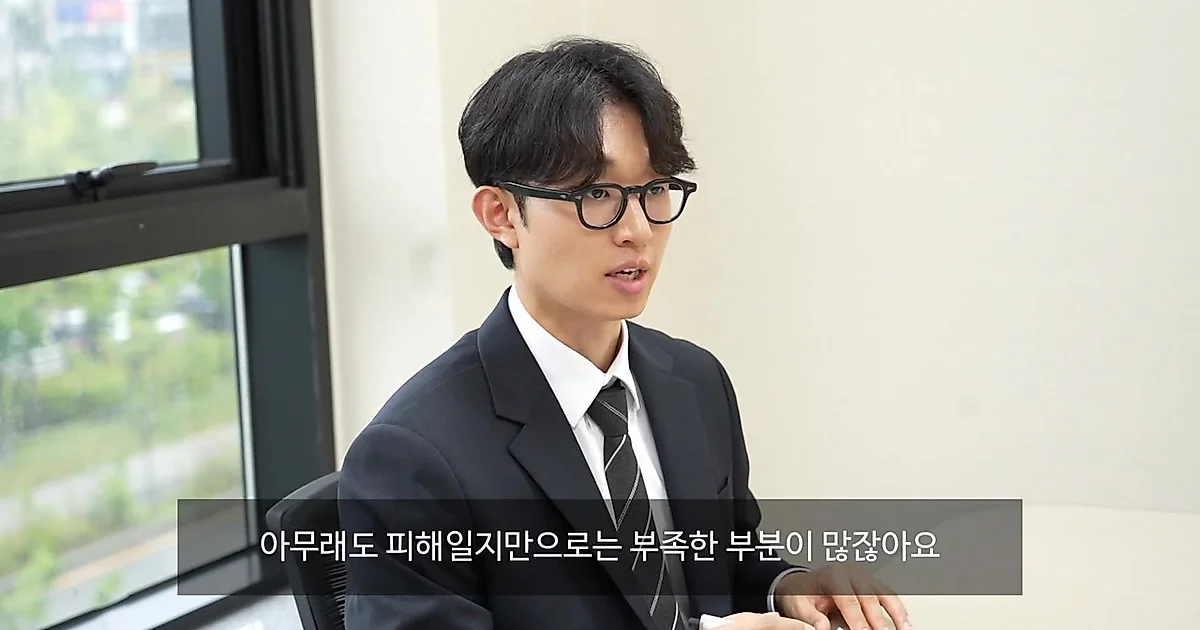
The issue of indoor smoking in corridor-style apartments goes beyond neighborly conflict and can lead to violations of the right to health. Recently, Lee Seung-yoon, a legal officer at the Mokpo Branch Office of the Korea Legal Aid Corporation, represented a pregnant couple suffering from continuous indoor smoking by their neighbor and led a successful verdict in a damages lawsuit. According to a Beopgugong TV video, the key to winning this case was how the invisible damage of secondhand smoke was objectively proven.
The power of a 'damage log' that recorded odor intensity in numbers
Since secondhand smoke is not physically visible in the form of smoke or odor, it is very difficult to prove the facts of damage in a legal battle. To overcome this, the newlywed couple, who were the clients in this case, wrote a very specific 'damage log.' In addition to recording when and where (veranda, entrance door, etc.) they smelled the odor, the victims quantified the degree of the smell on a scale from 1 to 10.
For example, they would mark an 8 or 9 if the smell was severe, or a 3 or 4 if the smell was merely detectable. These specific records became important evidence that objectively showed the persistence and intensity of the damage, rather than being vague claims. Through a video interview, legal officer Lee Seung-yoon explained that such a damage log played a crucial role in proving the facts of the damage in the actual lawsuit.
Management office work logs and the perpetrator's uncooperative attitude
In addition to the damage log, there were materials that helped the court's judgment. Since complaints were continuously filed through the management office, the 'work logs' written by the security guards played a decisive role. In the work logs, along with the details of the received complaints, there were detailed records of situations such as the perpetrator smoking indoors when the management entity visited the unit in question.
In particular, the perpetrator even made irrational claims such as "the cigarette smoke is not sent by me, but by a devil," but these remarks were also recorded in detail in the work log and were reflected in the court's judgment. Furthermore, records of the pregnant victim receiving medical treatment due to stress from secondhand smoke and concerns for the fetus's health were also submitted as evidence to support the facts of the damage. Legal officer Lee Seung-yoon mentioned that it was difficult to find registered precedents related to secondhand smoke, so there were many worries about the issue of proof initially, but the lawsuit could proceed smoothly thanks to the client actively taking and providing photos of the apartment interior and hallways, as well as no-smoking posters.
Violation of 'Recommendation to Stop Smoking' under the Multi-Family Housing Management Act leads to victory
The core legal aspect of this lawsuit was the 'Multi-Family Housing Management Act.' According to Article 20 (Prevention of Secondhand Smoke, etc.) of said Act, residents of multi-family housing must not cause damage to other residents due to smoking within indoor units such as balconies or bathrooms. Additionally, if a resident suffering from secondhand smoke notifies the management entity, the management entity may recommend that the resident stop smoking, and the perpetrator has an obligation to cooperate with this recommendation.
The court judged this as a tort based on the fact that the perpetrator did not stop smoking despite being aware of the management entity's recommendation, and ignored the apartment management regulations and no-smoking posters posted in elevators, entrances, etc. Ultimately, the court accepted the clients' claim for damages. It is known that the clients successfully gave birth to their child after the lawsuit result and are planning to move out after putting the house on the market due to continuous neighbor conflicts.
Meanwhile, Lee Seung-yoon mentioned through this case that the Corporation's work is very rewarding, and expressed that he applied to the Korea Legal Aid Corporation again thanks to good memories during his time at the Jeonju Branch and the consideration of his colleagues. The Korea Legal Aid Corporation is a public institution under the Ministry of Justice that provides various free legal services for the economically and socially vulnerable. Related consultations can be made by dialing 132 without an area code.

Comments 0