
390-ton Marine Research Vessel 'Research 1' Reveals Interior of Research Base on Restricted Waters
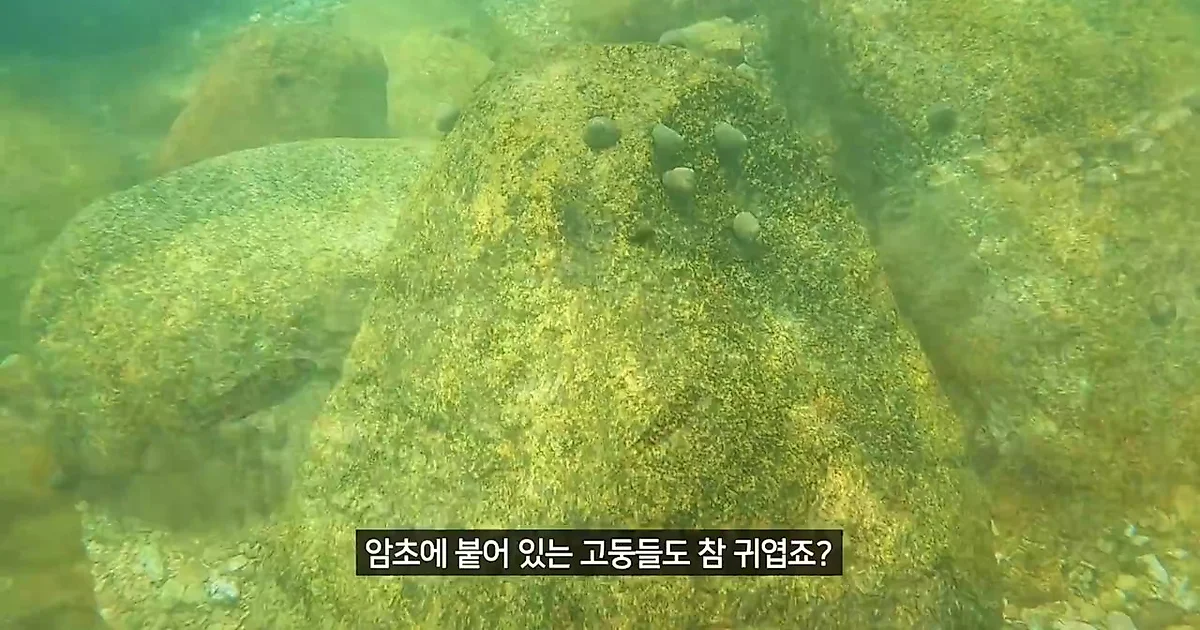
Four of South Korea's national parks include marine areas, and their total area accounts for half of all national parks. According to a video from the YouTube channel 'Walk Travel', the process of exploring sea caves, uninhabited islands, and underwater ecosystems in Namhae via the 390-ton class marine research vessel 'Research 1', where boarding by the general public is strictly controlled, has been revealed.
Interior Facilities of the 390-ton Research Vessel 'Research 1' with Restricted Public Access
The research vessel Research 1, which was the center of this journey, is a 390-ton class vessel built in 2017, operated for the purpose of professionally investigating and researching South Korea's marine ecosystem. The video introduced special facilities on board that had not been opened to the general public. On the outdoor deck, there are cranes that can transport boats and research equipment into the sea, and it features a structure that carries separate boats with high mobility, similar to an aircraft carrier. In fact, the video captured the use of these boats when there was a need to go to the sea or land while living on the research vessel.
The internal laboratory configuration, faithful to the research purpose, also stands out. The 'Dry Lab', where experiments are conducted using electronic devices such as computers, and the 'Wet Lab', where biological specimens collected from the sea are directly handled, are located separately. In particular, a CTD, a precision instrument that measures the state of seawater by depth, is placed around the Wet Lab; the video mentioned that this equipment is a highly expensive precision research tool costing approximately 100 million won.
Mysterious Sea Caves of Yundolseom Island, Geoje Island, and Snorkeling Exploration
The exploration conducted before boarding the research vessel began at Gujora Beach in Geoje. At this location, which is popular for marine leisure due to its calm waves and gentle water depth, the expedition team moved by kayak and reached near the nearby uninhabited island, Yundolseom Island. Beneath the cliffs of Yundolseom Island, two sea caves formed by wave erosion are hidden. The structure is such that once you pass through a narrow gap and enter the cave, a magnificent sea landscape completely different from the outside unfolds.
Through the subsequent snorkeling, the underwater ecosystem could also be observed. Various marine creatures, such as schools of damselfish swimming between reefs, mackerel, and barnacles attached to the reefs, were captured. During snorkeling, the expedition team visited the sea caves once again to confirm the wondrous appearance of the cleavage planes created by continuous wave erosion. This was described as a product of nature that cannot be imitated by human hands.
National Park Marine Ecosystem Conservation Center Accommodations and Local Food in Sacheon
For full-scale research vessel activities, the expedition team stayed at the National Park Marine Ecosystem Conservation Center located in Sacheon, Gyeongsangnam-do. This institution, which newly opened on November 25, 2025, is a professional marine management agency equipped with advanced investigation equipment, including Research 1. Inside the conservation center, various educational facilities are prepared, such as marine ecosystem exhibits, a miniature of the research vessel, and a diving pool for diving training.
The accommodations were designed with a marine ecosystem theme, and the video introduced room number 202, named the 'Whale Shark Room'. When the room door is opened, the structure allows one to look down at the scenery and night view of the sea in front of Sacheon at a glance. Meals containing the characteristics of the Sacheon region also followed. Spicy eel stew, a representative food of Sacheon, was provided, and the video introduced the local food culture of eating it with 'Bang-a leaves', a natural Korean herb with a pungent aroma, alongside the oily eel. Through this, the expedition team experienced a unique taste unique to Sacheon.
Related Articles
Naju Lake Skywalk Opens, Featuring an Aerial Deck Path Over the Water Built with 11 billion won
617m Longest Domestic Suspension Bridge, a Circular Course Completed with the Opening of Danyang's Siru Island Bridge of Miracles
Cheongsong Juwangsan 6.8km Trekking, a Course Walking Through a 70 Million-Year-Old Columnar Joint Gorge
Pocheon Unaksan Cloud Path Opens, Featuring Cliffside Walkways and Suspension Bridge at 800m Altitude
Seoul's Underground Space Opens After 40 Years, Featuring BIGBANG's 20th Anniversary Exhibition at 'K Culture Station'
A Million Songhee in the Mountains, sharing 'Mountain High' and life stories while hiking Bomunsan in Daejeon

Meeting between a craftsman with 40 years of experience at Nagwon Musical Instrument Arcade and NCT WayV's XIAOJUN and Yang Yang

From KTX Andong Station to Hahoe Folk Village: A Travel Course Connecting Autumn Festivals and World Heritage

Anseong Midam-ro Mural Street: From Rice Market Street Legends to the History of the Cattle Market

100% Train Fare Discount Vouchers for Visiting Depopulated Areas… Summary of '2026 Autumn Travel Campaign' Benefits

The 14.5km Gyejoksan Red Clay Trail Walked Barefoot: Why It Is Best to Visit 3 Days After Rain

From Daegu Yangnyeongsi Oriental Medicine Experiences to 5-Minute Cosmetic Shopping and Electric Roasted Chicken

Traveling to Okcheon, Chungcheongbuk-do: Eating Olgaengi-guk, Riding an Electric Cruise Ship, and Visiting the Jeong Ji-yong Birthplace

From Samcheok Mul-dakgalbi to Central Market Snacks, a Day Trip Local Travel to Find Leisure
Five Islands of Gogunsan Islands Connected by Four Pedestrian Bridges, Opening the World's Only Island Trail

Comparison of Coffee at 17 Gyeongbu Expressway Service Areas, Specific Brand at Manghyang Service Area Ranks 1st

30 Minutes from Pangyo, Seongnam: Why the Alleys of Sujin-dong and Taepyeong-dong are Becoming New Travel Destinations
Maengdong Healing Forest in Eumseong, Chungcheongbuk-do, Newly Opens with Twice the Size of Yeouido Park
70% Refund for Young Travelers, Sancheong Half-Price Travel Budget Set at 22.8 Billion Won

Comments 0