
Seoul's Underground Space Opens After 40 Years, Featuring BIGBANG's 20th Anniversary Exhibition at 'K Culture Station'
In the heart of downtown Seoul, a massive underground space that has not been visited by the general public for about 40 years has been transformed into a cultural space and opened to citizens. Located near Euljiro 1(il)-ga Station on Seoul Subway Line 2, this space operates under the name 'K Culture Station' and has been transformed from a secretive underground tunnel into a place where various cultural exhibitions can be enjoyed.
A 335m tunnel opening for the first time in 40 years, hosting BIGBANG 20th anniversary exhibition
According to the video, if you walk about 100m along the underground walkway in the direction of Exit 1 of Euljiro 1(il)-ga Station, you can encounter the new facility, 'K Culture Station'. This was originally a secretive underground space around the Line 2 subway tracks, and it has been opened to the public for the first time in 40 years, as its original architectural purpose remained unclear. This massive tunnel-shaped space, measuring 335m in length and approximately 10m in width, is currently hosting an exhibition celebrating the 20th anniversary of the idol group BIGBANG.
The exhibition is a paid event, and visitors can view it through advance reservations via Naver Booking or by purchasing tickets on-site. The video introduces an exhibition configuration that utilizes the unique dark atmosphere of the tunnel, along with a space to listen to new songs and a VR experience zone. In particular, through the VR experience, visitors can have an experience as if they are seeing the singers right in front of them, and a Gucci shop selling limited edition goods available only on-site is also operating. The BIGBANG exhibition is scheduled to run until the end of September, and subsequent exhibition schedules can be checked through the Seoul Metropolitan Government website.
Historical ruins under City Hall and the Sky Observatory
Located on the first basement floor of City Hall, which connects from K Culture Station, is the Seoul Gallery. Here, the ruins of 'Gungisi', where weapons were made during the Joseon Dynasty, are preserved, allowing visitors to directly see the sites where furnaces used at the time were located and arrowheads. Additionally, at the place selling Seoul Metropolitan Government souvenirs, various designed collaboration products can be found.
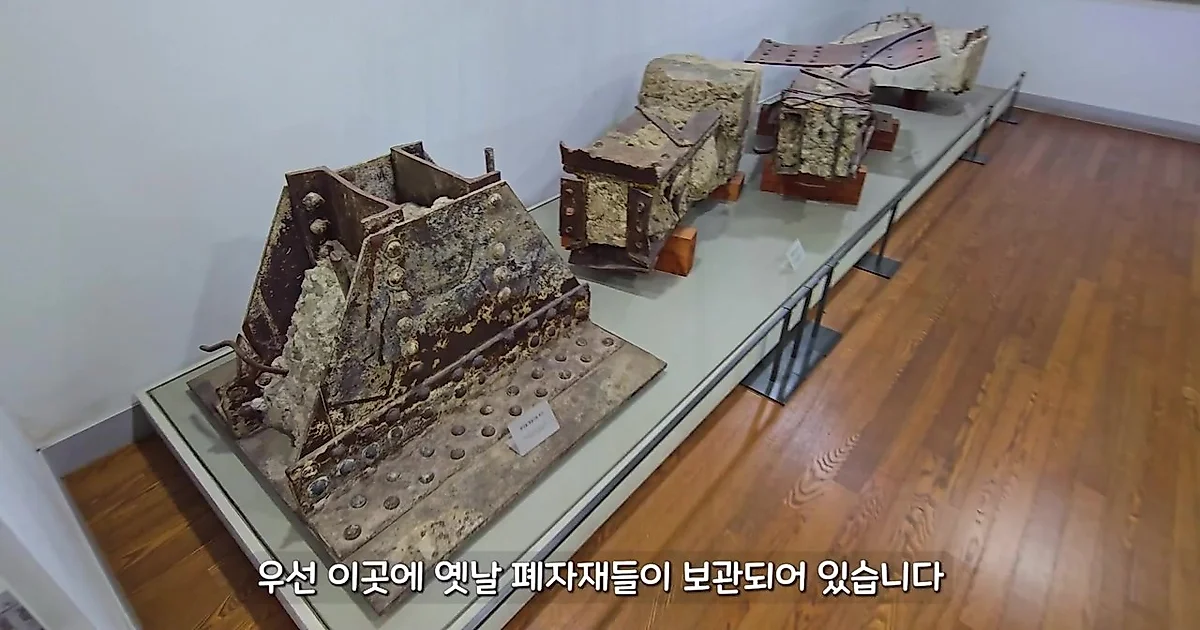
The space leading into the City Hall building is equipped with various amenities and observation facilities. On the 9th floor, there is the Sky Plaza Café along with the recently opened sky observatory, where the scenery of Deoksugung Palace and the cathedral can be viewed through large floor-to-ceiling windows. On the 9th floor of the Seoul Library, which is the former Seoul City Hall building, there is a space where doors and main beams from the former building are stored, and at the Haneultteul Observatory, which is open from 9:00 AM to 5:00 PM on weekdays, one can admire Seoul's symbolic scenery such as Bugaksan Mountain, Gwanghwamun, and Deoksugung Palace.
A 2.8km underground walkway connecting City Hall Station to Dongdaemun
'Seoul Underground Walkway', which starts from City Hall Station and continues to Dongdaemun History & Culture Park Station, is the longest underground walkway in the country, reaching a total length of 2.8km. This path connects five subway stations and features the characteristic of being able to move without being affected by the weather.
Moving along the underground walkway, it sequentially connects to the Myeongdong direction of Euljiro 1(il)-ga Station, the art street near Euljiro 3(sam)-ga Station, the 'Hipjiro' area near Euljiro 4(sa)-ga Station, and finally to the Dongdaemun direction. Near Euljiro 3(sam)-ga Station, there are art pieces, restaurants, and clothing shops, while the area near Euljiro 4(sa)-ga Station is adjacent to Jongmyo Shrine and features a commercial district frequented by young people coexisting with media art. The journey concludes at the final section in Dongdaemun, connecting to the DDP (Dongdaemun Design Plaza) designed by the world-renowned architect Zaha Hadid.



Comments 0