
Cat Attachment Types: Characteristics of Secure, Anxious, and Avoidant Types and Differences in Oxytocin Levels
A video from "Meowcheol's Nyangnyang Punch" details a study by a Chinese research team regarding the three attachment types of cats—secure, anxious…
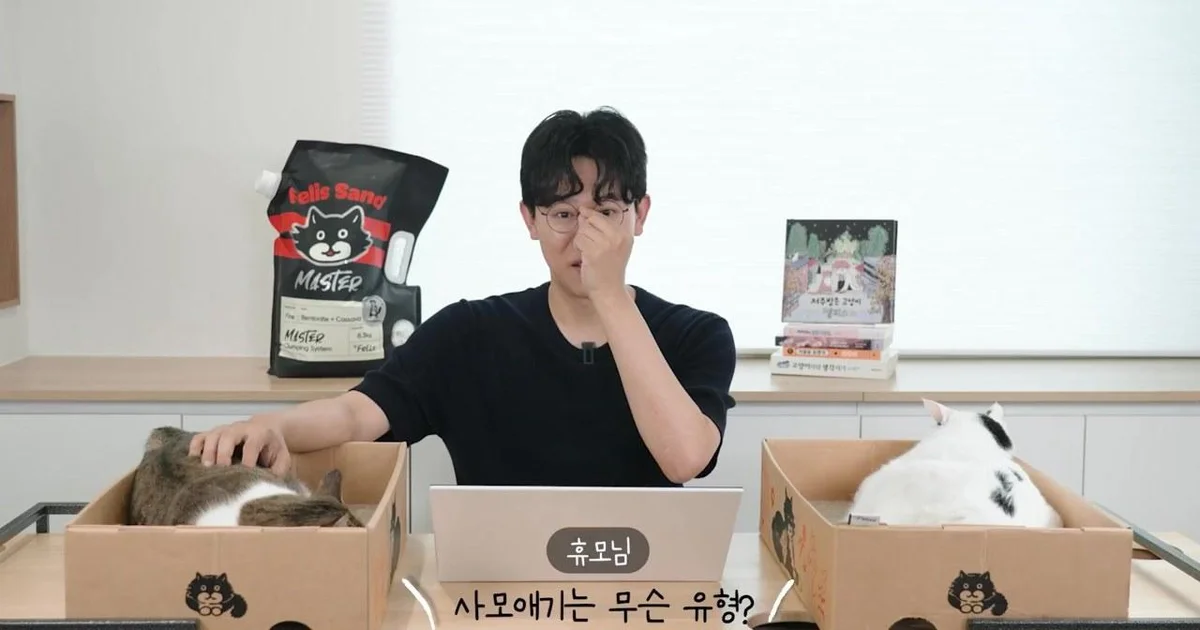
The behavior of a cat following its owner closely or, conversely, keeping its distance may be related to attachment types beyond simple personality differences. In a recently released video from "Meowcheol's Nyangnyang Punch," the characteristics of the three attachment types of cats—secure, anxious, and avoidant—were discussed in detail based on the results of an experiment by a Chinese research team.
Behavioral and Hormonal Differences in Secure, Anxious, and Avoidant Cats
A Chinese research team conducted an experiment to classify the attachment types of 30 cats between 1 and 3 years of age. As a result of the study, among the participating cats, 11 were identified as secure, 11 as anxious, and 8 as avoidant. They showed different reactions when reunited with their guardians in an unfamiliar space.
Secure cats gradually found stability after reuniting with their guardians and were seen exploring the room again while maintaining an appropriate distance from the guardian. On the other hand, anxious cats did not find sufficient stability even after meeting their guardians and tended to stay by the guardian's side for too long or try to cling continuously. Avoidant cats showed a tendency to avoid approach or contact and keep their distance even when the guardian returned.
Significant differences were also observed in 'oxytocin' levels, which are involved in social interaction and stress regulation. For secure cats, levels were relatively low before interaction, but oxytocin levels rose significantly after interacting with the owner. However, anxious cats, despite having relatively high levels before interaction, showed a tendency for levels to actually decrease after interaction. For avoidant cats, there was almost no change in levels before and after interaction. This suggests that while interaction is a positive stimulus for secure cats, interaction does not resolve anxiety for anxious cats, and avoidant cats may not perceive interaction as a special reward.
Testing Your Cat's Attachment Type in Daily Life
The video suggested ways for owners to easily guess their cat's attachment type in daily life. One can observe the reaction the cat shows when the owner returns home after going out.
First, if the cat approaches happily, rubs its body, interacts for a moment, and then returns to resting comfortably or doing its own business, it is highly likely to be 'secure.' If the cat stays attached to the owner but shows signs of being unable to calm down, it falls under 'anxious.' Lastly, if the cat does not approach the owner and instead hides in a corner or on top of a cat tower and only watches, it is highly likely to be 'avoidant.'
Correct Ways to Interact with Avoidant Cats
The attitude taken by a guardian should also differ depending on the attachment type. In particular, for guardians raising avoidant cats, attempting forced physical contact when the cat does not approach first can be harmful to the cat. The video recommended 'waiting until the cat approaches first' as the shortcut to reducing stress in avoidant cats. Giving the cat the choice is the most comfortable and positive start to interaction, even for secure cats.
Furthermore, a cat's attachment type is also influenced by the owner's personality. According to the research, the higher the owner's anxiety or stress levels, the higher the cat's anxiety and stress levels tend to be. Therefore, to make a cat secure, it is important for the owner to maintain their own peace of mind.


Comments 0