
Cats also express emotions through their tails! Understanding your pet cat's mood through its tail
High, puffed, trembling, lowered and whipping tails may signal happiness, fear, anticipation, anxiety or anger; overall posture also matters.
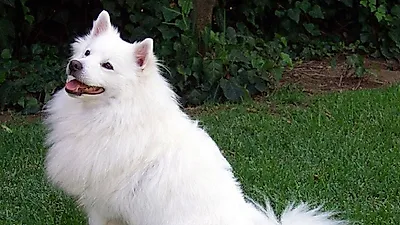
Most people believe they can understand what a dog is thinking just by looking at its tail. While a wagging tail is often judged as an expression of friendliness, that is not always the case. Conversely, if a dog tucks its tail between its legs, it is interpreted as being tense or frightened. However, dogs are not the only animals that convey their emotions through their tails.
Cats can also express emotions with their tails. A cat's tail is an excellent device for conveying emotions, and it is also a good way for owners to understand their pet's mood. Cat behavior expert Pam Johnson-Bennett stated that while cats express their emotions through their tails, one must interpret the overall body language to truly understand a cat's feelings.
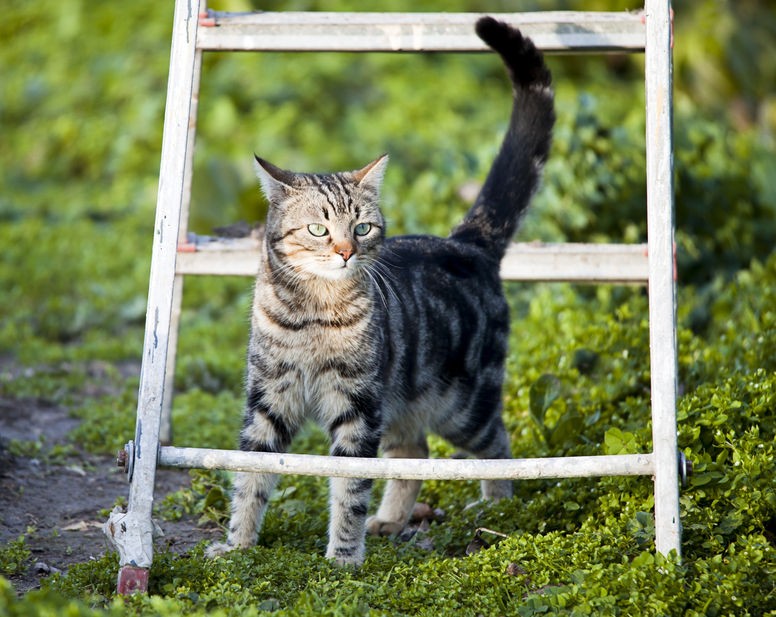
When the tail is held high
If a pet cat walks around the house with its tail held high and the tip twitching slightly, it is a sign of happiness and confidence. In households with multiple cats, one can often see cats greeting each other by holding their tails high like this. If your cat approaches you in this posture, it can be interpreted as expressing happiness at seeing you and wanting attention.
According to pet experts, if a pet cat begins to twitch its raised tail, it should be understood as being in a particularly good mood.
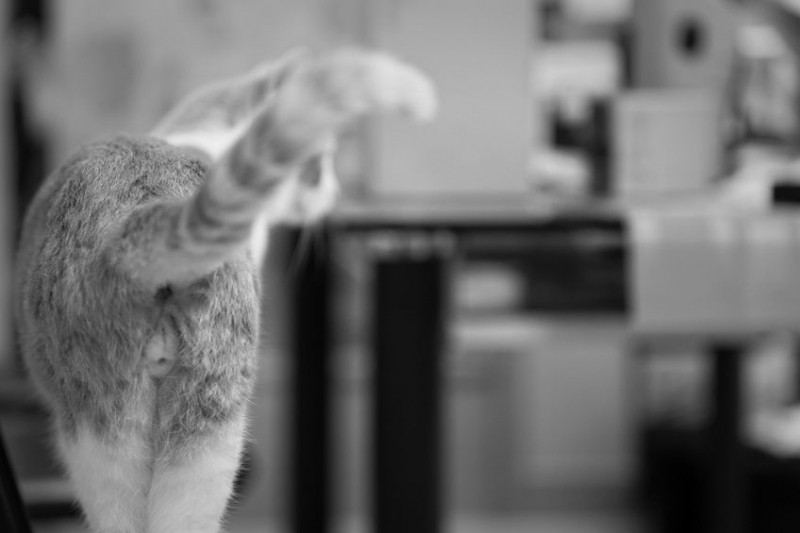
When the tail is shaped like a question mark
A cat curling its tail into a question mark shape means it is feeling playful and is actually ready to play at any moment. Cats may move their tails quickly when in this state. If your pet cat shows this behavior, it is good to pause what you are doing and spend some fun time with the cat.
When the tail is trembling
A cat about to mark its territory will hold its trembling tail high and position itself with its back to the object or wall. It may also tread with its front paws. A cat marking its territory may close its eyes or keep them half-closed.
It is easy to think that only unneutered male cats mark territory, but in fact, both male and female cats mark territory regardless of whether they are neutered. There are several reasons for this behavior, including territory marking, fear, instability, stress, anxiety, and health issues.
A trembling tail does not always mean the cat is trying to mark territory. Cats also tremble their tails when they are anticipating something good. You may have seen a cat trembling its tail when you are about to feed it or give it a favorite treat. In such cases, the cat's eyes are wide open in anticipation of the food or treat.
When the tail is held low
If a pet cat's tail position is low or tucked between its legs, it means the cat is anxious. Cats are animals prone to anxiety and fear. If your pet cat is sending such signals, you should look around the environment and find and remove stressors.
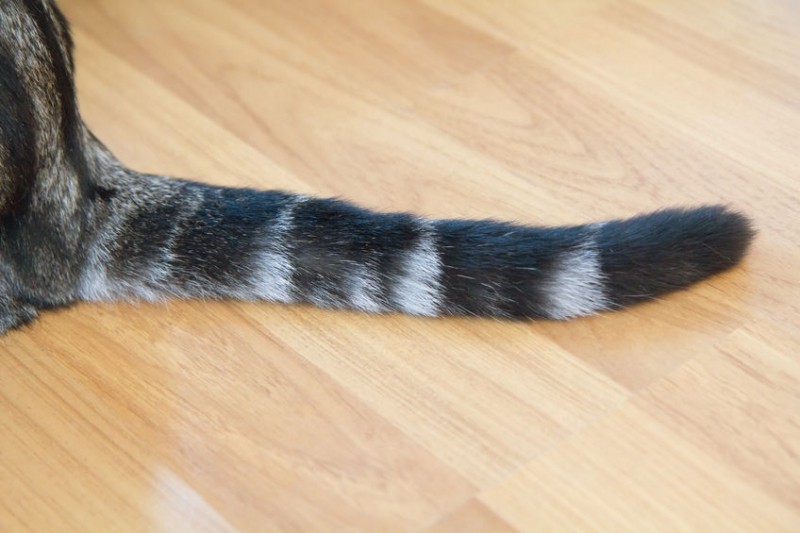
When the tail is lashed or whipped
If a cat lashes or whips its tail, it is a warning that it is angry. If a cat brushes or taps the floor with its tail and then lashes it, it can be interpreted as meaning it no longer wants something or has had enough. Behavior experts warn not to mistake a cat's tail wagging for happiness. Cats are not like dogs that wag their tails. A cat whipping its tail is a clear signal to stop what you are doing and leave it alone.
When the tail is wrapping around something
If a pet cat wraps its tail around another cat or around its owner's arm or leg, it is expressing friendship and companionship. The same can be interpreted if the cat is leaning against a person's skin without wrapping its tail. They may also sniff the owner's scent.
A cat's tail is a great tool for understanding emotions. While cats convey emotions to humans by moving their tails, one must first notice the overall body language and attitude before accurately understanding the action. If you understand the signals your pet cat is sending, you can build a relationship based on mutual trust and respect.
[Fam Times = Journalist Kim Seong-eun]
FAM타임스 명의로 발행된 기사를 모아 제공하는 매체 공용 저자 페이지입니다.
Comments 0