
Is Dog Training Hard?... Common Mistakes Made by Owners
Common dog-training mistakes include impatience, physical abuse, repeated commands, improper rewards, and poor emotional control.

In this regard, we introduce several mistakes that most pet owners make during dog training.
The Owner's Attitude
All pet dogs must be full of confidence to learn new skills and commands during training. However, if they are constantly reprimanded or criticized by their owner, they may lose interest in training and show a reluctance to participate. It is also not good for owners to develop prejudices, thinking their dog lacks the will to learn or is inflexible, upon seeing such behavior. It is most important for owners to approach training with positive methods, but mistakes can occur during this process. Here are a few.
1. Lack of Patience and Endurance
As mentioned earlier, dog training requires a lot of time and guidance until the dog fully masters a skill. This is because each dog has its own pace and learns skills according to that pace. Therefore, it is unreasonable for an owner to predict the timing of goal achievement at their own whim.
While owners may feel stressed during training or frustrated because the dog is a bit slow to follow, these emotions only hinder good results. Furthermore, an owner's stress is transmitted directly to the dog, which can worsen the situation. This can ultimately cause the dog to lose interest in training. It is recommended to keep training sessions short, around 10 to 15 minutes, and approach it using positive reinforcement by giving praise and rewards when the dog performs correctly.
2. Physical Abuse
There is no need to demonstrate that you are stronger than the dog. Using force to correct behavior will never be effective. Some owners, under the guise of strict training, hit the dog, grab it by the scruff, or put pressure on it with a leather leash. However, such actions are dangerous because they can ultimately make the dog fear its owner and become aggressive instead. Difficulties inevitably arise when training a dog that cannot understand human language. However, owners must realize that choosing force or violence as a solution is the worst option.
4. Incorrect Use of Rewards
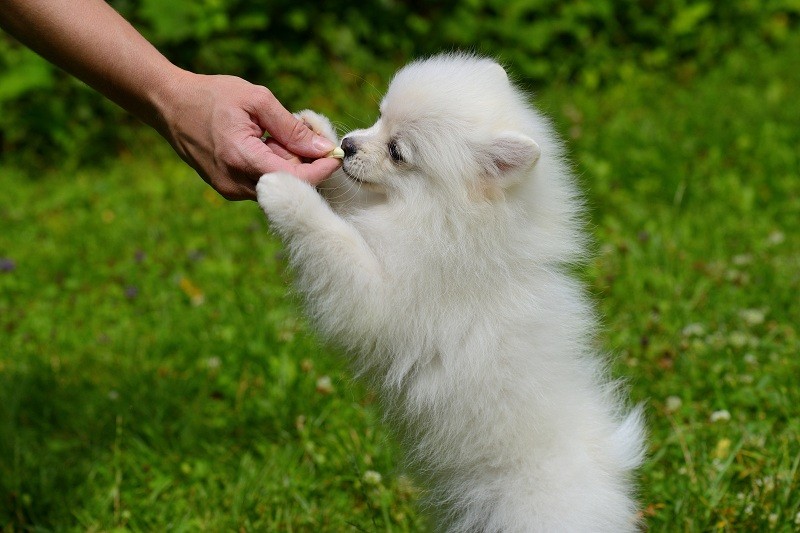
An essential element in training a pet dog is utilizing things that can serve as rewards, such as treats. If an owner rewards the dog when it performs a desired behavior, the likelihood of that behavior being repeated increases. However, some owners use this in the wrong way: by openly showing the reward to the dog.
If you hold a treat in your hand and say a command while the dog is watching, the dog will immediately show a correct response and react actively to the reward. While this is highly effective, on the other hand, there is a high possibility of side effects as the dog may fail to respond properly to commands when there is no reward. Therefore, when training, it is much more desirable to provide the treat as praise after the dog has performed the correct action, rather than showing the treat in front of its eyes first.
Rewards are usually treats, but other things such as favorite toys, praise, petting that the dog finds comfortable, or playing together can also serve as rewards. It is efficient to use a variety of rewards in a balanced manner rather than using only one type.
5. Immature Emotional Management
Dogs are very sensitive to human emotions and moods; they can sense whether an owner is stressed or in a good mood. Therefore, training while the owner is in a bad mood will not feel like a positive experience to the dog. Furthermore, the owner's facial expressions or displays of emotion when the dog makes a mistake can be conveyed directly to the dog, worsening the situation. In such cases, it is advisable to take a break or play another game instead of training. Once recharged, the owner can resume enjoyable training sessions with the dog.
[Fam Times = Reporter Ko Jin-ah]
FAM타임스 명의로 발행된 기사를 모아 제공하는 매체 공용 저자 페이지입니다.


Comments 0