
Why 'Home Training' is Essential to Reduce Frustration During Dog Walks
To prevent frustration in dogs caused by restricted sniffing and sudden leash pulls…
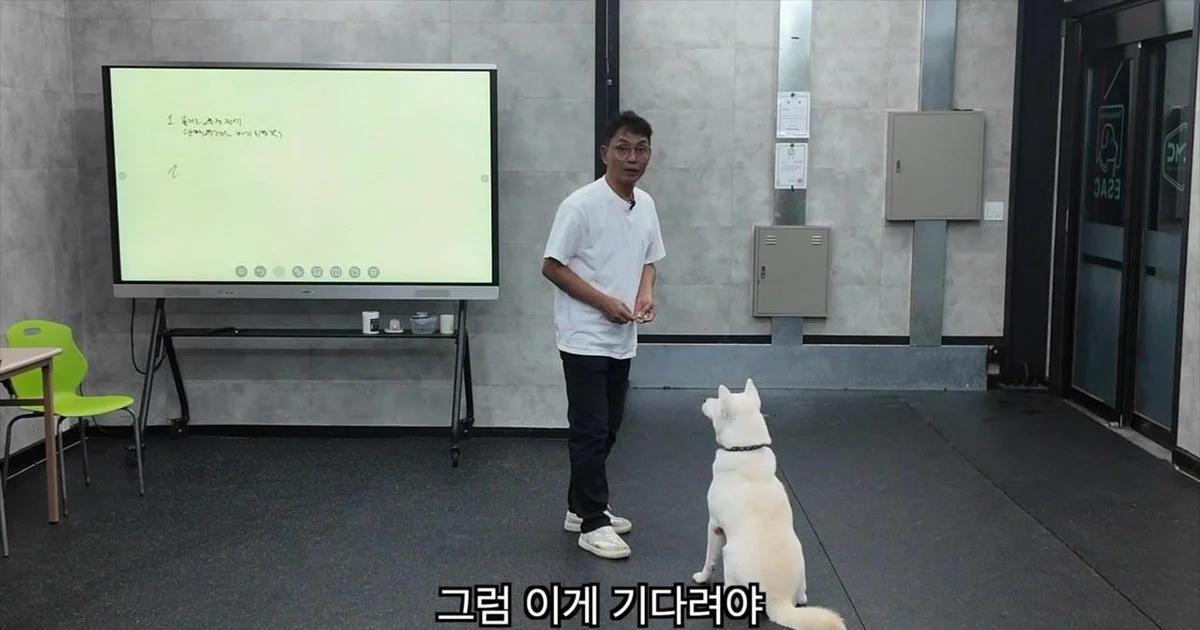
When going for a walk with a pet dog, if a guardian repeatedly holds the leash short and forcefully restrains them, the dog may feel frustration because they cannot satisfy their instinctive desires. According to a video from the YouTube channel 'Lee Chan-jong's Isaac TV', the act of a dog sniffing is a process of satisfying instinctive desires, such as predatory behavior; if a guardian forcibly prevents this, stress builds up, which can lead to problem behaviors during the next walk.
The Cause of 'Frustration' Felt by Dogs During Walks and Autonomy
The reason dogs feel frustration during walks is that they try to process information and satisfy instinctive desires through sniffing, but ultimately achieve nothing. For example, when a dog discovers a cat and tries to chase it, if the guardian pulls the leash to stop them, the situation ends without the dog achieving its goal. If these experiences are repeated, the dog becomes stressed on its own, which causes them to repeat the same behavior during the next walk.
To solve this, the video recommends that rather than holding the leash short and controlling the dog when they are not yet trained, one should use a long lead to give the dog autonomy. However, this is not unconditional autonomy; it must be predicated on the guardian's ability to control and adjust the distance through their body movements. Experts explain that even if the leash is held long, if the guardian moves backward, they can achieve the same control effect as holding a short leash. In other words, rather than relying on the length of the leash, true autonomy can be granted only when the guardian can regulate the dog through their own body movements.
Step-by-Step 'Home Training' Methods to Start at Home
For a successful walk, rather than trying to forcibly modify behavior outside, one should pre-train at home by connecting 'Come here', 'Stay', and 'Change direction'. The video presents a step-by-step training process using treats or kibble as follows:
The first step is the most basic 'Come here' training. Throw a treat and induce the dog to come in front of the guardian. The second step is 'Change direction', which applies this concept. After throwing a treat, when the guardian turns their body 90 or 180 degrees, they induce the dog to follow the guardian's direction while connecting it to 'Come here'. This is a process of training while the guardian moves to a position where it is easy to see the dog.
The third step is the connection of 'Stay' and 'Come here'. When the dog performs 'Sit', instead of immediately giving a reward to make them stand up, they teach 'Stay' by giving continuous rewards while the dog maintains the sitting position. Afterward, when the guardian moves during the 'Stay' state, they command 'Come here' to make the dog react to the guardian's movement. This process should be repeated at home like a fun game to encourage the dog to bond with the guardian.
Applied Movements and Control Techniques for Real-World Walking
Training learned at home can be usefully applied in actual walking situations. When a dog tries to rush toward another dog or person during a walk, the guardian can use a long lead while pulling their body back and commanding 'Come here' to simultaneously perform physical distance adjustment and control. This is a method to prevent sudden dog behavior by achieving the same effect as holding a short leash even while holding a long one.
Additionally, if the dog pulls ahead of the guardian, they can control the dog through 'Stay' and then command 'Come here' in the direction the guardian intends to move to induce the dog to walk by the guardian's side. The video emphasizes, "If you want to walk well, rather than trying to change the resulting behavior of problem behaviors outside, it is important to create an environment where the dog can understand on its own through step-by-step training at home." Especially in the case of sensitive dogs, they must go outside only after being sufficiently trained using treats at home so they can respond better to the guardian's commands.

Comments 0