
Jung Hee-sook's Smart Organizing: Why a Client Started Sleeping in the Dressing Room Instead of the Bedroom Due to Life Changes
A client who experienced significant life changes and the loss of a pet found themselves sleeping in a dressing room rather than their bedroom.
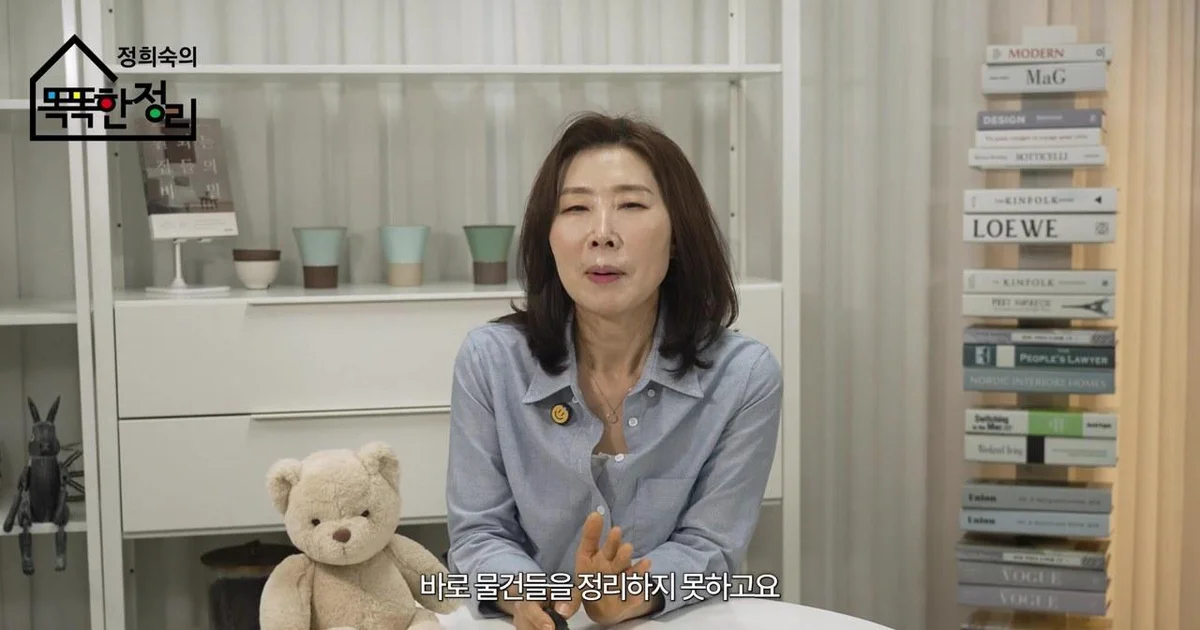
The reason people postpone organizing is not simply due to laziness, but can be due to major life changes or psychological difficulties. According to a video from the YouTube channel 'Jung Hee-sook's Smart Organizing', the home of a client who underwent organizing four years ago had seen changes in the resident's occupation, family composition, and lifestyle patterns over time. In particular, after experiencing the loss of a pet cat, the functions of the spaces became completely mixed up, such as being unable to use the existing bedroom and bathroom and sleeping in the dressing room instead.
Space functions frozen by loss and life changes
The client tried to maintain the space organized four years ago, but significant changes occurred in the living environment, such as a change in occupation and frequent overseas business trips. Most of all, after the pet cat that had been with them for a long time passed away, they stopped using the bedroom where memories of the pet remained. As a result, an uncomfortable lifestyle continued where they laid a topper in the dressing room, which was full of clothes and dust, to sleep instead of the bedroom. In the video, expert Jung Hee-sook expressed empathy for situations where people are unable to organize and leave things neglected due to psychological difficulties, stating, "After experiencing something sad, one feels as if the space has stopped." In fact, the client had not yet been able to organize the pet cat's belongings, which remained scattered throughout the house, making it even difficult to enter the home.
'Customized spatial reconfiguration' tailored to current life
The core of this organizing session was not to return to the state of four years ago, but to redesign the space to fit the changed current lifestyle. First, to return the dressing room, which was being used as a sleeping area, to its original function as a 'space to find clothes,' the following measures were taken.
First, unnecessary furniture within the dressing room was removed and the position of the hangers was adjusted to optimize the movement path so that bags, clothes, and sportswear could be handled conveniently all at once before and after going out. Second, drawers that were not previously there were placed to allow for the storage of small items of clothing that are difficult to hang on hangers. To achieve this, furniture from the master bedroom was moved and placed in the dressing room. Third, considering that the type of clothing and shoes had changed due to the change in occupation, the locations of frequently worn suits and shoes were rearranged to match the lifestyle pattern. Expert Jung Hee-sook advised, "To find clothes quickly, it is better to increase the method of hanging rather than folding."
There is no fixed answer; 'wherever I am comfortable' becomes the purpose of the space
The criteria for organizing do not necessarily need to be bound by the fixed purpose of a room. When the client found it difficult to use the vanity due to memories of the pet cat, expert Jung Hee-sook organized the cosmetics using a trolley next to a desk in the living room. This is an example showing that if the user "is comfortable there, then that place becomes the vanity." However, since not all spaces should become bedrooms or dining tables, care must be taken to move the location of items appropriately so that the functions of the spaces do not get mixed up.
To the client, who said their heart felt much lighter through the organizing, expert Jung Hee-sook offered encouragement, saying, "Many good things will happen to you in the future." She also told viewers, "I hope you take time to check what changes are happening in your life lately," emphasizing the importance of changing the places of all items to match a changed lifestyle.

Comments 0