
Chuseok Vegetable Recipes: 5 Ways to Make Savory Side Dishes with Less Oil
The YouTube channel 'Young-Ja's Kitchen' has released specific cooking methods for five types of seasoned vegetables—bracken, radish, bellflower root…
In celebration of the Chuseok holiday, there are times when you need vegetable side dish (namul) recipes that offer a clean and savory taste instead of greasy foods. According to a video from the YouTube channel 'Young-Ja's Kitchen', specific cooking methods for five types of vegetables—bracken, radish, bellflower root, mung bean sprouts, and spinach—have been revealed to make them savory while reducing oil content.
Bracken and Radish: How to Enhance Savory Flavor Using Moisture
When making bracken (gosari) namul, caution is required from the preparation stage. The video explains that since the hard core part of the bracken is inedible, you must use your hands to select and snap off only the soft parts. The key is to snap off the soft parts by hand rather than using a knife. For cooking, based on 500g of soaked bracken (50g of dried bracken), add 1 tablespoon of cooking oil, 2 tablespoons of soy sauce, 0.5 tablespoons of soup soy sauce, and 0.5 tablespoons of minced garlic to boil first to create the seasoning. When the seasoning boils and the aroma of garlic rises, add the bracken and stir-fry over high heat. If you stir-fry until the bracken shrinks slightly as moisture escapes, the savory bracken namul is completed without grease. Adjust the final seasoning with salt, roasted sesame seeds, and 1 tablespoon of perilla oil.
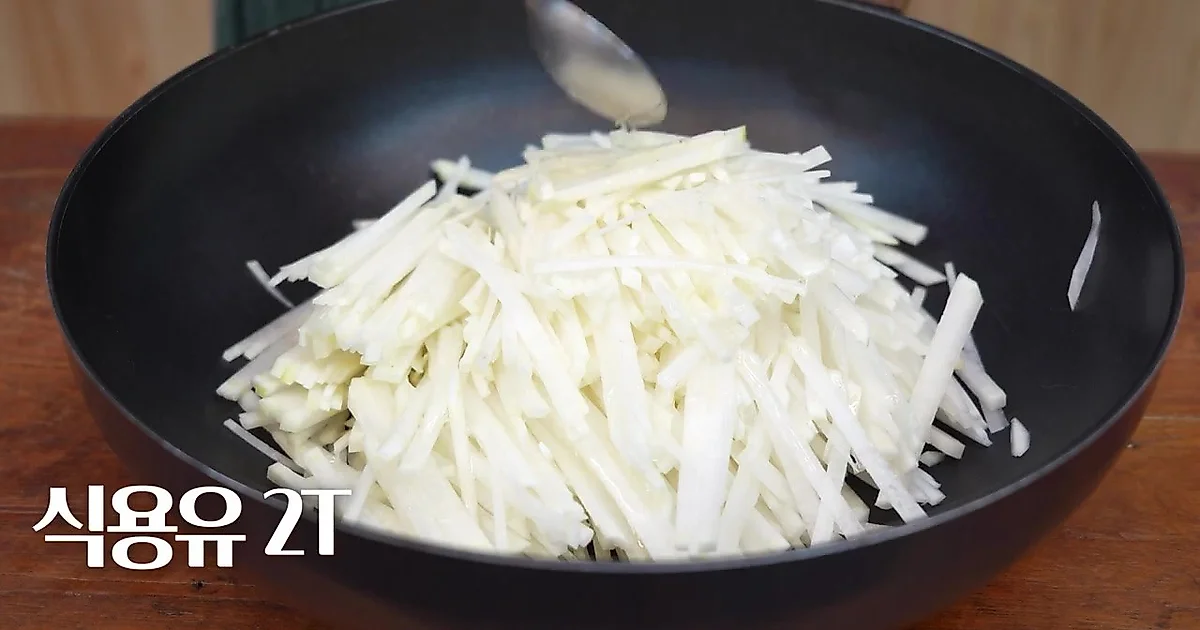
For radish (mu) namul, use 800g of radish as a standard. When slicing the radish with a knife, you should place the side of your finger against the spine of the knife and chop it as if tapping to avoid injury. Instead of pushing the knife, you must tap it to ensure the radish is sliced well without breaking. The core process is to add 2 tablespoons of cooking oil, 1 tablespoon of minced garlic, and a bit of salt to the julienned radish, mix gently, and let it sit for 15 to 20 minutes to wilt. Once the radish becomes soft, pour in 100mL of water and boil over high heat. If you want a crunchy texture, finish at this stage; if you want a very soft texture, cover with a lid and reduce to low heat to let it steam. Finish by adding green onion and 1 tablespoon of sesame oil (or perilla oil) at the end.
Bellflower Root and Mung Bean Sprouts: Preparation Techniques to Remove Bitterness and Fishy Smells
Bellflower root (doraji) namul using fresh bellflower root is prepared by peeling the skin and slicing it thinly. The video mentions that it is better to use bellflower roots that are slightly thin rather than thick ones. To remove the bitterness of the bellflower root, add a bit of salt, massage it for about 5 minutes, and then immediately rinse it under running water. If you put the bellflower root in a pan without adding oil, it is a method of cooking it with its own moisture; if moisture is insufficient, you can add a little water. Once the bellflower root is cooked and becomes transparent, finish by adding garlic, salt, green onion, sesame oil (or perilla oil), and ground sesame seeds. It is characterized by being very savory because no oil is used.
For mung bean sprouts (sukju) namul, instead of washing them in water, you should shake them vigorously with your hands to remove the skins so that the skins do not stick even after blanching. When putting the sprouts into boiling water, you must use enough water to submerge the sprouts, and you should blanch them only briefly as they will turn black if blanched for too long. Immediately place the blanched sprouts in cold water to completely remove the heat and leave them for about 5 more minutes to remove any fishy taste. After draining the water, first add 2 tablespoons of sesame oil to the sprouts to coat them, then mix in green onion, paprika (optional), salt, and ground sesame seeds to bring out a crunchy and refreshing taste. At this time, adding plenty of ground sesame seeds allows the sesame to hold the moisture.
Spinach: The Key is Preparation to Remove Soil
Spinach (simchi) namul using winter spinach requires 700g of spinach, 20g of green onion, and 1 red chili pepper. When preparing the spinach, the process of cutting off the top (the head part) is important to remove the soil and sand stuck between the leaves. Cutting off the top part is necessary because it allows foreign substances to be washed out effectively. The video continues the cooking process while emphasizing the preparation method that preserves the color and taste of the spinach.

Comments 0