
The order of salting radish and cabbage determines the crunchy texture of Nabak-kimchi
The secret to preventing soggy cabbage and bland broth in Nabak-kimchi lies in the specific order and timing of salting the radish and cabbage.
Nabak-kimchi, which refreshes the stomach after eating greasy foods like holiday meals, is loved by everyone, but when made at home, the cabbage often becomes mushy or the broth becomes bland within two days. According to a video from 'Yoriwang Biryong Chef TV', these problems do not stem from the seasoning, but from the 'salting order' and 'time difference' between the radish and the cabbage.
The key to preventing cabbage from becoming mushy is 'differentiating salting times'
The core of Nabak-kimchi is to preserve the texture of both the radish and the cabbage. Because the speed at which salt penetrates hard radish and thin cabbage differs, they should not be salted at the same time. The video explains that 800g of radish should be thinly sliced to 0.3cm thickness and salted first for 20 minutes with 3 spoons of sea salt. After the radish is sufficiently salted, 500g of cabbage should be added and salted for an additional 10 minutes to prevent the cabbage from wilting excessively and becoming mushy. At this time, the liquid produced while salting the radish and cabbage should not be discarded, but used entirely as the broth later.
Additionally, to prevent the broth from becoming bland, the initial seasoning should be set slightly saltier than usual. Since moisture continues to be released from the radish and cabbage over time, the broth should be slightly salty at the time of making so that the seasoning remains perfect the next day. Using 2 to 3 spoons of sea salt is recommended to adjust the seasoning.
How to make clear broth using 'soaking chili powder' and 'natural sweetness'
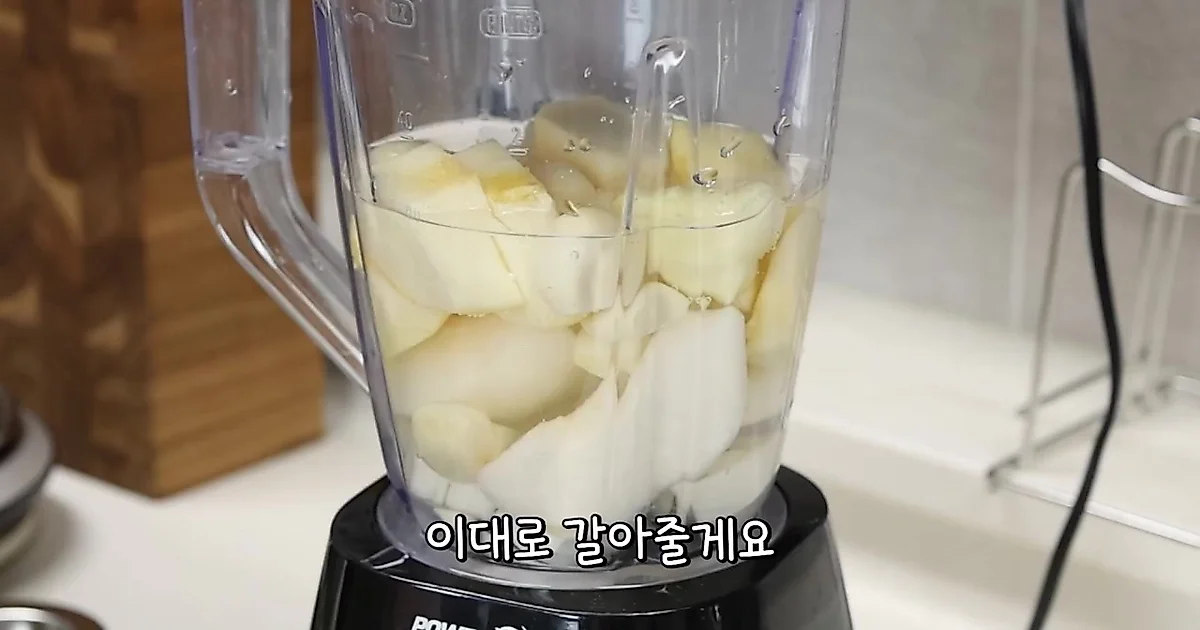
To increase the color and transparency of the broth, a process of soaking the chili powder in advance is required. Dissolve 3 spoons of chili powder in 500ml of water and soak it for 20 minutes beforehand; if this is then filtered through a cotton cloth, you can obtain a beautiful color and clear broth without the powder floating in the liquid. The base broth, made by mixing onion, pear, apple, garlic, ginger blended with a mixer and 500ml of water, is also much cleaner if filtered through a cotton cloth.
When adding sweetness, the characteristic method is to utilize pear and apple instead of sugar or New Sugar. Using excessive sugar can make the broth sticky, so the video suggests a method of adding grated or sliced pear and apple to create a natural sweetness. Once the Nabak-kimchi is completed, leave it at room temperature for about half a day until bubbles rise and a sour smell begins to emerge, then move it to the refrigerator for storage; it becomes most delicious from the second day.


![[Simple Dinner Recommendation] Chewy Braised Lotus Root and Sumi's Side Dishes Braised Burdock Root Recipes](https://img.famtimes.co.kr/famtimes/2026/09/193a43c2-fc47-483e-9f7b-71b9ef96730c-f31634e9-thumb.webp)
Comments 0