
Earth’s Magnetic Field Is the Secret to European Eels’ Long-Distance Journey
European eels use Earth’s magnetic field to navigate long distances, while returning adults and Europe-bound young eels have sharply declined.
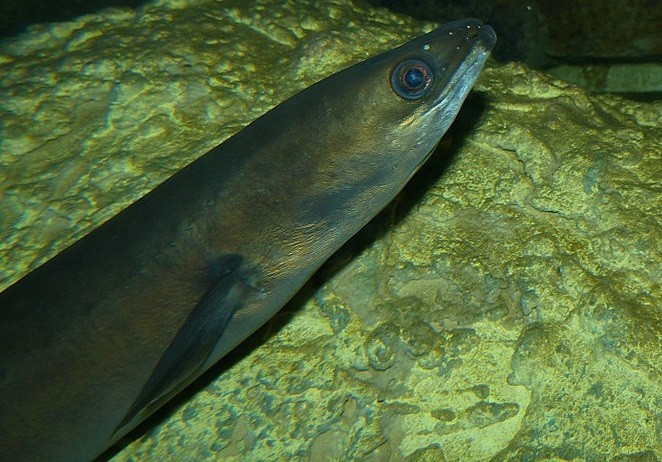
European eels travel from the Sargasso Sea near Bermuda to rivers in Europe or North America in search of a habitat where they can grow into adults and live.
Researchers from the National Oceanic and Atmospheric Administration in Florida placed the eels in tanks filled with seawater and installed copper wires to stand in for Earth’s magnetic field.
When no current was flowing, the eels did not swim in any particular direction. But when the researchers created a magnetic field resembling the one in the Sargasso Sea, most of the eels moved toward the southwestern part of the tank. Wherever they were in the tank, the eels swam toward the wires generating the magnetic field.
The researchers said young eels use an internal map based on magnetic fields to travel from the western Atlantic to Europe via the Gulf Stream.
European eels that set out to find habitats in places such as Europe return to the Sargasso Sea about 20 to 90 years later, where they reproduce and then die.
Unfortunately, the future does not look bright for this unusual fish. The European eel is an endangered species designated by the International Union for Conservation of Nature.
The International Union for Conservation of Nature explained that over the past 45 years, the number of silver eels—the name given to European eels once they reach adulthood—returning to the Sargasso Sea to reproduce has fallen by 50% to 60%, citing habitat loss, changes in ocean currents and marine pollution as causes. It also said the number of young eels migrating to European waters declined by about 90% to 95% over the same period.
FAM타임스 명의로 발행된 기사를 모아 제공하는 매체 공용 저자 페이지입니다.


Comments 0