
Why Are There No Sea Snakes in the Atlantic Ocean?
Geographic barriers, cold waters and timing kept modern sea snakes from reaching the Atlantic, where earlier species died out 33 million years ago.
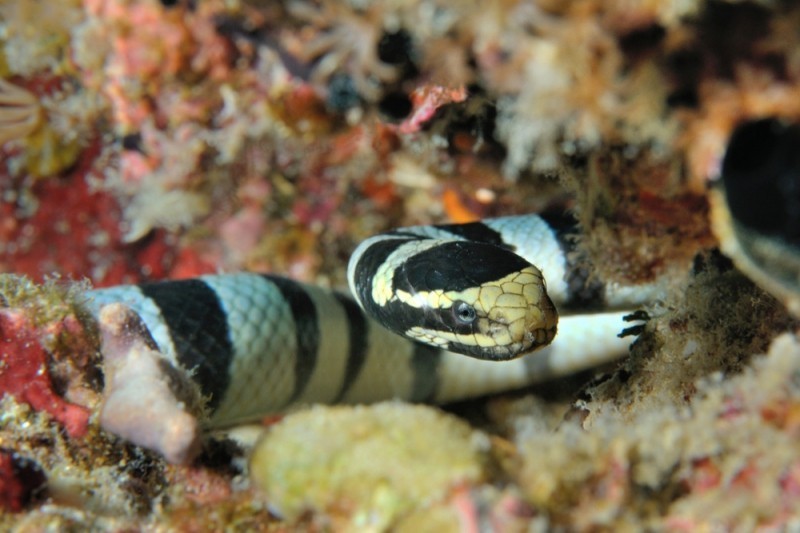
This fact has puzzled scholars for a long time. Dr. Coleman Sheehy, curator of reptiles at the Florida Museum, said, "We have determined why sea snakes are found in the oceans where they currently live, but why they are absent only from the Atlantic remains a mystery."
Dr. Sheehy and his fellow researchers said the reason is that sea snakes were unable to reach the Atlantic, with geographical, climatic and temporal factors likely playing a role. In theory, the Atlantic is not an unsuitable environment for sea snakes; it appears that they simply could not overcome the geographical barriers along the routes leading there.
Most sea snakes are found in the Coral Triangle in Southeast Asia and have inhabited the region for one to three million years. By the time sea snakes crossed the Pacific and were first found along the western side of the Americas, the Isthmus of Panama had already closed, preventing them from reaching the Caribbean Sea.
Meanwhile, extreme cold and dry climatic conditions prevail where the Indian and Atlantic oceans meet. Sea snakes are known to be unable to survive in water temperatures below 18°C.
In fact, there was once a time when as many as 20 species of sea snake inhabited the Atlantic, but they all became extinct when Atlantic temperatures rapidly declined 33 million years ago. The Caribbean Sea remained in a similar state until the Isthmus of Panama closed.
Nevertheless, Dr. Sheehy said that sea snakes evolved for survival in ways entirely different from turtles, crocodiles and freshwater snakes, and that, through their intriguing adaptations to life at sea, they are now regarded as the animals most successful at adapting to their environment.
FAM타임스 명의로 발행된 기사를 모아 제공하는 매체 공용 저자 페이지입니다.


Comments 0