
How Did an Ancient Lizard Adapt to Both Land and Water?
Vadasaurus herzogi combined an aquatic head and elongated tail with land-adapted legs, offering clues to reptiles’ transition into water.
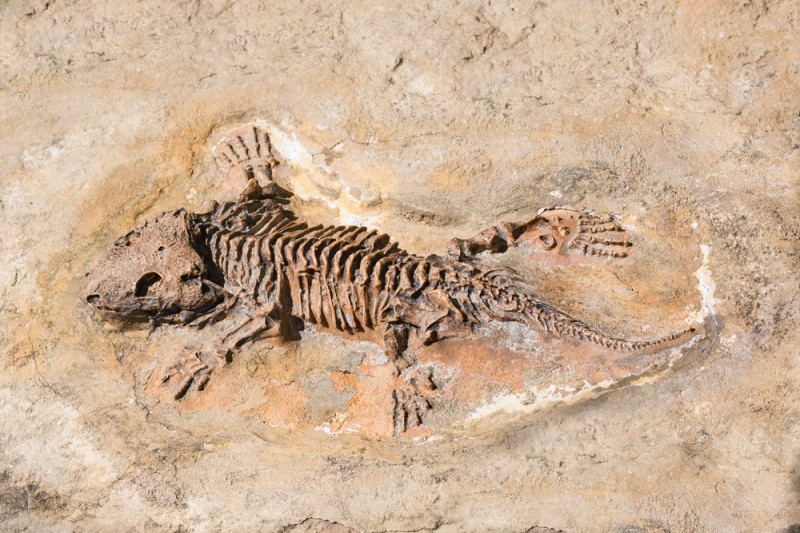
Named after Vadasaur, which means “lizard” in Latin, this lizard was discovered near Solnhofen, Germany. The area was once a shallow sea where so many fossils were found that it was called a “treasure trove of fossils.” The Vadasaurus fossil is now at the Natural History Museum in New York.
Dr. Gabriel Bever and Dr. Mark Norell of the Department of Paleontology at Johns Hopkins University in the United States studied the Vadasaurus fossil. The ancient reptile is said to be an ancestor of ancient land-dwelling and marine creatures, as well as modern marine animals such as whales, seals, and sea snakes.
Vadasaurus was most likely related to Pleurosaurus. Pleurosaurus had vestigial legs and swam by moving its spine, much like modern sea snakes, providing evidence that it once lived on land.
Vadasaurus’s triangular skull and elongated snout resemble those of Pleurosaurus and other aquatic animals, including fish, eels, and whales.
The researchers also said that Vadasaurus probably struck with its bite quite rapidly. The creature’s tail began to lengthen 155 million years ago, around the same time the tails of modern marine creatures began to grow longer.
Further in-depth research and fossil excavation are needed to learn more about this fascinating creature.
FAM타임스 명의로 발행된 기사를 모아 제공하는 매체 공용 저자 페이지입니다.


Comments 0