
Nearly Perfectly Preserved Skeleton of Extinct Sea Cow Found on Russian Coast
A nearly intact 17-foot Steller's sea cow skeleton found on Russia's coast may advance research into the extinct marine mammal.
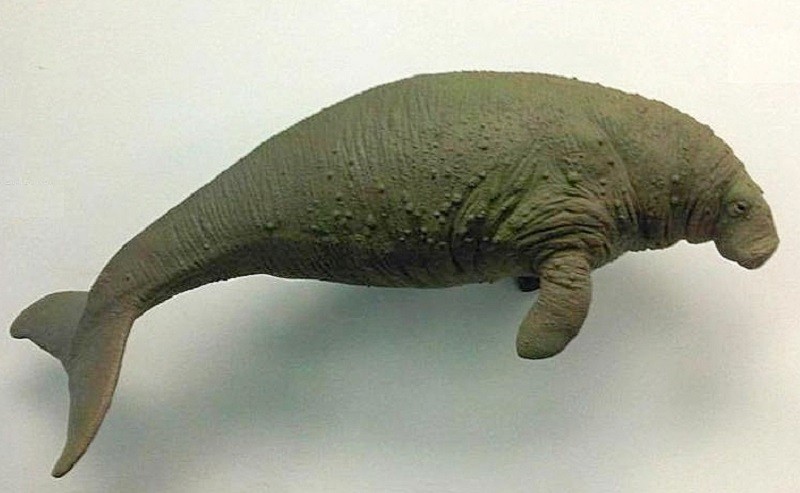
The excavated skeleton measures 17 feet (about 5.2 m) long and is estimated to have reached 20 feet (about 6.1 m) with the head included. That is comparable to the size of a modern-day killer whale.
The remains of the Steller's sea cow (scientific name: Hydromdamalis gigas) were excavated after researcher Marina Shitova spotted ribs protruding from the sand during a coastal survey of the Komandorsky Nature Reserve.
Although fragments of sea cow remains have been found over the past 200 years or so, Daryl Domning, a Steller's sea cow expert and professor of anatomy at Howard University in the United States, said, "These remains are particularly noteworthy because they may include the first fully preserved skeleton of a front flipper."
The Steller's sea cow became extinct in 1768, just 27 years after it was first discovered in 1741. That year, Danish explorer Vitus Haring set out at the head of a Russian naval expedition, but his ship was wrecked. Bering and the surviving crew spent the winter on an island that would later be named Bering Island.
One of the survivors, German naturalist Georg Wilhelm Steller, discovered the sea cow on Bering Island and, with the crew's help, moved it before studying it in the harsh environment.
After building a vessel from the wreckage and returning safely, the crew told people they had discovered a treasure trove of marine life, including sea cows. Hunters soon flocked to Bering Island and effectively drove the animals to extinction. It is also said that sea cows starved to death because of competition for food, in addition to being captured.
The newly excavated Steller's sea cow skeleton is scheduled to go on display at the Komandorsky Nature Reserve visitor center.
FAM타임스 명의로 발행된 기사를 모아 제공하는 매체 공용 저자 페이지입니다.


Comments 0