
The Environmental Impact of Sloths’ Unusual Bathroom Habits
Sloths descend to defecate, sustaining moth life cycles that enrich fur-dwelling algae; Pauli’s ecological theory remains unproven.
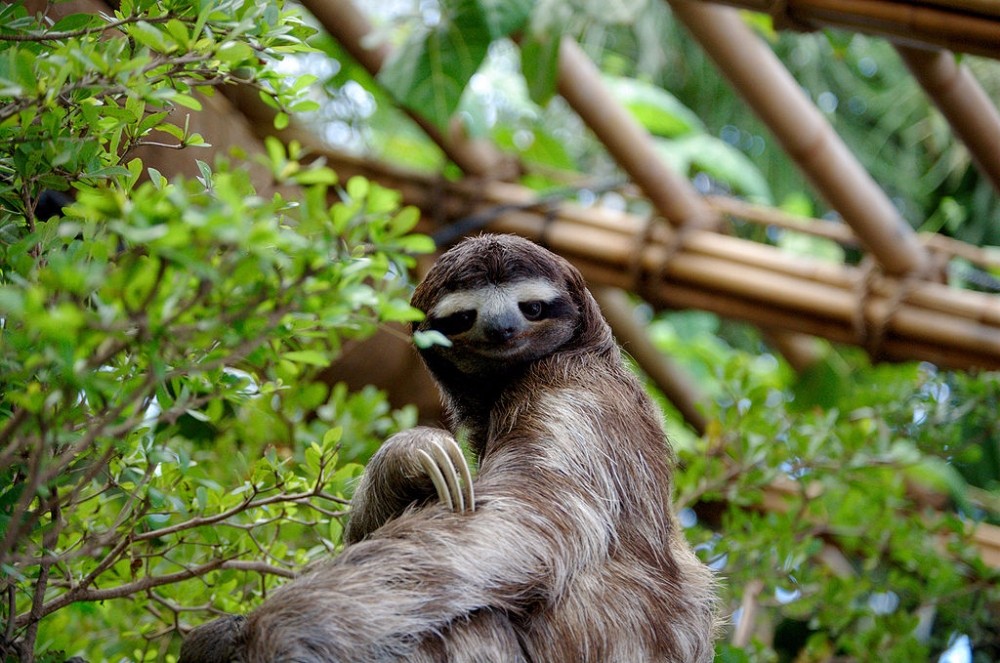
[FamTimes reporter Lee Kyung-han] Sloths are slow-moving mammals that live in trees in Central and South America. Sloths are divided into two families: two-toed sloths, which have two toes but three fingers, and three-toed sloths, which have three toes.
Biologists have been puzzled by these mammals’ unusual bathroom habits. Although sloths live in trees, they climb down to defecate. One expert found an answer to this strange behavior.
Jonathan Pauli, an assistant professor at the University of Wisconsin in the United States, became interested in sloths’ unusual bathroom habits after watching a documentary filmed by David Attenborough on YouTube.
According to the documentary, sloth fur provides a habitat for algae (moss). This miniature algal ecosystem is concealed within the sloth’s fur, and reportedly contains 120 species of algae per sloth.
While studying three-toed sloths, Pauli discovered a recurring cycle: moths live in sloth fur, lay their eggs in sloth feces, and then return to the fur.
In other words, sloths’ bathroom habits increase moth reproduction and extend their overall life cycle. The moths enrich the algal ecosystem found in sloth fur.
When moths die in a sloth’s fur, they become fertilizer for the algae, serve as camouflage, and may also become food for sloths when the animals lick one another’s fur.
Despite these intriguing findings, Pauli’s theory has not yet been proven, but it offers a fascinating perspective on how animals interact and contribute to the natural flow of the environment.
Reporter Lee Kyung-han fam1@pcss.co.kr
FAM타임스 명의로 발행된 기사를 모아 제공하는 매체 공용 저자 페이지입니다.


Comments 0