
Oil Spills and the Risks Facing Birds
Even limited crude oil on birds’ wings can increase flight energy use, slow evasive responses and hinder migratory birds’ survival.
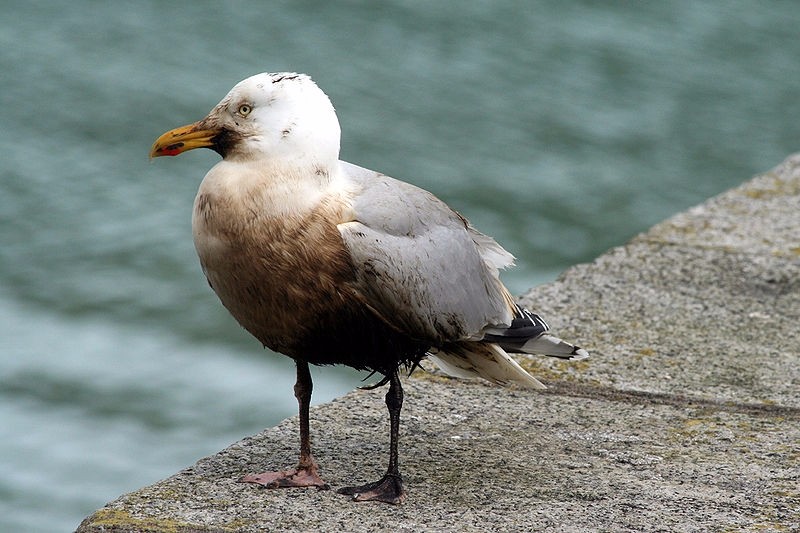
[Fam Times reporter Jennylyn Gianan] Oil spills are one of the biggest problems birds face. Even a small spill can cause serious problems when oil becomes tangled in their feathers. Even if birds survive an oil spill, they suffer long-term adverse effects.
On the first of the month, the Journal of Experimental Biology published a study on oil spills and their effects on birds.
Ivan Maggini, who led the study, emphasized the importance of birds’ feathers.
He said this was because feathers determine how far and how fast birds can fly, as well as how long they can maintain that speed.
For the experiment, Maggini and the researchers applied varying amounts of crude oil to the wings of long-billed dowitchers. They used a soft brush to apply the oil to the birds’ wings and then released them into a wind tunnel.
The results varied according to the amount of crude oil used. At less than 20%, the birds used the same amount of energy to fly. At 30%, they used 45% more energy in flight.
Even with only small clumps of crude oil on their wings, the birds had to exert more effort to fly. For migratory birds, crude oil acts as additional weight. Maggini and his team called this “oil drag.”
Oil spills pose an even more serious problem for male migratory birds because they must migrate as quickly as possible to build nests for females and be chosen as mates.
He also said that oil on their wings slowed their response time when evading attacks.
Migratory birds face further problems from climate change and food shortages. Maggini said that reducing oil spills alone could therefore help birds survive.
Jennylyn Gianan fam1@pcss.co.kr
FAM타임스 명의로 발행된 기사를 모아 제공하는 매체 공용 저자 페이지입니다.


Comments 0