
Dogs Used to Find Orca Feces
Dogs help scientists locate orca feces in Puget Sound to study water pollution, toxins, hormones and reproductive problems.
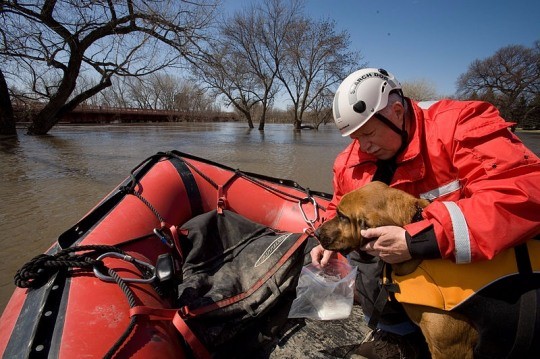
[FamTimes reporter Park Joo-hye] Scientists are using dogs to find orca feces in the Puget Sound area of Washington State, United States. The researchers are investigating clues about how polluted the area's waters are.
Samuel Wasser of the University of Washington's Center for Conservation Biology decided to use dogs' sense of smell to find orca feces, given how difficult they are for people to spot.
“Orca feces are similar in color to seawater and smell like salmon,” he explained. The feces may also drift around with the seawater or sink. Even under these complicated conditions, the dogs are reportedly able to detect the scent of orca feces from far away.
Unlike on land, where dogs can walk or run toward the source of a scent, Wasser's dogs ride in a boat with a handler trained to interpret their signals.
When a dog signals, the handler steers the boat. The signal is a very subtle movement of the nose. “Each dog has its own way of signaling by moving its nose,” Wasser said.
Wasser began studying orca feces in 2007. Scientists are using toxins and hormones found in the samples to investigate whether orcas experienced spontaneous abortions or whether calves died at birth.
According to Wasser, 66% of orcas experience problems with pregnancy and birth. “Orcas face a food shortage. If they do not eat enough, they have difficulty with pregnancy,” Wasser said.
Reporter Park Joo-hye fam1@pcss.co.kr
FAM타임스 명의로 발행된 기사를 모아 제공하는 매체 공용 저자 페이지입니다.

Comments 0