
From High Jump Coordination to Table Tennis Steps: Customized Exercises by Sport
Customized training methods for South Korean national athletes competing in the Aichi-Nagoya 2026 Asian Games have been revealed.
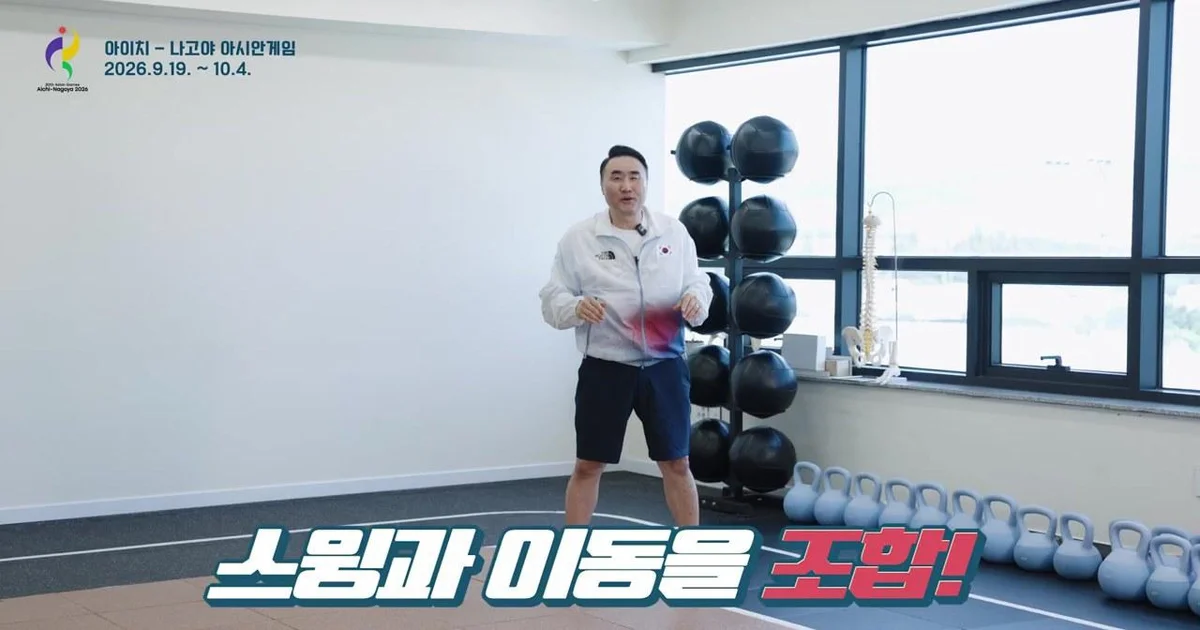
Customized training methods for each sport, supporting the performance of South Korean national athletes competing in the Aichi-Nagoya 2026 Asian Games, have been revealed. According to a video from the Ministry of Culture, Sports and Tourism, sports medicine expert Professor Hong Jeong-gi presented the physical abilities required according to the characteristics of each sport and specific movements to strengthen them.
High Jump Coordination and Swimming Shoulder Flexibility Strengthening Methods
The core of the high jump is power jumping ability and physical coordination. In the video, a movement was introduced where hands are gathered and touched to the knees while jumping to assist the movements of high jump athletes. The purpose is to increase the body control ability required to clear the bar.
In the case of swimming, shoulder flexibility and strength, as well as trunk (back) flexibility, are important. The video demonstrated a movement where, after taking a four-legged position, the arms are slightly lifted to the side, then stretched straight down under the arms, followed by raising one hand up in a cheer. This movement helps alleviate pain and increase flexibility in the neck, shoulders, and back, which are prone to stiffness.
Movements to Develop Fencing Agility and Table Tennis Lower Body Strength
As training for the fast speed and agility of fencing athletes, 'footwork' movements were presented. The method involves taking a stance with the front foot facing forward and the back foot forming a right angle, then moving the feet like a spider moving. This is intended to improve the instantaneous foot movements required during a fencing match.
For table tennis, the power emanating from the legs is essential for powerful attacks. To this end, the 'side step swing squat' movement was introduced. It is a form that combines moving sideways while maintaining a squat position with a swinging movement of the arms. This exercise helps build lower body strength while simultaneously providing shoulder exercise effects by moving the arms.

Comments 0