
Professor Lee Sang-gyu of Hallym University recommends stress management methods: "Avoid alcohol, smoking, and impulsive decisions"
Professor Lee Sang-gyu of Hallym University Chuncheon Sacred Heart Hospital suggests practical ways to manage stress…
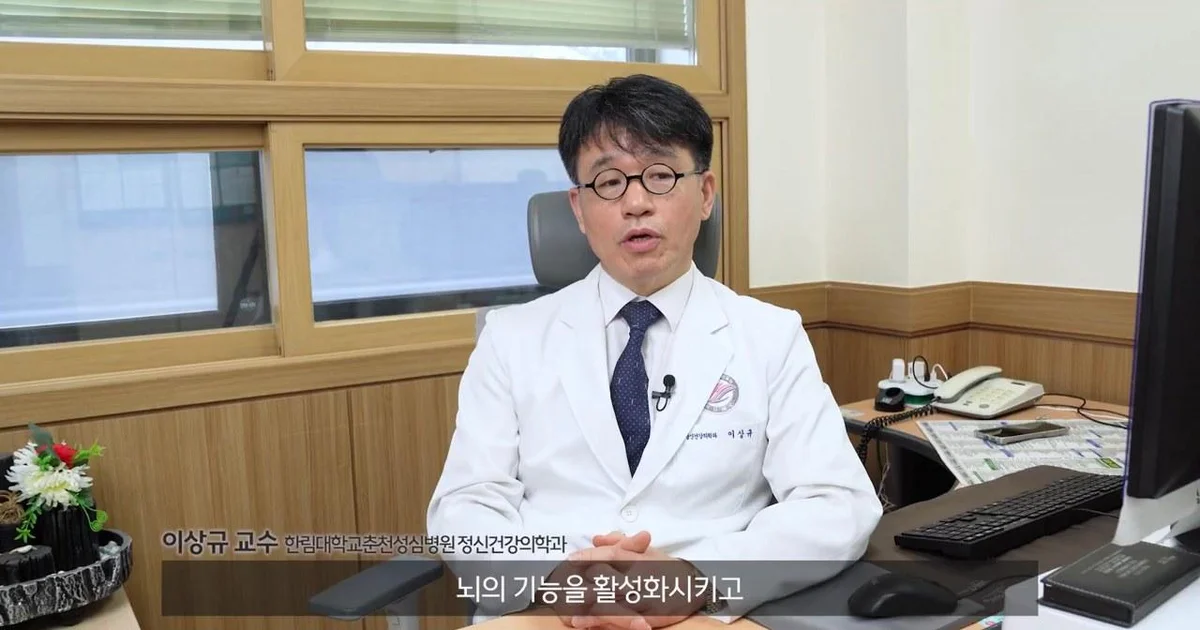
The stress encountered in daily life is a natural phenomenon that everyone experiences. Experiencing stress itself is natural, and what matters is how one manages it. In a video, Professor Lee Sang-gyu of the Department of Psychiatry at Hallym University Chuncheon Sacred Heart Hospital presented behaviors to avoid and specific, actionable methods to manage stress.
Two behaviors to avoid in stressful situations
There are certain behaviors that many people unconsciously choose when they are stressed that require caution. In the video, it was explained that many people attempt to relieve various uncomfortable feelings after experiencing stress through alcohol or smoking, but this is not a good method. Rather, it tends to cause that stress to remain latent and become further amplified.
Additionally, it is advisable to avoid making important decisions while under stress or from a state of emotional or mental discomfort. This is because, in situations where momentary impulsivity increases, people often fail to make good decisions. Therefore, if one is in a state of severe stress, it is recommended to take time to compose one's mind first rather than making immediate decisions.
"Find your own routine" and stress relief techniques
As a method for managing mental health, Professor Lee Sang-gyu advised, "Find your own routine." The first step is to maintain a relatively regular lifestyle, such as having consistent sleeping times, waking up times, and meal times. Along with this, he emphasized that one should create at least one personal technique that can relieve stress.
As a specific practical method, he suggested walking around the neighborhood for about 10 minutes after work. Walking activities at a level that produces a light sweat can help relieve stress by activating brain functions. Furthermore, making an effort to meditate for about 5 minutes in the morning, or taking 5 to 10 minutes at the end of the day to reflect on how the day went and how one's mind is feeling, is also effective.
He also voiced a warning regarding the culture of comparison that lowers self-esteem. Looking at SNS or other people's profiles and feeling that everyone else is enjoying something while you are not can significantly damage one's self-esteem. Rather than comparing, effort is needed to turn that time into time where one can be joyful and happy.
Finally, he recommended establishing three criteria to judge when work-related stress occurs after leaving the office. Ask oneself: "Is that task something that absolutely must be done right now?", "Is that task something that absolutely must be done by me right now?", and "If I make an effort, will the result change if I do that task now?". If all three are true, devoting one's best efforts to the task is a wise way to handle work while managing stress.

Comments 0