
Rotator Cuff Tear: Patient's Actual Function is Key to Treatment Decision, More Than MRI Findings
The decision for treating a rotator cuff tear should be based on a patient's actual physical function and strength rather than relying solely on MRI images.
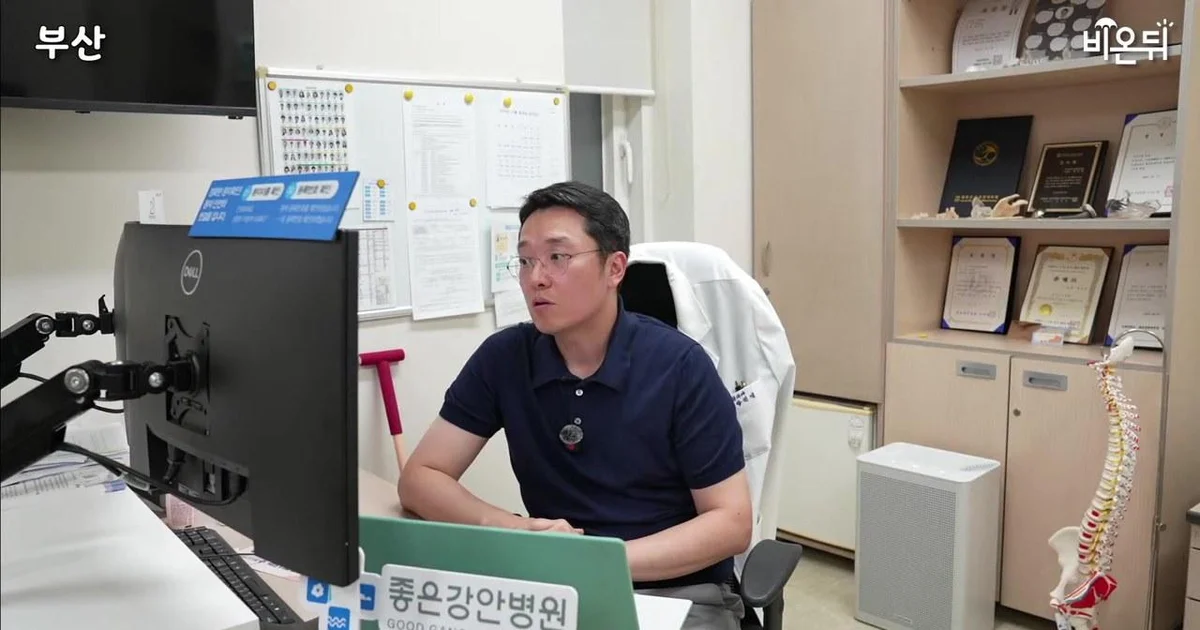
When shoulder pain is felt, many people suspect a 'rotator cuff tear,' and if a torn tendon is confirmed on an MRI image, they immediately think of surgery. However, the degree of tearing in the image is not an absolute standard for determining actual pain or the direction of treatment. According to a video from Uihak Channel Biondwi, the treatment for rotator cuff tear patients must be accompanied by a 'function-centered' customized approach, including the patient's actual movement and muscle strength, in addition to MRI findings. Bang Jin-young, director of Orthopedic Surgery at Good Gang-An Hospital, emphasizes that it is more important to establish a comprehensive treatment strategy through physical examination of the patient rather than focusing on an MRI-centered perspective.
Rotator Cuff Tear: Why Imaging and Actual Pain Do Not Match
The occurrence of a rotator cuff tear does not mean everyone experiences extreme pain. There are cases where, despite a 'full-thickness tear' being visible in the images, the patient actually performs normal shoulder functions without any pain. Conversely, in cases of 'partial tears' where the degree of tearing is not severe, patients may complain of extreme pain that keeps them awake at night. This suggests that the damage to the tendon itself may not be the sole cause of pain.
In fact, according to cadaver autopsy studies, full-thickness rotator cuff tears were found in approximately 17.7% of the population without any special history of treatment. This shows that rotator cuff tears can appear as part of the aging process, and the tear itself does not necessarily lead directly to pain or functional decline. Therefore, deciding on surgery based only on the size (cm) of the tear seen in MRI images can be dangerous. It is explained that 'physical examination,' such as the patient's pain levels, range of motion of the arm, and movement of surrounding muscles, must supplement the limitations of MRI that cannot reflect these factors.
Frozen Shoulder vs. Rotator Cuff Tear: How to Distinguish Them at Home
When the shoulder does not move well, people often think of 'frozen shoulder,' but it could also be 'secondary frozen shoulder' caused by a rotator cuff tear making the shoulder stiff. The simplest way to distinguish this is to check 'passive movement.' Even if it is difficult to raise the arm with one's own strength, if the arm can be raised when someone else lifts it, this may be a state where the shoulder joint itself is completely stiff (possibility of frozen shoulder). On the other hand, if the arm cannot be raised even with someone else's help, the shoulder stiffness is severe, and an accurate differential diagnosis is required.
Rotator cuff diseases occur due to a combination of mechanical factors, where the tendon rubs between the acromion (the bone at the top of the shoulder) and the humerus, and intrinsic factors, where the tendon's regenerative function decreases with age. As people age, the rate at which the tendon is damaged becomes dominant over the rate at which it regenerates, leading to injury. If this inflammation worsens, it can progress from subacromial bursitis to partial tears, full-thickness tears, and eventually arthritis caused by rotator cuff tears.
'Function-Centered' Customized Strategies for Successful Treatment
For effective treatment, one must comprehensively examine the patient's actual condition, which MRI images cannot capture. A 'patient-customized treatment strategy' must be established, considering the patient's muscle strength levels, range of motion for raising the arm, presence of nocturnal pain, and even the patient's age, occupation, and future shoulder usage plans. In particular, when assessing the patient's condition, it is necessary to compare the arm and muscle strength of the side without pain.
Specifically, in cases diagnosed with a partial tear, one should not stop at only receiving injection therapy to reduce pain. After the injection settles the inflammation and swelling, 'rehabilitation exercises' to restore the range of motion of the shoulder must be performed in parallel. If shoulder stiffness is not relieved through rehabilitation, there is a high possibility that pain will worsen again after some time, even if the pain is temporarily alleviated. If pain has recurred after being diagnosed with a partial tear in the past, it is recommended to check the progression of the tear by comparing it with the previous MRI.
Comments 0