
4 Key Management Methods for Making Cabbage Full and Firm 30 Days After Planting
This article outlines four essential management strategies—top-dressing, moisture control, pest management…
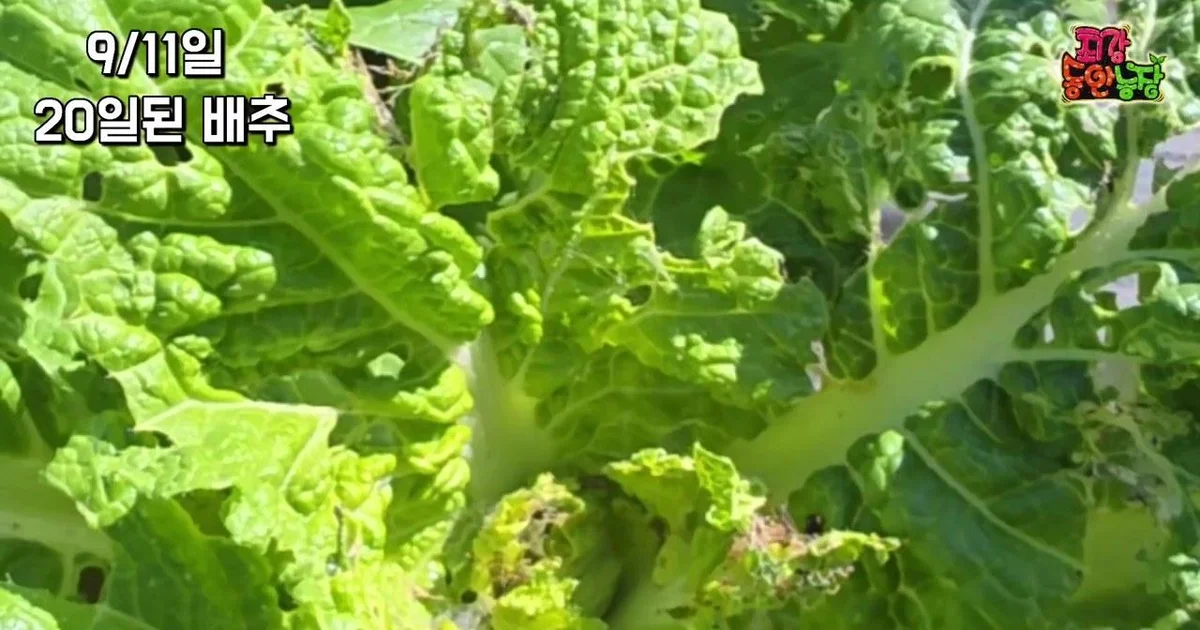
The period approximately 30 days after planting cabbage is a very important time when the roots grow actively and growth is maximized. How you manage the cabbage during this period determines whether the head becomes full or if growth stops due to pests and diseases. According to a video from the YouTube channel 'Imsil Perilla Lady', for cabbage planted under covers during the heatwave on August 22 to grow enough to overflow the ridges within a month, one must take care of four key management elements: top-dressing, moisture management, pest management, and calcium supplementation.
Controlling Green Caterpillars and Aphids that Threaten the Core
One must not let their guard down just because the cabbage appears to be growing large. The video emphasized the danger of green caterpillars that eat into the cabbage core (the heart). If a green caterpillar lays eggs inside the core, larvae can emerge ten or twenty at a time, completely destroying the cabbage's interior. Once the core is ruined like this, the cabbage loses its life. To prevent this, one must directly catch the larvae inside the core using tweezers or spray caterpillar pesticide to protect the core. In particular, even if it is covered with insect netting, bugs can still invade, so it is necessary to always open the core with your hands to check.
Additionally, aphid control is essential during the period when the cabbage core begins to form. If aphids breed inside the core, the cabbage may fail to grow normally, so it is good to spray aphid pesticide once as a preventive measure even if it looks clean on the surface. During this period, damage from flea beetles is almost non-existent, but green caterpillars or patterned caterpillars may appear, requiring continuous observation.
Top-dressing to Avoid Excess Nitrogen and Calcium Supplementation
It is recommended to apply top-dressing once or twice to aid cabbage growth. A point of caution here is that one should not excessively use fertilizers with too high a nitrogen (N) content. If there is too much nitrogen, only the leaves will become lush, the roots will weaken, and storage quality may decrease. Therefore, the secret to making the cabbage tissue firm and crunchy is to mix calcium with fertilizers containing nitrogen and potassium (K).
When applying top-dressing, the location should vary depending on the growth status of the cabbage. If the cabbage leaves have already overflowed the ridge, the fertilizer should be applied between the furrows so that the roots do not come into direct contact with the fertilizer and suffer damage. If the leaves are still within the ridge, insert about one spoonful of fertilizer into the edge (line) of the ridge. Also, to prevent the nitrogen component of the fertilizer from evaporating into the air, one must cover it with soil after applying the fertilizer to increase efficiency. If symptoms of calcium deficiency, such as the tips of the leaves turning yellow, are observed, one must respond quickly through foliar feeding by spraying a mixture of calcium and micronutrients directly onto the leaves.
Tips for Water Supply and Utilizing Morning Hours
As cabbage is a crop where more than 90% of its components consist of water, the water requirement is very high during the period when heading begins. If there is no rain in the forecast, one should soak the furrows with water once every 3 to 4 days to keep the ground from drying out. At this time, if the furrows are blocked with stones to induce good absorption, the fertilizer components will move along with the water, which helps prevent calcium deficiency. Using a weed mat can help the fertilizer components dissolve better into the ground.
The most important tip for watering is not to spray water directly onto the cabbage leaves. If water touches the leaves directly, it is easy for pathogens to invade, and if water enters through wounds, there is a high risk of soft rot occurring. Instead, one should pierce the inside of the plastic mulch or allow water to soak sufficiently into the furrows. Additionally, the morning is the most appropriate time for watering. Watering in the morning allows the roots and stems to absorb sufficient moisture, and the moisture is delivered toward the core overnight, allowing the heading process to occur smoothly. Conversely, care is needed because watering at night can make the ground too wet, increasing the incidence of diseases such as soft rot.


Comments 0