
30 Days into Growing Kimjang Radish: Final Thinning and Hilling Determine Yield
At the 30-day mark of Kimjang radish cultivation, the "secondary growth phase" begins, where key management tasks like final thinning, top-dressing, hilling…
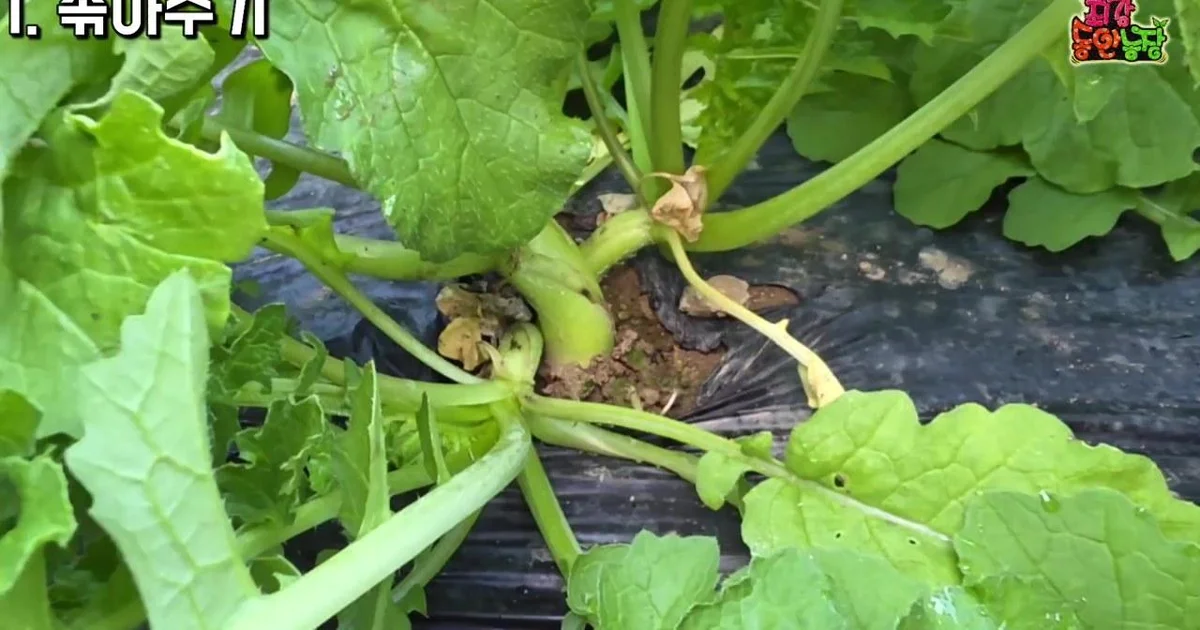
The point approximately 30 days after sowing Kimjang radish is the 'secondary growth phase' where the radish roots begin to grow in earnest. How you manage the plants during this period can change the shape, taste, and final yield of the radish. According to the Imsil Perilla Lady video, the core management methods that must be addressed on the 30th day of Kimjang radish cultivation are summarized as thinning, top-dressing, hilling, moisture management, and pest control.
The period when radish roots grow: Final thinning and top-dressing
Radishes undergo two stages of shedding/splitting during the growth process. The first is around 20–25 days after sowing, a period when the roots primarily split, and the second is around 30 days, the current period, when the roots undergo secondary enlargement. The video emphasizes that final thinning must be performed during this period. If 2–3 plants were left per spot through the primary thinning around day 20, then at day 30, all others must be removed, leaving only the strongest one, so that the radish root can grow properly.
Additionally, if the crop condition is poor or if the primary top-dressing has not yet been applied, it is good to apply top-dressing during this period. Since radishes can show deficiency symptoms if calcium or boron is lacking, it is effective to supplement calcium and boron along with NK fertilizer. However, if the goal is not to grow very large radishes, top-dressing can be omitted.
Hilling and soil management for smooth and sweet radishes
After completing the thinning, 'hilling'—the task of firmly pressing down the soil around the radish roots—is required. If hilling is not done and the top part of the radish protrudes excessively above the ground, that part may turn green, resulting in a bitter taste and hard texture. Furthermore, if the green part is exposed, there is a risk of frost damage or cold damage due to low temperatures. By covering the radish with soil through hilling, the shape of the radish will be smooth and pretty rather than crooked, and it helps in producing a sweet taste.
The video explains that hilling performed on day 30 may be more cumbersome than the primary thinning on day 20. This is because the size of the radish has already increased, meaning the area that needs to be covered with soil is larger. Therefore, a way to increase work efficiency is to perform a certain amount of hilling in advance when doing the primary thinning. If hilling is difficult, at least the soil around the radish should be pressed down firmly to shape it.
Moisture management and pest control for delicious radishes
One of the important factors that determines the success or failure of radish farming is periodic moisture management. For radishes to grow sweet and delicious, the ground must maintain a moist state throughout the cultivation period. The video recommends supplying moisture at least once a week. At this time, the morning is more appropriate than the afternoon for watering. This is because if you water in the morning, the plants can send those nutrients down to the roots in the evening after performing photosynthesis. Conversely, watering in the evening creates a humid environment, which can lead to damage from pests like snails or diseases such as water rot and rot diseases.
Finally, attention must be paid to pest management. In the early stages, damage from flea beetles piercing holes may occur; if control is not performed properly at the beginning, the radish tissue cannot become firm and the size will not grow properly. After day 30, damage from green caterpillars or radish leaf beetles may appear, so you must carefully inspect the undersides of the leaves every 5 to 7 days and proceed with periodic control to harvest clean and healthy Kimjang radishes.


Comments 0