
Disinfecting Chives Seeds and Calcium Supplementation: Cultivation Methods to Prevent Leaf Tip Deficiency
This article provides cultivation tips for Kimjang chives, including optimal planting times, pest prevention through seed disinfection…
As the planting season for Kimjang chives approaches, cultivation tips for harvesting sturdy chives are drawing attention. According to a video from the YouTube channel 'Imsil Perilla Lady', it is appropriate to plant Kimjang chives between late August and mid-September, and planting around mid-September allows for the harvest of fresh chives that are not lacking in nutrients. The cultivation period for Kimjang chives takes about 50 days, considering the period when temperatures drop.
Seed Disinfection for Pest Prevention and Planting Location
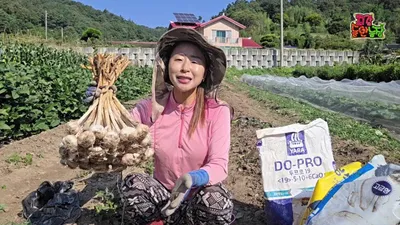
Kimjang chives are not just for eating; they must undergo overwintering to be used as seed chives around next May. Therefore, pest management is very important when planting the seeds (seed chives). The video recommends disinfecting the seeds to prevent pests such as onion flies or root mites. Before disinfection, cutting the tips of the roots and the part where the sprouts emerge with scissors can help the sprouts emerge uniformly and all at once. As a disinfection method, the seeds should be placed in an onion net and disinfected for about 30 minutes, followed by a process of drying them in a cool place.
Additionally, when planting chives, it is advantageous to plant them at the edge of the field rather than in the center. Since Kimjang chives must be used as seed chives after overwintering, planting them in the center of the field may make space utilization inconvenient when cultivating other crops later. If seeds are not available, even cutting and planting the white root part left over after harvesting chives will result in new sprouts emerging.
Nutrient Management and Moisture Maintenance to Prevent Calcium Deficiency
Chives are a heavy-feeding crop that requires a lot of nutrients and has a very high calcium requirement. Like cabbage, chives can also show deficiency symptoms at the leaf tips if calcium is lacking. The video explains that when preparing a field for Kimjang, it is efficient to manage radish, Altari radish, chives, mustard greens, and spinach together. In particular, when preparing a Kimjang field, sufficient calcium components must be added; if missed, the method to keep the leaf tips fresh is to supplement calcium components when applying the first top-dressing about 20 days after planting the chives.
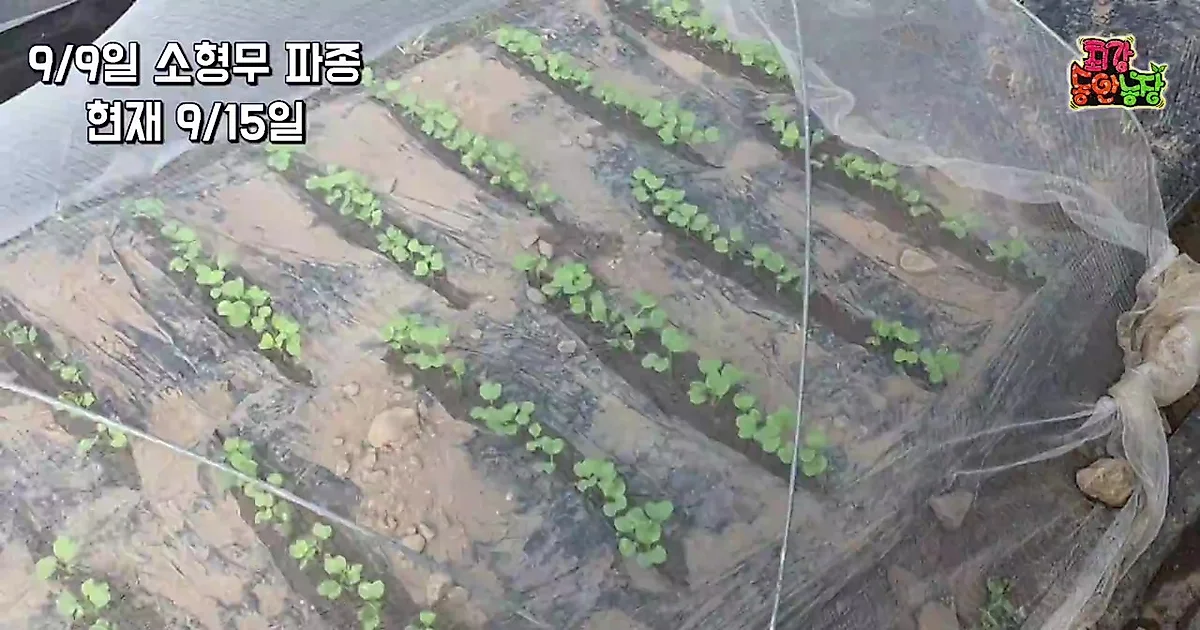
The planting method involves placing the root side of the seed facing down and the sprout facing up, planting them at intervals of 15–20 cm. If the seeds are small, it is fine to plant 2–3 together in one hole. After planting, cover with soil, pat it down, and then water them thoroughly. During dry periods like recently when there is no news of rain, covering with additional soil or using a shade net or non-woven fabric to maintain moisture can prevent moisture from evaporating over the plastic, resulting in the effect of sprouts emerging earlier. The video emphasized the importance of moisture management through cases where Altari sprouts emerged two days earlier than usual by covering with two layers of shade net, or spinach sprouts emerging from the 3rd day.
Differences in Cultivating Chuseok Chives and Kimjang Chives
The growth rate of chives varies depending on the planting time and environment. In the case of Chuseok chives planted in early August, since the temperature is high, harvesting is possible within 35 to 45 days. The video shows a case of harvesting Chuseok chives planted on August 6 around 40 days later to make green onion kimchi, mentioning that planting too early may instead result in calcium deficiency or nutrient deficiency. Chuseok chives can be sufficiently harvested within 35–45 days due to high temperatures, and around 40 days is explained as a good size for green onion kimchi.
On the other hand, Kimjang chives grow during a period when temperatures are dropping, so the cultivation period is longer than that of Chuseok chives. Even if the Kimjang season is missed, if overwintering chives are planted by October at the latest, there is an option to harvest them again next spring, even if harvesting within the current year is difficult. It is good to plant overwintering chives within September, but even if planted until October, harvesting the following spring is possible.
Comments 0