
Tesla Semi features 1,088 horsepower and 550km range; European model lacks FSD support
Tesla's electric truck, the Semi, was unveiled at the IAA Transportation exhibition in Hanover, Germany, showcasing a powerful 1…
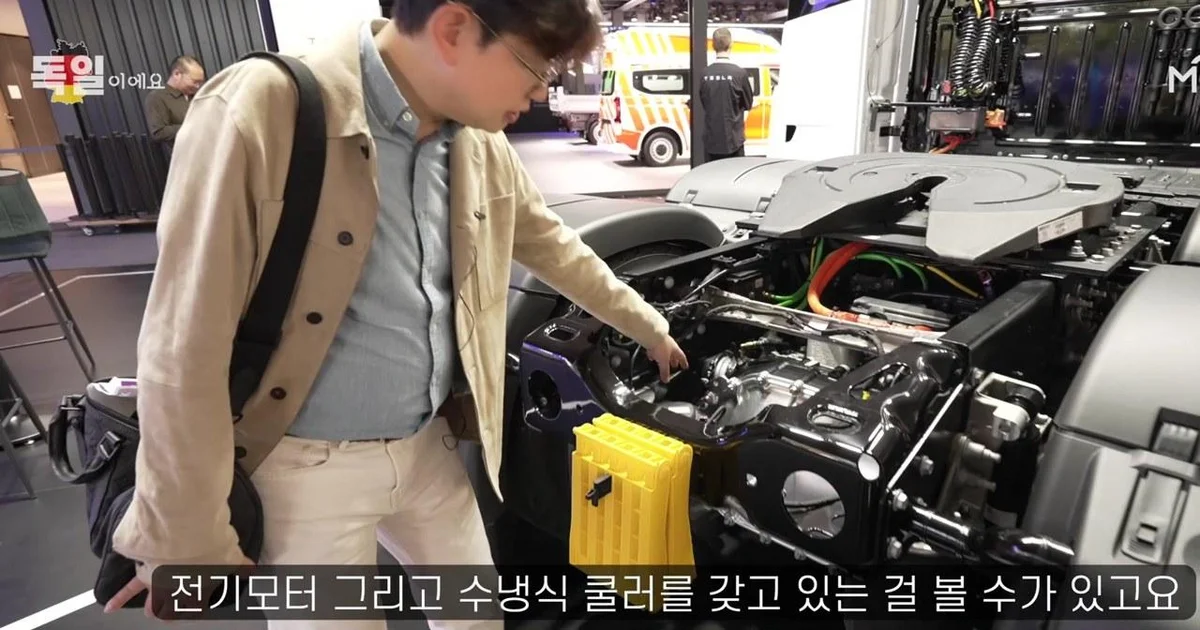
Tesla's electric truck, the 'Semi', was unveiled at the IAA Transportation exhibition held in Hanover, Germany. According to Kim Han-yong's MOCAR video, the European Semi truck confirmed this time is characterized by a powerful output of 1,088 horsepower (800kW) and a driving range of 550km. However, the FSD (Full Self-Driving) menu, which is Tesla's core technology, was not identified on the exhibited vehicle.
Aerodynamic Design and MCS Megawatt Charging System
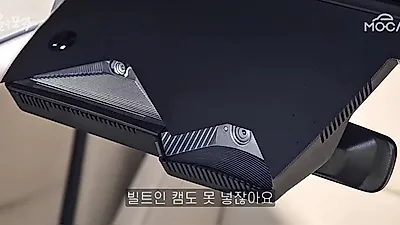
The exterior of the Tesla Semi shows a sleek design that differentiates it from existing trucks. The video emphasizes the aerodynamic design with a smoothly tapered front, explaining that it chose a compromise between the protruding nose of American trucks and the flat shape of European trucks. In particular, it is notable that the design freedom was increased by considering a structure where only one person occupies the driver's seat (cabin). The front features linear lamps and DRLs (Daytime Running Lights) to give a futuristic feel, and unlike typical trucks, it is equipped with only one wiper. A front camera is located at the top, and a bumper camera is separately provided, following Tesla's unique design approach.
The charging method is also innovative. In addition to the CCS method used by existing electric buses, it is equipped with a charging port called 'MCS (Megawatt Charging System)'. Through this port, megawatt-class charging is possible, which is about five times faster than general automobiles. Tesla plans to open this MCS standard to other automakers to build an infrastructure so that the Semi can operate smoothly throughout Europe. Tesla aims to create an environment where the Semi can traverse all of Europe by distributing more megawatt chargers.
Regarding the driving range, a figure of 550km was presented based on estimates from European manufacturers. This figure considers the regulation where drivers must take a 45-minute break after 4 hours and 30 minutes of driving, and it is designed so that operation can be carried out while charging at rest areas. The energy efficiency is at a level of 1.0kWh/km, which is expected to secure high economic competitiveness in the European market where diesel prices approach 3,800 to 4,000 won per liter.
Futuristic Interior and Powerful 3-Motor Powertrain
The interior space gives a very concise and blunt impression, in contrast to the quaint storage spaces of existing European trucks. The dual displays located in the center create a futuristic atmosphere and support Spotify, calendars, camera screens, etc. It uses a structure that utilizes cameras instead of side mirrors, and various cameras covering the front, bumper, sides, and rear are installed. In particular, considering that aligning front and rear is necessary due to the nature of freight vehicles, separate cameras are provided.
The core of the powertrain is three electric motors. They operate in a way where the left and right motors move independently or one motor drives powerfully, reaching a total output of approximately 1,088 horsepower (800kW). The video suggested that while the FSD menu was not activated on the exhibited vehicle, there is a possibility that FSD functions will be introduced once European regulations are established in the future. The currently installed cameras are primarily used for driving assistance and display verification, but they could be utilized as key devices for autonomous driving in the future. The Semi moving in the outdoor test track in the video showed it moving quietly without engine noise.
Possibility of Introduction to the Korean Logistics Market and Outlook for Electric Trucks
A positive outlook was presented regarding the possibility of the Tesla Semi being introduced to Korea. Currently, the large truck market in Korea is focused on hydrogen trucks, but the analysis suggests that electric trucks, which repeatedly operate specific sections, could become a blue ocean due to the limitations of hydrogen charging infrastructure. While hydrogen trucks have the inconvenience of having to move to find charging stations, electric trucks will not face significant issues in operation if charging infrastructure is established along the routes between terminals.
In particular, the 550km driving range is at a level that allows travel from Seoul to Busan without charging, making it a good fit for the Korean operating environment. The video concluded with expectations that if the Tesla Semi is introduced domestically, it could contribute to reducing driver fatigue and decreasing accidents during highway driving. If FSD technology is also quickly introduced in the future, the convenience for freight truck drivers is expected to be maximized.


Comments 0