
Hyundai's New TUCSON Features Design Resembling a Concept Car and Up to 245 Horsepower
Hyundai Motor Company has unveiled the new TUCSON, which features a sharp, concept-car-inspired design and a hybrid powertrain delivering up to 245 horsepower.
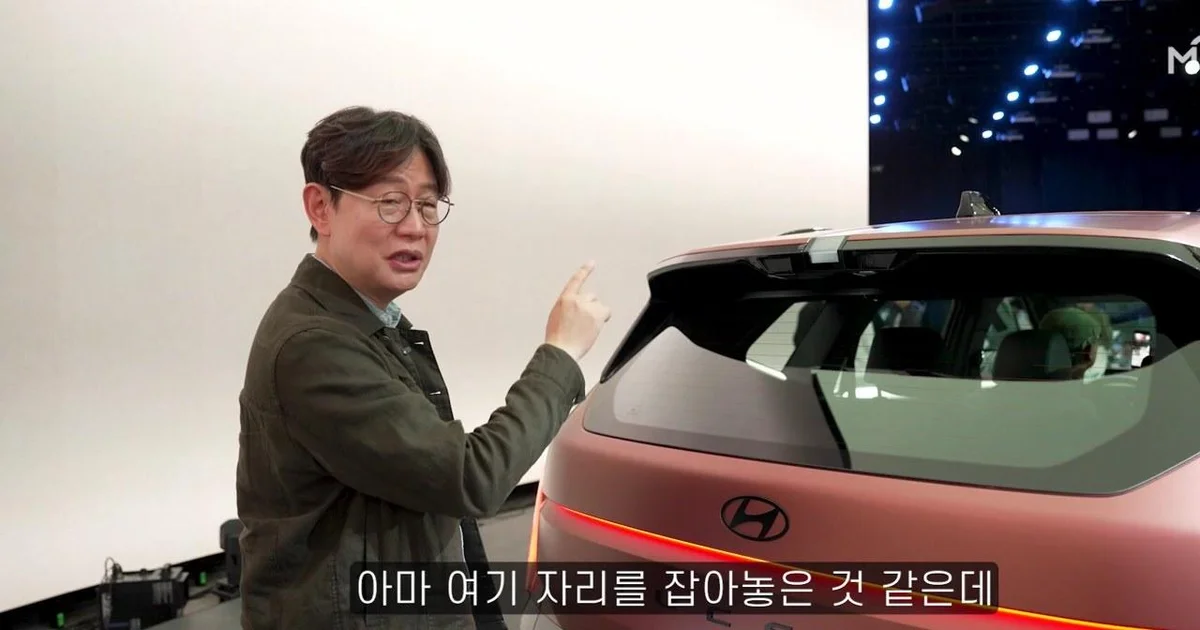
Hyundai Motor Company's new TUCSON has revealed itself at the unveiling site. This new model departs from the previous rounded design, featuring a sharp exterior that evokes a concept car and emphasizes a strong impression. According to Kim Han-yong's MOCAR video, the new TUCSON completes a modern SUV image by connecting the horizontal lines and lamp designs of the front end with a sense of unity, simultaneously providing a visual sense of intimidation.
The Harmony of Sharp Design and Hybrid Powertrain
The most noticeable change in the new TUCSON's exterior is the front design. The horizontal lines extending from the hood are connected in a long, straight line, and an indirect lighting design is applied to the top of the lamps to prevent glare. In particular, the vertical lamps add the toughness characteristic of an SUV. The front is equipped with cameras for a 360-degree surround view, active flaps that adjust air vents, and an active shutter that aids cooling. In the case of the side design, through a design that makes the creases of the hood and the front overhang appear short, it realizes proportions similar to a rear-wheel-drive-based luxury SUV.
The powertrain is equipped with a 1.6-liter turbo hybrid engine. In the case of the hybrid model, it delivers a maximum output of 245 horsepower, and the combined fuel efficiency was confirmed to be 17.4 km per liter. The gasoline model provides an output of 193 horsepower through a 1.6-liter turbo engine, and instead of a regular gasoline model, it consists of two options: turbo or turbo hybrid. Considering the characteristics of hybrid vehicles, a Virtual Engine Sound System (VSS) is also applied to notify pedestrians of the vehicle's approach.
The 'XRT' trim, which emphasizes a tough style, also draws attention. However, at the time of video filming, the XRT model was displayed in an unfinished state during the preparation process, and it was observed that some gaps were not perfectly aligned, unlike the regular model.
Trunk Space and Luggage Board Design Enhancing Practicality
Various ideas considering user convenience are reflected in the trunk space. It is designed so that when the trunk is opened, the license plate lamp also rises, allowing the open state of the trunk to be checked from a distance, which appears to be a measure considering safety. Near the trunk handle, a separate switch is provided to prevent user confusion.
The luggage board inside the trunk goes beyond a simple board shape and has a structure that can be firmly fixed through grooves. The luggage board can be adjusted in a sliding manner, allowing the height of the loading space to be adjusted to increase utility. Additionally, speakers for rear passengers are placed on both sides, and a sub-woofer integrated with the fender is installed to complement the audio experience. However, in the video, the position of the speakers, which does not seem to have been reflected during the design stage, was also mentioned.
To increase the utility of the loading space, Hyundai Motor Company applied a storage and fixing system named 'Hyundai Edgy Gear'. Underneath the luggage board, a device is provided to fix shelves, designed to respond to various loading environments such as situations where the rear seats are folded down.
Spacious Rear Seats and the Openness of the Panoramic Sunroof
The rear seat space is designed to be spacious so that it can faithfully perform its role as a family SUV. In particular, a panoramic sunroof that extends from the front seats to the rear seats is applied to the ceiling, providing a wide sense of openness, and a separate shield (sunshade) is included to allow light control.
In terms of convenience features, the slim display and HUD (Head-Up Display) configuration centered around the driver and passenger seats stand out. Various storage ideas are reflected in the center console, and functions such as wind-free air conditioning and Stay Mode are also included. However, in the case of rear passengers, it is designed so that they cannot directly call and use the voice recognition function 'Clova', showing that the scope of rear seat convenience functions is configured around the driver's seat.



Comments 0