
The Docent Profession is Like an Actor Delivering Exhibition Planning, and Speaking Ability is Key
Jang Su-yeon, a docent who has been active at the ACC for 11 years, explained the role of a docent, the differences from a curator…
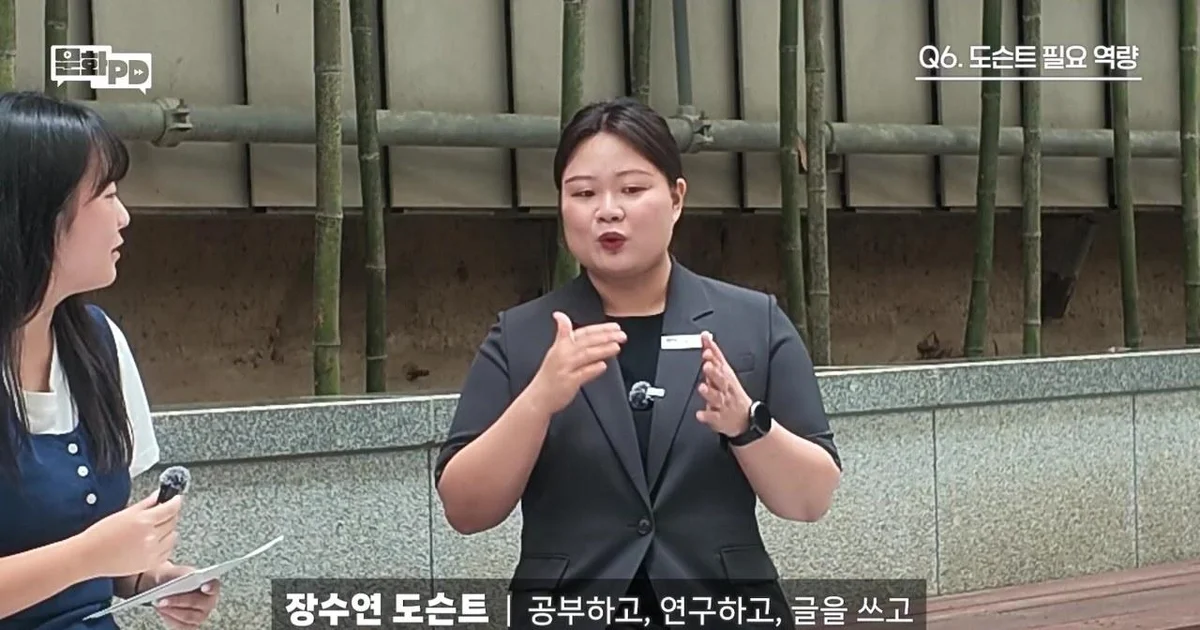
The specific scope of work and required competencies of a docent, the 'guide of art' who connects artworks and audiences at cultural and artistic exhibition sites, have been revealed. According to a video released on the Culture Portal YouTube channel, Jang Su-yeon, a docent who has been active at the ACC for 11 years, explained the role of a docent, the differences from a curator, and professional preparation requirements.
The role of an 'actor' delivering the exhibition directed by the curator
The core task of a docent is exhibition commentary. To help visitors enjoy the exhibition smoothly, the process begins with researching the exhibition content and writing a script for the commentary based on that research. The participant in the video explained the relationship between a curator and a docent by comparing it to the film production process. The explanation is that if the curator is the 'film director' who organizes and directs the exhibition, the docent is like an 'actor' who delivers the content according to the composition intended by the director.
In the case of the ACC, docents generally take charge of all commentaries for new exhibitions held at the Asia Culture Museum and the complex exhibition halls of the Culture Creation Center within the Culture Information Center, characterized by a full-time employment form. As professional advantages, being able to encounter exhibitions faster than anyone else and being able to fully observe meetings with artists or the artwork installation process were cited. On the other hand, the difference in the energy felt during commentary depending on the visitors' reactions was mentioned as a professional hardship.
No major restrictions, but research and speaking ability are essential
It is not mandatory to complete a specific major to become a docent. Anyone interested in art or exhibitions can take on the challenge, so there is no significant difference in majors. While there is no specific state-certified qualification, it is helpful to participate in docent training programs, obtain certificates, and gain practical experience. Additionally, possessing English skills to attend to foreign visitors is an advantageous factor.
As the most important competency, 'speaking ability' was emphasized. It is not merely about being good at speaking; it must be supported by the process of studying and researching the exhibition content deeply and writing it down. The participant explained, "Studying, researching, writing, and the final step is speaking," adding that the ability to deliver content without being nervous in front of an unfamiliar public is important. It was emphasized that while anyone can challenge being a docent, it is a profession that carries the responsibility of explaining in front of the public.
Comments 0