
Rural Development Administration Researcher Kang Hee-yoon Aims to Increase Agricultural Value Through K-Whisky and Traditional Liquor Research
Researcher Kang Hee-yoon at the National Institute of Crop Science is conducting research to create high-value-added liquors using domestic agricultural…
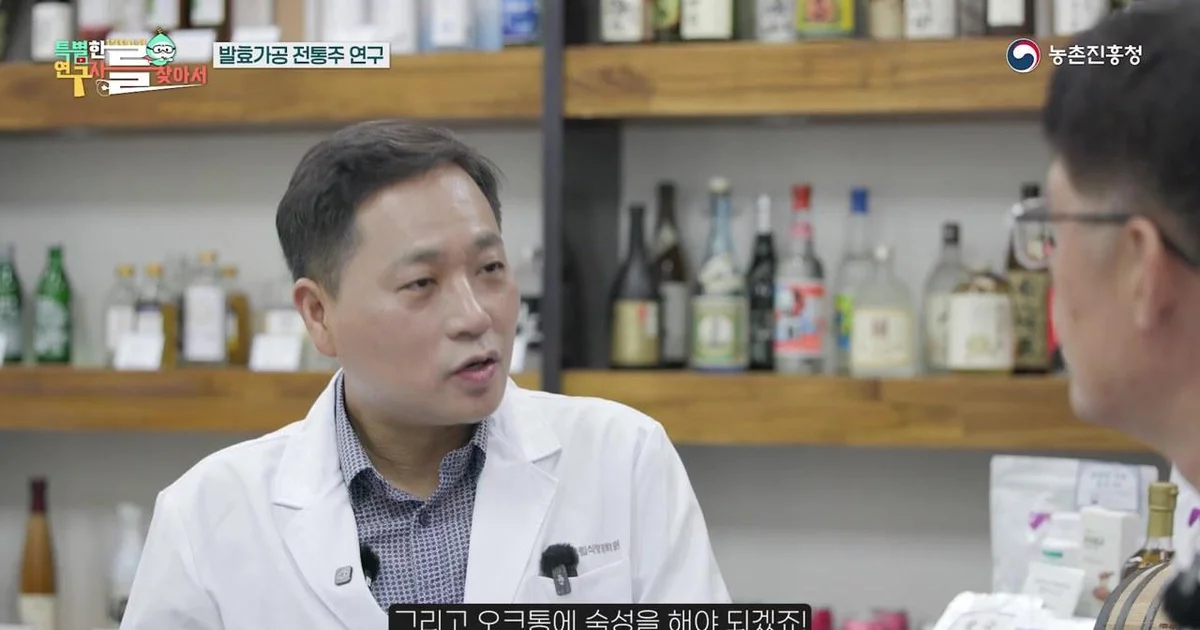
Traditional liquor does not remain stuck in the old methods of simply brewing in jars. At the Fermentation and Processing Research Division of the National Institute of Crop Science under the Rural Development Administration, various types of alcohol that can create high added value using our agricultural products are being researched. Recently, the scope has expanded beyond Makgeolli and Yakju to include research on whisky, a global trend, testing the possibilities of Korean-style premium spirits.
The Power of Microorganisms that Convert Starch to Sugar: The Principles of Nuruk and Fermentation
The core of making alcohol is the action of microorganisms. According to Kang Hee-yoon, a researcher at the Rural Development Administration, it is the role of mold to break down the starch in ingredients such as rice or barley into glucose, and it is the role of yeast to convert this glucose into alcohol. 'Nuruk' is what contains both of these microorganisms.
The institute deals with both the traditional 'Jerye Nuruk' method, which captures microorganisms from the air, and 'Improved Nuruk,' where excellent microorganisms are pre-selected and inoculated into wheat bran. In particular, improved nuruk is characterized by its superior performance, allowing for the brewing of large amounts of alcohol with much smaller quantities than the traditional method. For example, when making alcohol with 1kg of rice, whereas about 200g of nuruk was needed in the past, using improved nuruk, 20g is sufficient.
Oriental liquor manufacturing is characterized by 'parallel multiple fermentation,' where saccharification and alcoholic fermentation occur simultaneously. This is a point of differentiation from the Western method, which uses malt to break down starch before fermenting. Through this research, if dedicated varieties for brewing are developed, much higher quality alcohol can be produced compared to existing methods, contributing to the increase in farm household income.
The Challenge Toward K-Whisky: Distillation Technology and Oak Barrel Aging
The focus of recent research is 'whisky.' Whisky is a spirit made by fermenting beer, distilling it, and then aging it in oak barrels. Researcher Kang is conducting research to produce flavors similar to whisky based on South Korea's rice soju. This is a challenge to create products on par with foreign whiskies to create new added value.
The institute is equipped with various distillation equipments. Representative examples include the 'multi-stage still' used to make high-quality spirits, and the 'vacuum still' which lowers pressure to prevent burnt smells in the alcohol and produces a clean taste. The green-bottled soju we commonly drink follows an atmospheric distillation method using spirits, but traditional-style soju achieves a high alcohol content of around 60–65 degrees through an atmospheric still.
The aging process is also a key research subject. In the West, oak barrels are mainly used, and the institute also recycles oak barrels that were used for aging wine to improve the quality of whisky. Using oak barrels that retain the aroma of wine has the effect of making the color of the whisky darker and deepening its flavor. In this way, the research of the Rural Development Administration is expanding the scope of use for our agricultural products and establishing the technical foundation for Korean traditional liquor to leap forward as a global premium alcoholic beverage.

Comments 0