Home › Food Culture
Food Culture

How to Set a Jesa Table: “Red East, White West”? “Jujubes, Chestnuts, Pears, Persimmons”? What Matters Most for Chuseok Rites

FAM타임스 | FAM타임스 | Published 2019.09.10 16:54|Updated 2026.09.13 02:50 | Comments 0

Chuseok charye tables follow familiar food-placement customs, but traditional Confucian etiquette emphasizes sincerity over rigid rules.
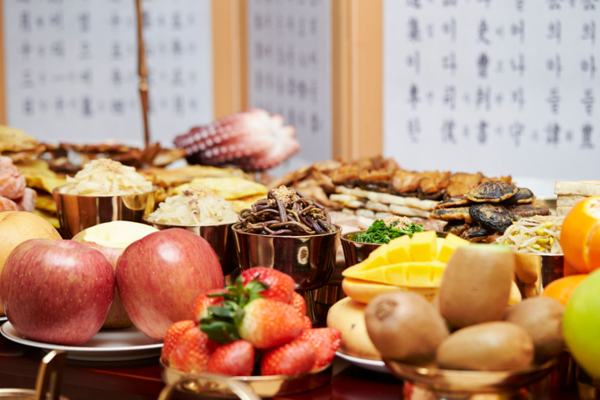
▲Charye table arrangements are gradually evolving. (Photo=ⒸYTN NEWS)
Koreans hold ancestral rites known as jesa. Jesa is a ritual in which people show their devotion by offering food to spirits or loved ones who have passed away. Rites held on holidays such as Seollal and Chuseok, as well as on ancestors’ birthdays, are specifically called charye. This Chuseok, many families will once again be busy preparing charye tables.Setting the Chuseok Charye Table

The foods placed on a ritual table vary by region and family. Apart from a few staples, families may also prepare regional specialties or foods their ancestors enjoyed. Although ritual foods differ, table arrangements follow certain conventions. There are five to remember: eodongyukseo, dudongmiseo, jwapouhye, joyurisi, and hongdongbaekseo. Their meanings are not difficult once explained. Eodongyukseo means placing fish in the east and meat in the west, while dudongmiseo means positioning the head toward the east and the tail toward the west. Jwapouhye means placing dried meat or fish at the far left and sikhye at the far right. The widely known joyurisi calls for arranging jujubes, chestnuts, pears, and dried persimmons from left to right, while hongdongbaekseo is the rule that red fruit goes in the east and white fruit in the west. Regarding the order of the dishes, if the side with the incense is considered the front, foods such as jujubes, dried persimmons, and apples go in the front row. The second row holds seasoned vegetables and sikhye; the third, soup dishes, fish, and tofu; the fourth, fish, meat, and pan-fried battered meat; and the final row, songpyeon, rice cakes, a cup of liquor, and soup.
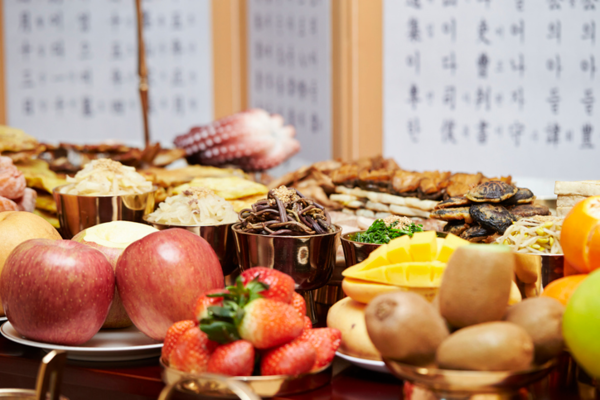
▲What matters is the devotion behind it. (Photo=ⒸGettyImagesBank)
There is one point worth considering: Must these rules for arranging a ritual table really be followed? Some experts say such rules are not specified in traditional Confucian ritual etiquette. The scholars Toegye Yi Hwang and Yulgok Yi I are also said to have taught that no fixed rules had to govern ancestral-rite tables; arrangements could vary according to the times and each household’s circumstances. In other words, the original ritual etiquette prescribes neither mandatory foods nor rules for arranging them on the table. Ultimately, what matters is sincerity and devotion. This Chuseok, rather than worrying too much about ritual foods and table arrangements, why not focus on enjoying the holiday with family?

#Chuseok #charye #jesa #ancestral rites #ritual table #Korean traditions
Copyright © FAM타임스 All rights reserved. Unauthorized reproduction, redistribution, and AI training prohibited.
F
FAM타임스
FAM타임스 · Food Culture desk

FAM타임스 명의로 발행된 기사를 모아 제공하는 매체 공용 저자 페이지입니다.
More by this reporter ›

Related Articles

Daeboreum Foods: Five-Grain Rice and Bokssam Recipes and Meanings—“May Good Things Happen All Year”

Daeboreum Foods: Five-Grain Rice and Bokssam Recipes and Meanings—“May Good Things Happen All Year”

2019.02.19
Makgeolli Made After Filtering Out Cheongju—Is Makgeolli Now the Main Brew? Yangpyeong Makgeolli

Makgeolli Made After Filtering Out Cheongju—Is Makgeolli Now the Main Brew? Yangpyeong Makgeolli

2018.11.05
Noryangjin Restaurants for Students and Civil Service Exam Candidates

Noryangjin Restaurants for Students and Civil Service Exam Candidates

2018.11.05

Comments 0

Be the first to comment.
Stories from FAM타임스.