
Wolves Are More Cooperative Than Dogs
Wolf pairs outperformed dog pairs in a food-pulling experiment, though trained dogs can learn to cooperate successfully.
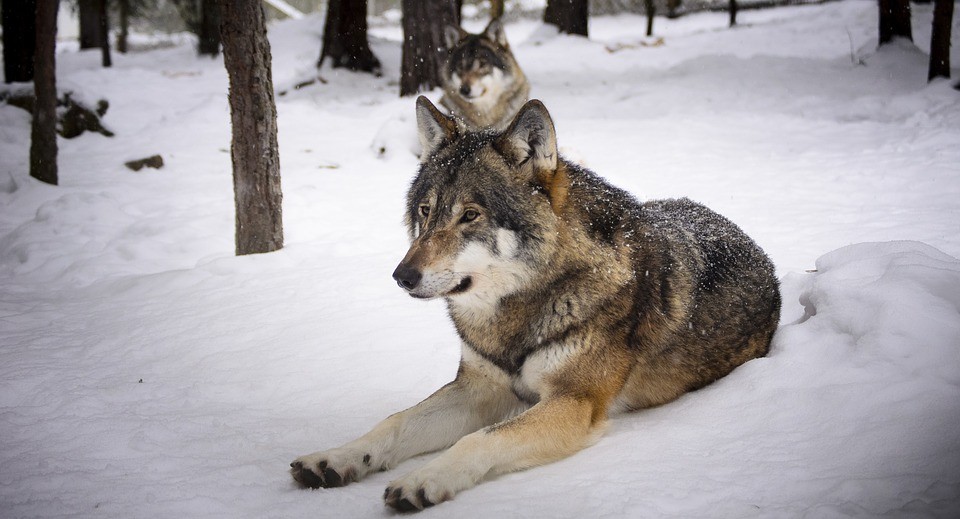
Wolves hunt together for food and collectively raise pups born within the pack. However, many people believe wolves become more aggressive and selfish when food is present.
Meanwhile, many people assume that dogs are friendlier toward humans because they were domesticated by them. The prevailing view has also been that dogs would be more cooperative when carrying out a task. However, the new study overturned these expectations.
Researchers Sarah Marshall-Pescini and Friederike Range, along with their colleagues, had pairs of wolves and pairs of dogs pull ropes connected to trays containing food.
As a result, three of the four wolf pairs successfully obtained the food, while only one of the six dog pairs did so.
Marshall-Pescini explained, “Wolf pairs often have to cooperate with each other to survive in the wild. That is why they performed better in the experiment as well.”
She added, “Dogs, by contrast, do not need teamwork when foraging.”
The researchers said that although wolves are indeed sensitive about food, once they obtain it, the pack ultimately shares it. Dogs, however, do not. Other dogs wait until the highest-ranking dog has eaten first.
Although the study found wolves to be more cooperative, dogs can readily learn to cooperate with one another through human training. Trained dogs successfully completed the rope experiment, and dogs are already active in a wide range of fields.
FAM타임스 명의로 발행된 기사를 모아 제공하는 매체 공용 저자 페이지입니다.



Comments 0